Staphylococcal scalded skin syndrome (SSSS)
Dermatology · Paediatric
Physician-written · Verified by three sets of doctors · Reviewed November 2026
Bedside summary
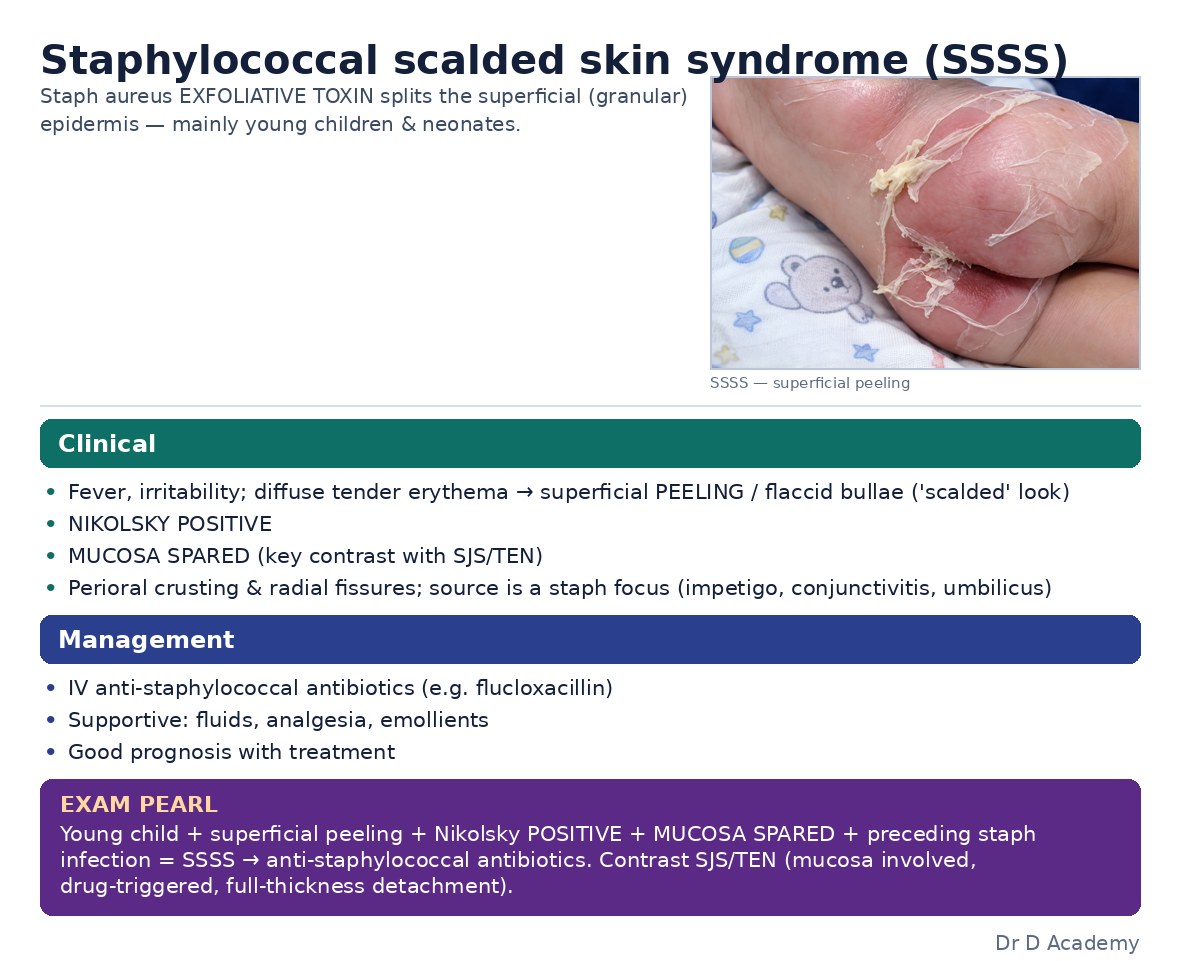
A toxin-mediated illness (exfoliative toxins from Staphylococcus aureus) mainly in young children, causing widespread superficial skin blistering and peeling that looks like a scald. The split is intra-epidermal and superficial, so mucous membranes are SPARED and Nikolsky's sign is positive. Treat as an acute dermatological emergency with anti-staphylococcal antibiotics and meticulous skin/fluid care; distinguish it from SJS/TEN.
Figures & algorithms
Red flags
- Extensive skin loss with fluid/electrolyte and thermoregulatory compromise
- Signs of sepsis / toxic shock
- Mucosal involvement (reconsider SJS/TEN)
- Secondary infection of denuded skin
Assessment
Differential diagnosis
- Stevens-Johnson syndrome / toxic epidermal necrolysis (mucosal involvement, deeper split, often drug-related)
- Bullous impetigo (localised form of the same toxin), epidermolysis bullosa, thermal/chemical burn
- Toxic shock syndrome, severe drug eruption
Investigations
- Clinical diagnosis: tender erythema, flaccid bullae and superficial peeling with a positive Nikolsky sign; MUCOSAL SPARING
- Swab likely primary sites (eyes, nose, throat, umbilicus, perineum) and blood cultures to find the staph source
- Monitor fluid balance, temperature and signs of sepsis; skin biopsy only if the diagnosis is unclear (superficial split distinguishes it from TEN)
Management
- Recognise the picture (scald-like peeling, mucosal sparing, positive Nikolsky) and assess severity and hydration.
- Start an anti-staphylococcal antibiotic IV (e.g. flucloxacillin; add clindamycin for toxin suppression; cover MRSA per local epidemiology).
- Manage like a superficial burn: careful fluid balance and replacement, analgesia, temperature control, and gentle emollient/non-adherent dressings; minimise skin trauma.
- Avoid corticosteroids (they are not the treatment and may worsen outcome).
- Treat/eradicate the primary staphylococcal focus; monitor for secondary infection and sepsis.
- Involve dermatology +/- a burns/paediatric team for extensive disease; the skin typically heals without scarring as the split is superficial.
Drugs & doses
Anti-staphylococcal antibiotic IV (e.g. flucloxacillin), with clindamycin as a toxin-suppressing adjunct; cover MRSA where prevalent (confirm against local policy)
Analgesia and careful fluid replacement (burn-type management)
Emollients / non-adherent dressings for skin care
Avoid corticosteroids
Disposition
Admit for IV antibiotics and skin/fluid care; extensive disease may need a paediatric high-dependency/burns setting.
Complications & pitfalls
- Dehydration and electrolyte disturbance
- Sepsis
- Secondary infection
- Hypothermia from skin loss
Exam pearls
- Mucosal sparing and a superficial split distinguish SSSS from SJS/TEN.
- Treat with anti-staphylococcal antibiotics plus burn-type skin and fluid care — avoid steroids.
- Healing is usually scar-free because the split is intra-epidermal and superficial.
Educational — confirm all doses against local policy.
Disclaimer: Educational decision support for qualified clinicians and students — not a substitute for clinical judgement, local protocols or a full drug reference. Confirm every dose and contraindication against your formulary before prescribing.