Scarlet fever
Infection · Paediatric
Physician-written · Verified by three sets of doctors · Reviewed November 2026
Bedside summary
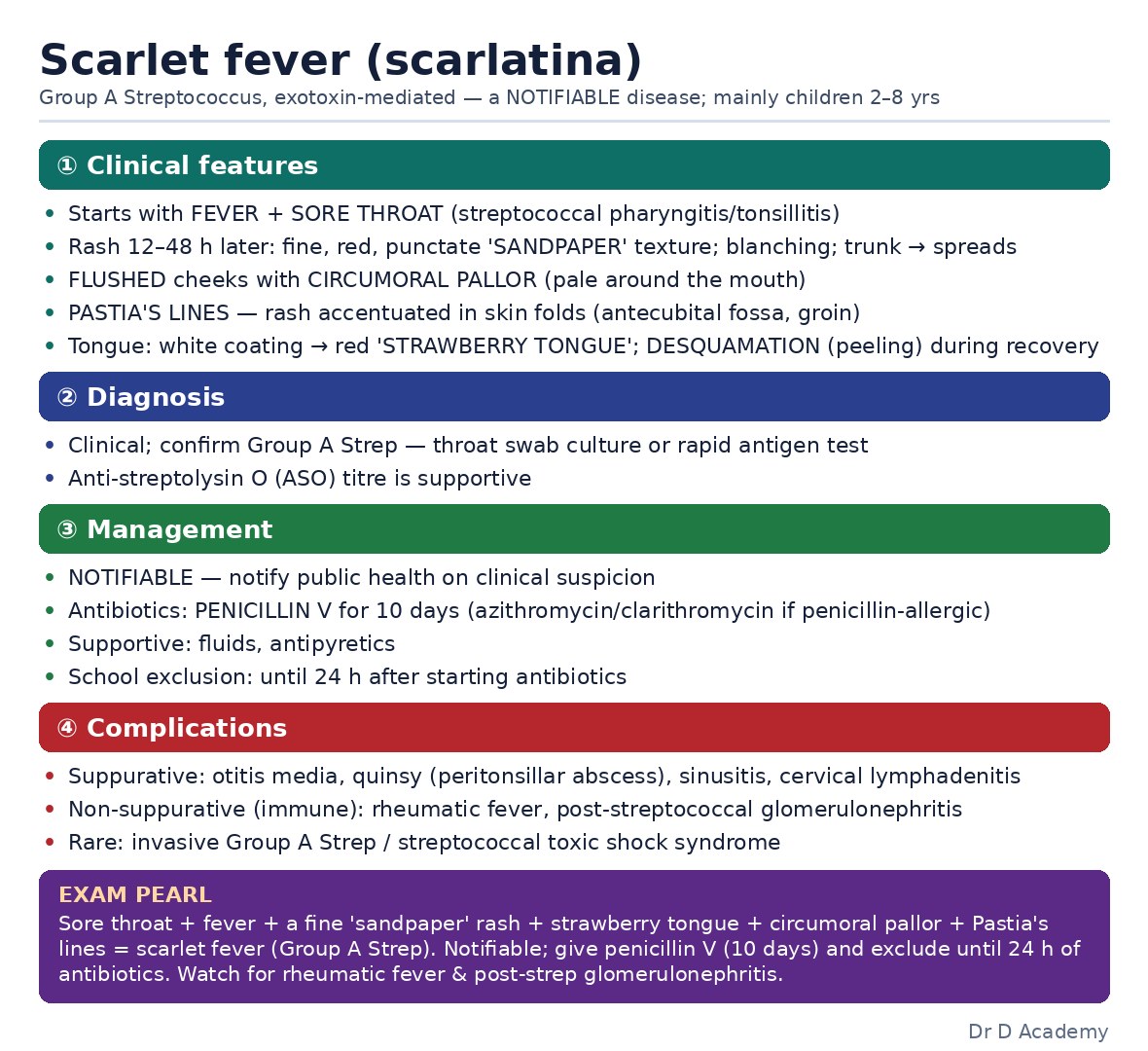
A toxin-mediated illness from group A streptococcus, typically with a sore throat, fever and a characteristic sandpaper-textured, blanching erythematous rash with flushed cheeks and perioral pallor; the tongue becomes 'strawberry'. It is generally self-limiting but matters because PROMPT antibiotics shorten illness, reduce spread and lower the (small) risk of complications including rheumatic fever. Watch for invasive streptococcal disease.
Figures & algorithms
Red flags
- High fever, severe pain, rapidly spreading rash or shock (invasive group A streptococcal disease)
- Features of Kawasaki disease or toxic shock
- Dehydration or inability to swallow
- Signs of a suppurative complication (e.g. peritonsillar/retropharyngeal abscess)
Assessment
Differential diagnosis
- Other causes of fever + rash: measles, Kawasaki disease, staphylococcal scalded skin/toxic shock, drug eruption, viral exanthem
- Streptococcal vs viral pharyngitis
Investigations
- Largely a clinical diagnosis (sandpaper rash, strawberry tongue, perioral pallor, pharyngitis)
- Throat swab (culture/rapid antigen) supports the diagnosis where used
- No routine bloods unless the child is unwell or complications suspected
Management
- Recognise the clinical picture and notify — scarlet fever is a notifiable disease.
- Start oral antibiotics: PENICILLIN V (first-line) for a full course; amoxicillin is an alternative; a macrolide if penicillin-allergic.
- Supportive care: antipyretics/analgesia, fluids and rest.
- Advise exclusion from school/nursery until a defined period after starting antibiotics (per local policy) and good hygiene to limit spread.
- Safety-net for complications and for signs of INVASIVE group A strep disease (high fever, severe pain, rapidly spreading rash, shock).
- Review if not improving within a couple of days of antibiotics.
Drugs & doses
Phenoxymethylpenicillin (penicillin V) for a full course — first-line (confirm against local policy)
Amoxicillin as an alternative (confirm against local policy)
Macrolide (e.g. azithromycin/clarithromycin) if penicillin-allergic (confirm against local policy)
Antipyretic/analgesic (paracetamol +/- ibuprofen) for symptom relief
Disposition
Most children are managed at home with antibiotics and safety-netting; admit the systemically unwell or those with complications/invasive disease.
Complications & pitfalls
- Invasive group A strep disease / toxic shock
- Suppurative complications (otitis media, abscess)
- Acute rheumatic fever and post-streptococcal glomerulonephritis (uncommon)
Exam pearls
- Sandpaper rash + strawberry tongue + perioral pallor is the classic triad.
- Antibiotics shorten illness, reduce spread and lower complication risk — and it is notifiable.
- A rapidly deteriorating child needs assessment for invasive streptococcal disease.
Educational — confirm all doses against local policy.
Disclaimer: Educational decision support for qualified clinicians and students — not a substitute for clinical judgement, local protocols or a full drug reference. Confirm every dose and contraindication against your formulary before prescribing.