Neonatal hypoglycaemia
Neonatal metabolic emergency · Paediatric
Physician-written · Verified by three sets of doctors · Reviewed November 2026
Bedside summary
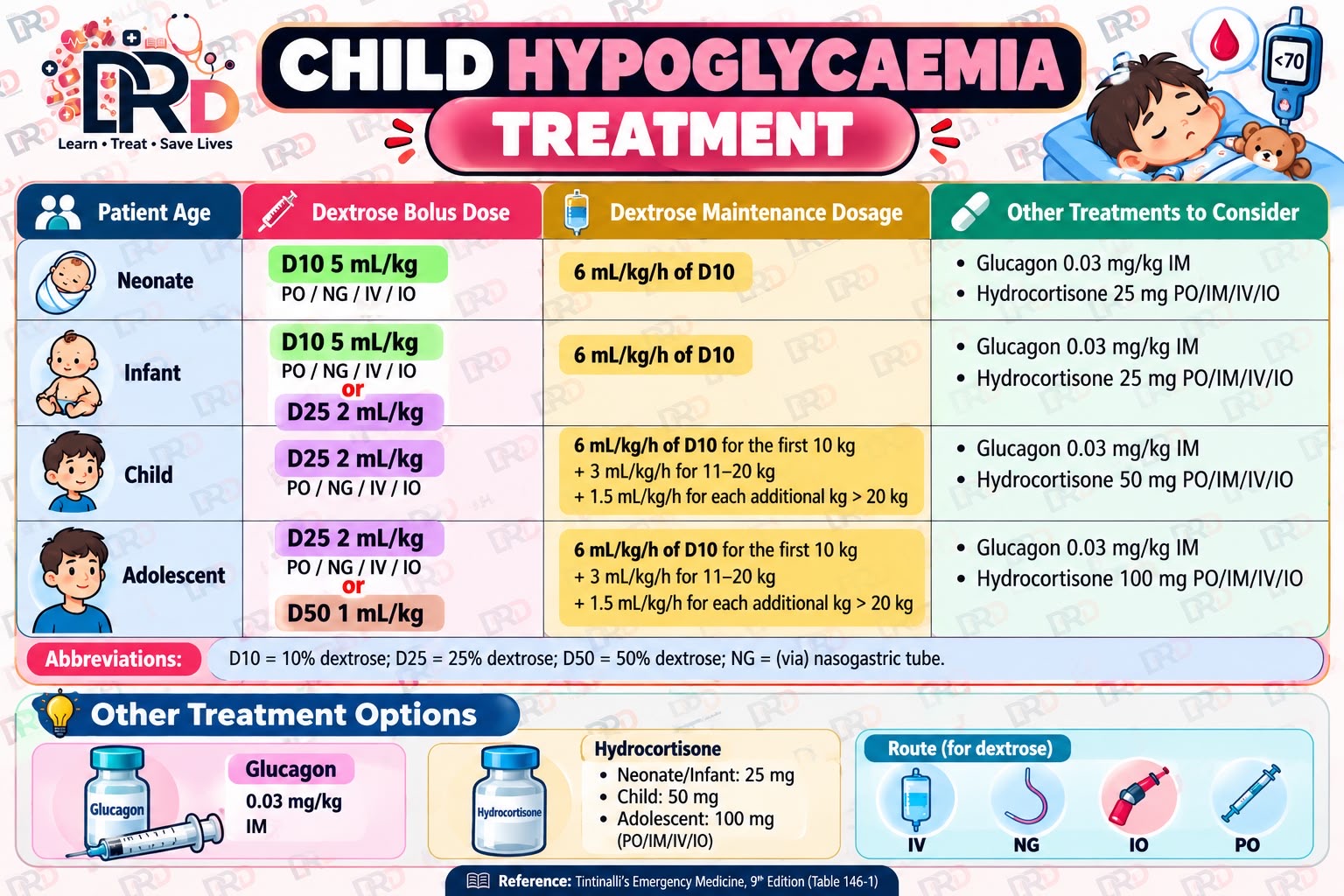
Low blood glucose in a newborn (preterm, small/large for dates, infant of a diabetic mother, sepsis) causes jitteriness, poor feeding, apnoea and seizures, and can cause brain injury. Prompt feeding or IV dextrose with a glucose infusion is key.
Figures & algorithms
Assessment
Investigations
- Confirm true blood glucose (not just a strip)
- Identify risk factors (IDM, SGA/LGA, preterm, sepsis)
- Look for cause if persistent (endocrine/metabolic)
Management
- Feed if able; recheck glucose
- IV dextrose bolus (e.g. 2 mL/kg of 10% dextrose) then a glucose infusion
- Treat the cause (sepsis screen, etc.)
- Avoid prolonged/recurrent hypoglycaemia (brain injury)
- Investigate persistent hypoglycaemia (hyperinsulinism, metabolic)
Drugs & doses
10% dextrose 2 mL/kg IV
Glucose infusion
Disposition
Neonatal/paediatrics.
Treat a hypoglycaemic newborn fast with dextrose and a maintenance infusion - prolonged neonatal hypoglycaemia injures the brain.
Disclaimer: Educational decision support for qualified clinicians and students — not a substitute for clinical judgement, local protocols or a full drug reference. Confirm every dose and contraindication against your formulary before prescribing.