Ketotic hypoglycaemia (child)
Non-diabetic hypoglycaemia · Paediatric
Physician-written · Verified by three sets of doctors · Reviewed November 2026
Bedside summary
The commonest non-diabetic hypoglycaemia in young children, occurring during fasting/intercurrent illness, with ketones present. Correct the glucose, and take a 'hypoglycaemia screen' at the time to exclude metabolic/endocrine causes.
Figures & algorithms
Assessment
Investigations
- Confirm true hypoglycaemia; take the hypoglycaemia screen BEFORE treating (if possible): ketones, insulin, cortisol, growth hormone, gas, lactate
- Identify the fasting/illness trigger
- Exclude metabolic/endocrine disease
Management
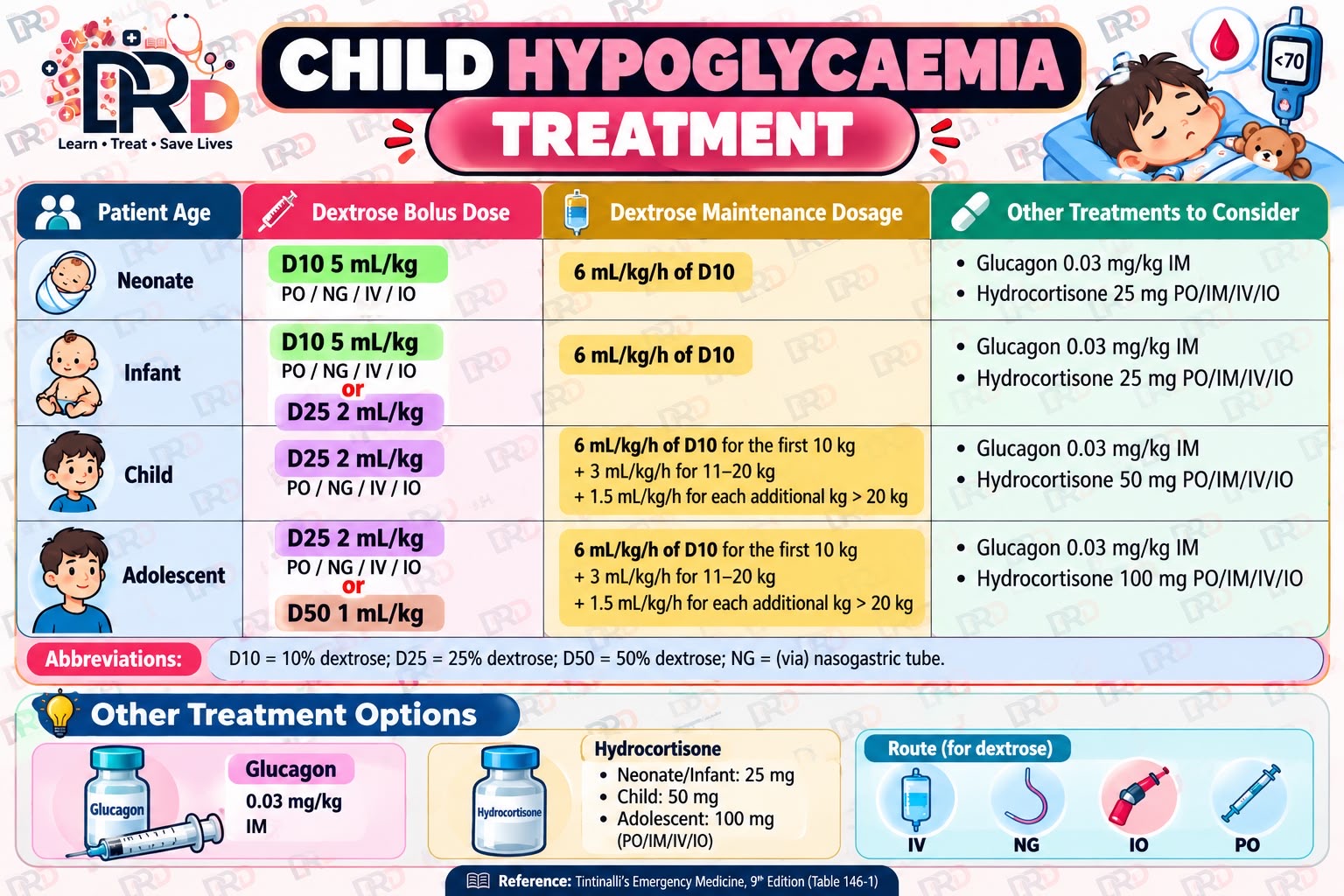
- Treat hypoglycaemia: oral glucose if able, or IV dextrose (2 mL/kg 10%) then infusion
- Take diagnostic samples at the time of hypoglycaemia where feasible
- Recheck glucose; provide carbohydrate; advise an emergency regimen for illness
- Investigate recurrent/atypical cases for metabolic/endocrine causes
- Paediatric follow-up
Drugs & doses
Dextrose 2 mL/kg 10% IV
Glucose infusion
Hypoglycaemia screen
Disposition
Discharge with sick-day plan; investigate if recurrent.
Take the hypoglycaemia screen at the time of the low glucose if you can - it is the only chance to catch a metabolic or endocrine cause.
Disclaimer: Educational decision support for qualified clinicians and students — not a substitute for clinical judgement, local protocols or a full drug reference. Confirm every dose and contraindication against your formulary before prescribing.