Infantile hypertrophic pyloric stenosis
Projectile vomiting, 2-8 weeks · Paediatric
Physician-written · Verified by three sets of doctors · Reviewed November 2026
Bedside summary
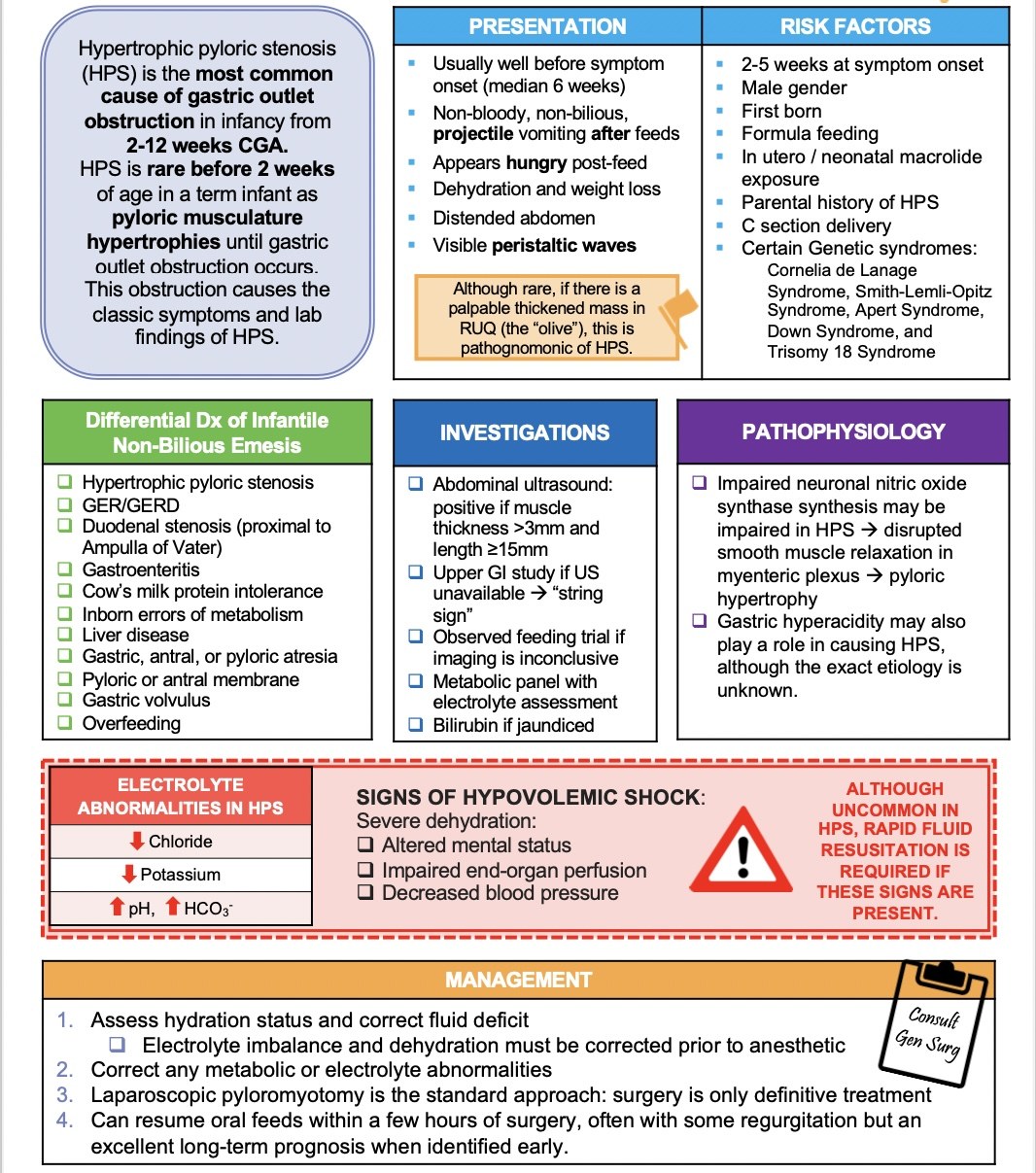
Hypertrophy of the pyloric muscle causes progressive gastric outlet obstruction, typically in infants 2-8 weeks old, presenting with non-bilious projectile vomiting, a palpable olive and hungry re-feeding. The emergency is the hypochloraemic, hypokalaemic metabolic alkalosis — correct it before surgery, which is never done as an emergency.
Figures & algorithms
Red flags
- Severe dehydration, lethargy or shock
- Profound hypokalaemia or alkalosis (arrhythmia/apnoea risk)
- Bilious vomiting (reconsider malrotation)
- Post-op apnoea (alkalosis-related)
- Any attempt to operate before electrolytes corrected
Assessment
Differential diagnosis
- Gastro-oesophageal reflux / overfeeding
- Cows' milk protein allergy
- Sepsis/UTI
- Raised intracranial pressure
- Congenital adrenal hyperplasia (if electrolytes atypical)
- Malrotation (if any bile present)
Investigations
- Capillary/venous blood gas and U&E (hypochloraemic hypokalaemic metabolic alkalosis, paradoxical aciduria)
- Pyloric ultrasound: muscle thickness >=3 mm, channel length >=15-17 mm (diagnostic)
- Glucose and FBC
- Weight and hydration assessment
- Urine dip (rule out concurrent UTI)
Management
- Stop feeds and pass a nasogastric tube on free drainage to decompress the stomach
- Secure IV access and send gas, U&E, glucose
- Resuscitate hypovolaemia with 10-20 mL/kg 0.9% saline bolus if shocked
- Start rehydration/maintenance with 0.45-0.9% saline + 5% dextrose, adding potassium chloride once urine output confirmed
- Replace NG losses volume-for-volume with 0.9% saline + KCl
- Arrange confirmatory pyloric ultrasound
- Correct the alkalosis and electrolytes fully — target chloride >100 mmol/L, bicarbonate <28-30 mmol/L, normal potassium — BEFORE theatre
- Refer to paediatric surgery for Ramstedt pyloromyotomy (laparoscopic or open) once biochemically optimised
- Recheck gas/electrolytes to confirm correction prior to anaesthesia
- Reintroduce feeds post-operatively per local protocol and monitor for apnoea
Drugs & doses
0.9% sodium chloride 10-20 mL/kg IV bolus if hypovolaemic/shocked
0.45-0.9% sodium chloride + 5% dextrose IV at ~1.5x maintenance for rehydration
Potassium chloride 10-20 mmol/500 mL added once passing urine (target normal K+)
NG loss replacement: 0.9% saline + 10 mmol KCl/500 mL, mL-for-mL
Disposition
Admit for fluid/electrolyte correction; elective pyloromyotomy once optimised. Discharge usually 24-48 h post-op when feeding established.
Complications & pitfalls
- Dehydration and electrolyte collapse
- Post-operative apnoea from residual alkalosis
- Mucosal perforation during pyloromyotomy
- Incomplete myotomy with persistent vomiting
- Aspiration pneumonia
Exam pearls
- Pyloric stenosis is a MEDICAL emergency and a SURGICAL elective — fix the biochemistry first
- Paradoxical aciduria is a late sign of severe volume/chloride depletion
- Non-bilious projectile vomiting with a palpable olive is nearly diagnostic; ultrasound confirms
- Expect some post-op vomiting; persistent bilious vomiting suggests another diagnosis
Disclaimer: Educational decision support for qualified clinicians and students — not a substitute for clinical judgement, local protocols or a full drug reference. Confirm every dose and contraindication against your formulary before prescribing.