Hand, foot and mouth disease (HFMD; coxsackievirus A16/enterovirus 71)
Viral exanthem · Paediatric
Physician-written · Verified by three sets of doctors · Reviewed November 2026
Bedside summary
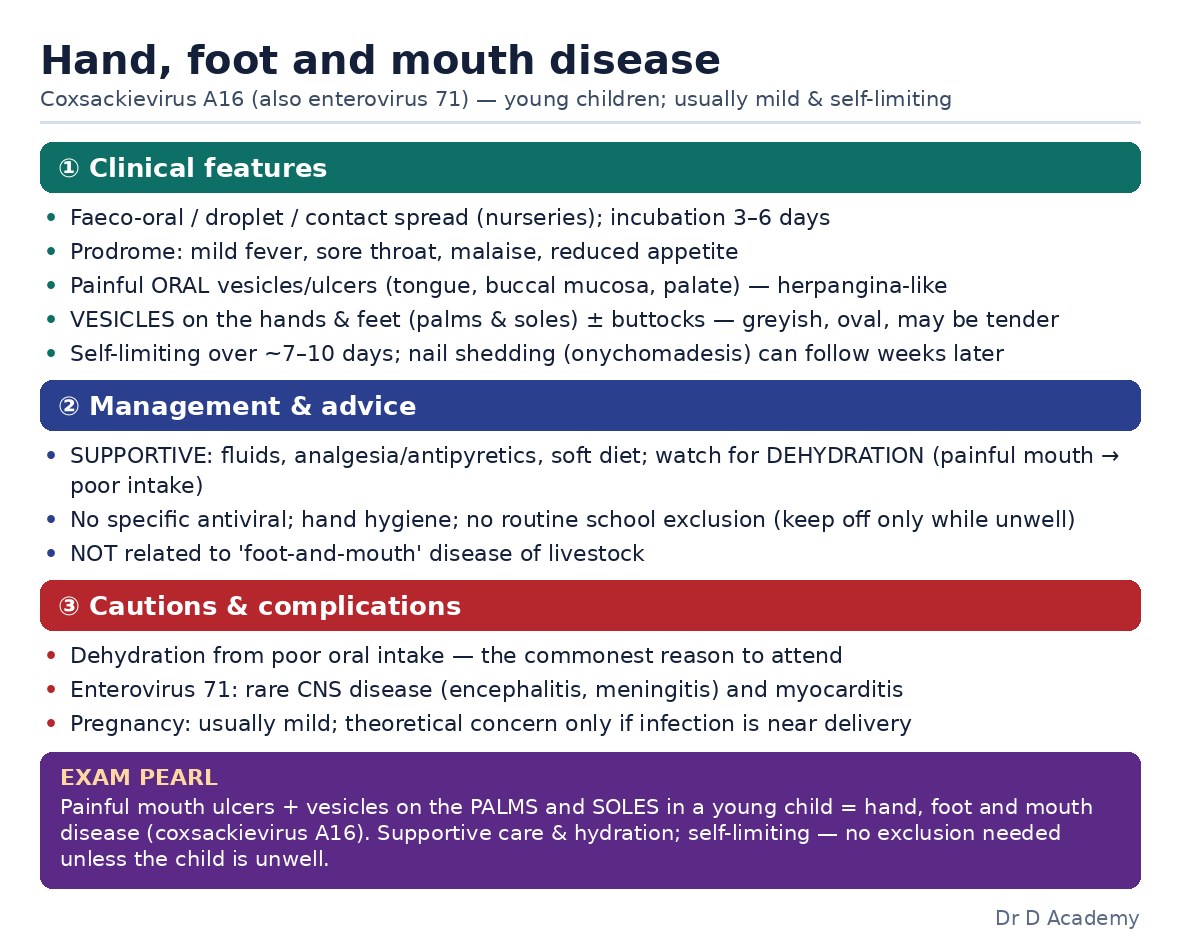
Common, usually mild enteroviral illness of young children: low-grade fever and a vesicular rash on the hands, feet (and buttocks) with painful oral ulcers/enanthem. Self-limiting over ~7-10 days. Enterovirus 71 outbreaks can rarely cause neurological/cardiorespiratory complications.
Figures & algorithms
Red flags
- Dehydration from refusal to drink (painful mouth)
- Lethargy, persistent high fever, myoclonic jerks, ataxia (EV71 neurological involvement)
- Tachycardia/tachypnoea out of proportion (rare cardiopulmonary involvement)
- Immunocompromise
Assessment
Differential diagnosis
- Herpetic gingivostomatitis (herpes simplex - more severe oral, gingival)
- Chickenpox (central rash, crops at different stages)
- Aphthous ulcers
- Herpangina (oral only)
- Erythema multiforme
- Scarlet fever
Investigations
- Clinical diagnosis - no tests needed
- Enteroviral PCR only if severe/atypical or for outbreak surveillance
- Assess hydration (oral ulcers reduce intake)
Management
- Reassure - self-limiting; good hand hygiene to limit spread
- Supportive: analgesia, maintain hydration (cold fluids, soft diet)
- Topical/oral analgesia for painful mouth ulcers
- Safety-net for dehydration and the rare neurological/cardiac complications (especially EV71)
- No exclusion from school needed once child is well enough (per local public health advice)
Drugs & doses
Paracetamol 15 mg/kg PO/PR 4-6 hourly (max 60 mg/kg/day) and/or ibuprofen 5-10 mg/kg PO 6-8 hourly (max 30 mg/kg/day) for pain/fever
Topical oral analgesic gel / soothing mouthwash for ulcers [verify local]
Encourage oral fluids; IV fluids only if dehydrated and not tolerating oral
No antivirals or antibiotics (viral, self-limiting)
Disposition
Home with reassurance and hydration/analgesia advice; admit only for dehydration or the rare neurological/cardiorespiratory complications.
Complications & pitfalls
- Dehydration
- Nail changes (onychomadesis) weeks later - benign
- Rarely (EV71): aseptic meningitis, encephalitis, acute flaccid paralysis, myocarditis/pulmonary oedema
- Secondary skin infection
Exam pearls
- Usually a clinical diagnosis needing only reassurance, analgesia and hydration advice
- The main practical risk is dehydration from painful oral ulcers - push cold fluids and analgesia
- Watch for EV71 neurological/cardiac red flags in outbreaks (more common in East/Southeast Asia)
- Nail shedding weeks later is benign and self-resolving
Disclaimer: Educational decision support for qualified clinicians and students — not a substitute for clinical judgement, local protocols or a full drug reference. Confirm every dose and contraindication against your formulary before prescribing.