Vaccine-associated anaphylaxis
Anaphylaxis · Allergy / Immunology
Physician-written · Verified by three sets of doctors · Reviewed November 2026
Bedside summary
Rare but serious IgE-mediated anaphylaxis occurring within minutes of vaccination, requiring immediate recognition and adrenaline; distinguished from common vasovagal and anxiety reactions.
Figures & algorithms
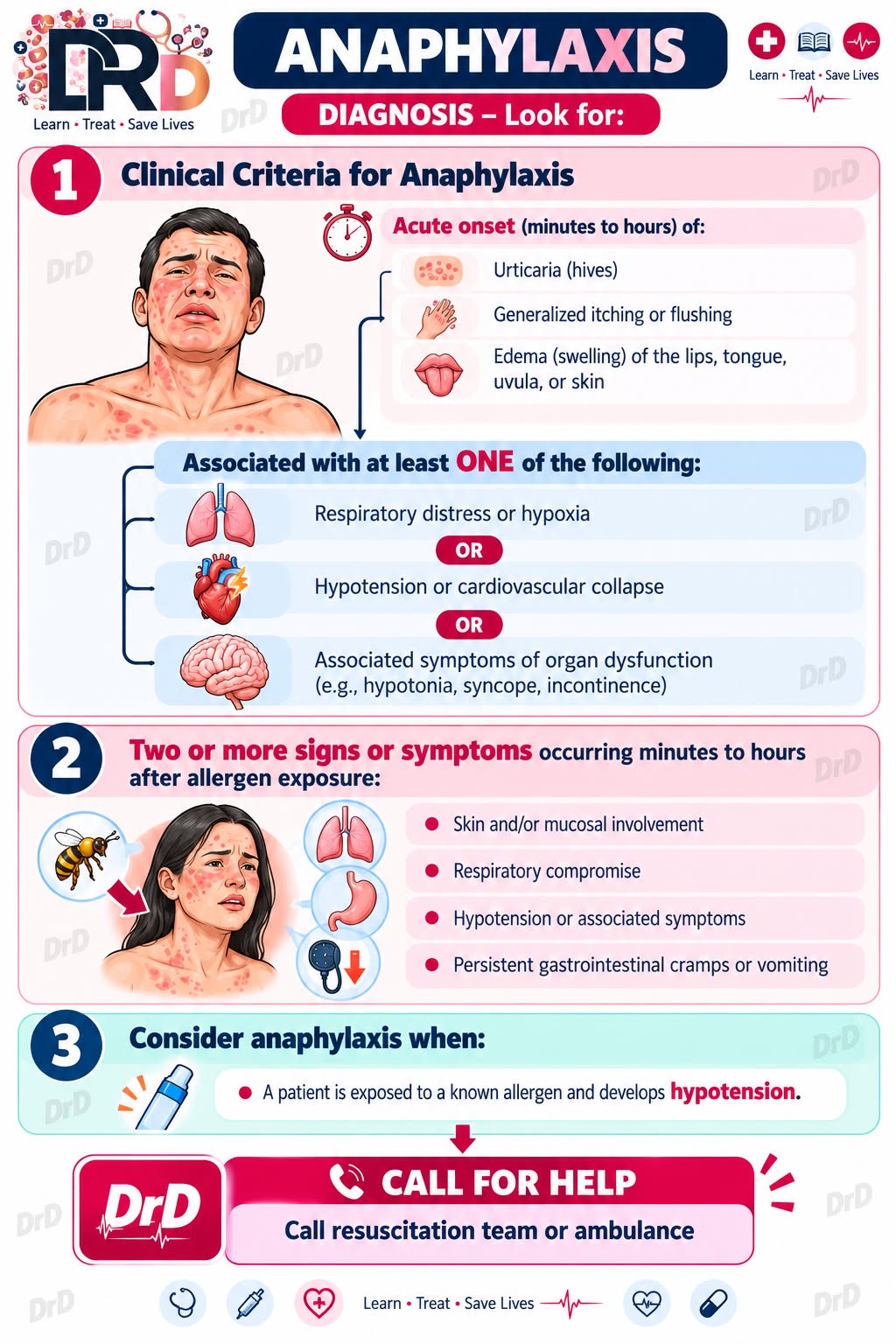
Red flags
- Airway/tongue swelling or stridor
- Bronchospasm, hypoxia
- Hypotension/collapse
- Rapid onset after the injection
Assessment
Differential diagnosis
- Vasovagal syncope (bradycardia, pallor, quick recovery)
- Anxiety/hyperventilation
- Immunisation stress-related response
- Angioedema without anaphylaxis
Investigations
- Clinical diagnosis - treat immediately
- Serial mast cell tryptase to confirm
- Monitoring (BP, SpO2, ECG)
- Later allergy referral to identify the responsible component
Management
- Recognise anaphylaxis (rapid onset airway/breathing/circulation problems, often with skin changes)
- Give IM adrenaline into the anterolateral thigh without delay
- Position appropriately and give high-flow oxygen
- Give IV fluids for hypotension
- Repeat adrenaline every 5 minutes as needed; escalate for refractory cases
- Observe for a biphasic reaction; report the event to pharmacovigilance and refer to allergy
Drugs & doses
IM adrenaline 0.5 mg (0.5 mL of 1:1000), repeated every 5 min as needed
High-flow oxygen
IV crystalloid bolus
Antihistamine/steroids as second-line for skin symptoms only
Disposition
Observe per local anaphylaxis policy; allergy referral before future doses; report to pharmacovigilance.
Complications & pitfalls
- Airway obstruction
- Cardiovascular collapse
- Biphasic reaction
Exam pearls
- Vasovagal reactions (common) have bradycardia and pallor without urticaria or bronchospasm - do not mistake for anaphylaxis
- All vaccination settings should have adrenaline and an anaphylaxis plan immediately available
- Report the reaction and refer to allergy to identify the culprit excipient (e.g. PEG, polysorbate)
Disclaimer: Educational decision support for qualified clinicians and students — not a substitute for clinical judgement, local protocols or a full drug reference. Confirm every dose and contraindication against your formulary before prescribing.