Acquired C1-inhibitor deficiency angioedema
Angioedema · Allergy / Immunology
Physician-written · Verified by three sets of doctors · Reviewed November 2026
Bedside summary
Bradykinin-mediated angioedema from acquired C1-esterase inhibitor deficiency (associated with lymphoproliferative and autoimmune disease), presenting like hereditary angioedema with non-pruritic, non-urticarial swelling that does not respond to adrenaline/antihistamines.
Figures & algorithms
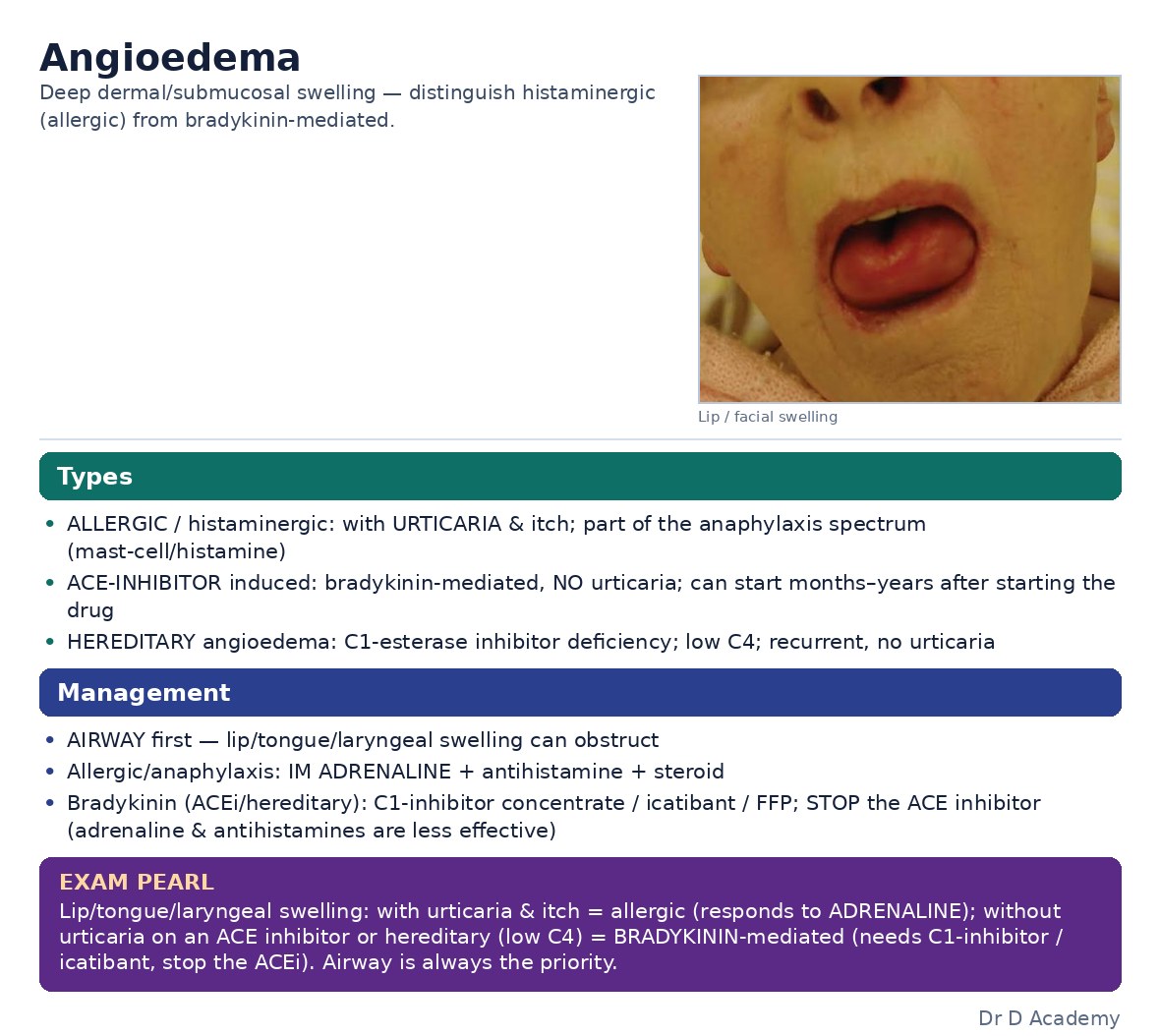
Red flags
- Laryngeal/tongue swelling with airway compromise
- Rapid progression of swelling
- Poor response to standard anaphylaxis treatment (points to bradykinin mechanism)
Assessment
Differential diagnosis
- Hereditary angioedema
- ACE-inhibitor angioedema
- Histaminergic (allergic) angioedema
- Idiopathic angioedema
Investigations
- C4 (low), C1-inhibitor level and function (low)
- C1q level (low in acquired, normal in hereditary)
- Screen for underlying lymphoproliferative/autoimmune disease
- Serial assessment of airway
Management
- Assess and protect the airway - involve anaesthetics/ENT early if any laryngeal involvement
- Recognise that adrenaline, antihistamines and steroids are largely ineffective (but give adrenaline if diagnosis uncertain or airway threatened)
- Give a specific bradykinin-pathway therapy (C1-inhibitor concentrate, or icatibant)
- Monitor and support until the attack resolves
- Investigate for and treat the underlying disorder
- Refer to immunology for long-term management
Drugs & doses
C1-inhibitor concentrate (plasma-derived) for acute attacks
Icatibant (bradykinin B2-receptor antagonist)
Fresh frozen plasma if specific agents unavailable (contains C1-INH)
Adrenaline only if the diagnosis is uncertain or airway is critically threatened
Disposition
Admit if airway involvement; immunology referral and investigation for underlying disease.
Complications & pitfalls
- Airway obstruction / asphyxiation
- Recurrent attacks
- Delayed diagnosis (treated as allergic)
Exam pearls
- A low C1q distinguishes acquired from hereditary C1-inhibitor deficiency
- Lack of response to adrenaline/antihistamines/steroids is a key clue to bradykinin-mediated angioedema
- Always search for an underlying lymphoproliferative disorder
Disclaimer: Educational decision support for qualified clinicians and students — not a substitute for clinical judgement, local protocols or a full drug reference. Confirm every dose and contraindication against your formulary before prescribing.