Stevens-Johnson syndrome / toxic epidermal necrolysis (SJS/TEN)
Bedside summary
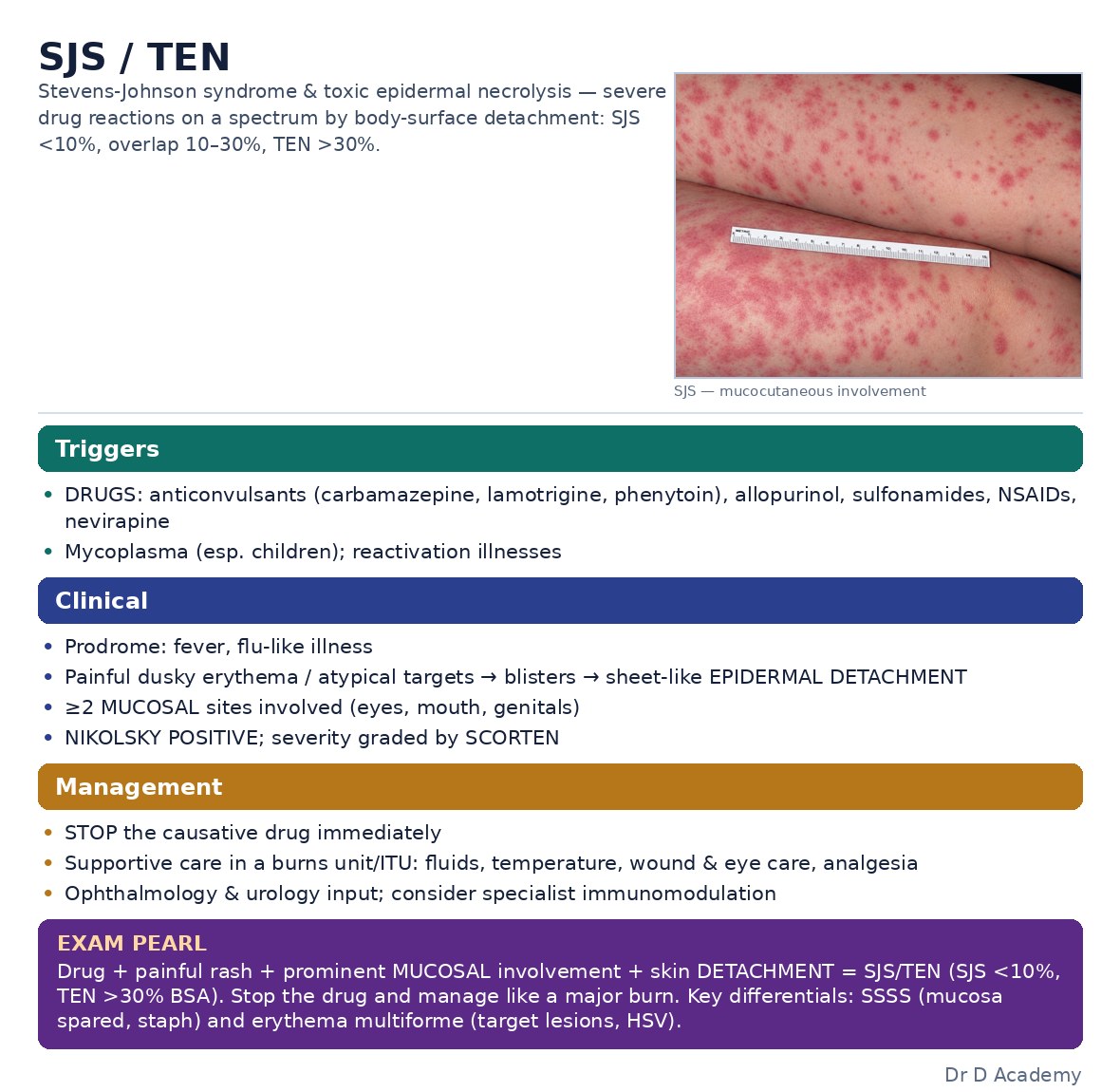
A rare, life-threatening T-cell mediated severe cutaneous adverse reaction, usually drug-triggered (allopurinol, aromatic anticonvulsants, sulfonamides, nevirapine, oxicam NSAIDs), with painful skin, mucosal erosions and epidermal detachment. SJS = <10% body surface detachment, TEN = >30% (overlap 10–30%). The priorities are IMMEDIATE withdrawal of the culprit drug, treatment as for a major burn in a specialist unit, and meticulous mucosal/ocular care.
Figures & algorithms
Red flags
- Positive Nikolsky sign / rapidly extending detachment
- Mucosal (ocular, oral, genital, airway) involvement
- Haemodynamic instability or sepsis
- High SCORTEN score
Assessment
Differential diagnosis
- Staphylococcal scalded skin syndrome (children, no mucosal involvement, intra-epidermal split)
- Erythema multiforme major, DRESS, acute generalised exanthematous pustulosis, autoimmune bullous disease
- Severe thermal/chemical burn, toxic shock syndrome
Investigations
- SCORTEN severity score (age, malignancy, heart rate, BSA detached, urea, glucose, bicarbonate) for prognosis
- FBC, U&E, glucose, bicarbonate, LFTs, cultures; identify and timeline ALL recent drugs (onset typically 1–4 weeks)
- Skin biopsy (full-thickness epidermal necrosis) to confirm; ophthalmology and urology/gynae review for mucosal sites
Management
- STOP the culprit drug (and any non-essential drugs) immediately — early withdrawal improves survival.
- Resuscitate as for a major burn: fluid resuscitation guided by losses (requirements are lower than thermal burns), temperature control, analgesia and nutritional support.
- Transfer early to a burns/ICU/dermatology specialist unit; handle skin gently with non-adherent dressings and strict asepsis (avoid prophylactic antibiotics but treat proven sepsis).
- MUCOSAL care: daily ophthalmology review and lubrication/amniotic membrane as needed, plus oral, genital and respiratory mucosal care to prevent strictures and blindness.
- Consider an immunomodulatory agent (e.g. ciclosporin, or etanercept; practice varies and evidence is limited) in discussion with specialists; corticosteroids and IVIG remain debated.
- Document the culprit drug, counsel the patient and family on lifelong avoidance (and cross-reactants), and consider HLA screening relevant to the drug class in future.
Drugs & doses
Disposition
Complications & pitfalls
- Sepsis and multi-organ failure
- Permanent ocular damage/blindness and mucosal strictures
- Fluid/electrolyte loss and thermoregulatory failure
- Death
Exam pearls
- Stop the culprit drug at once — delay worsens survival.
- Manage in a burns/ICU unit; daily ophthalmology review prevents blinding complications.
- SCORTEN estimates mortality; a painful skin eruption with mucosal erosions is SJS/TEN until proven otherwise.
Educational — confirm all doses against local policy. Antibiotic doses per BNF (current edition); confirm choice in the in-app Antibiotic Dosing tool.
Disclaimer: Educational decision support for qualified clinicians and students — not a substitute for clinical judgement, local protocols or a full drug reference. Confirm every dose and contraindication against your formulary before prescribing.