Idiopathic recurrent angioedema (histaminergic, normal C1-INH)
Recurrent angioedema without urticaria or identifiable trigger · Allergy / Immunology
Physician-written · Verified by three sets of doctors · Reviewed November 2026
Bedside summary
Recurrent angioedema with a normal C1-inhibitor and no wheals, not explained by drugs or hereditary disease, is usually mast-cell (histamine) mediated and responds to antihistamines, distinguishing it from bradykinin-mediated forms. A subset is idiopathic and benefits from up-dosed antihistamine prophylaxis.
Figures & algorithms
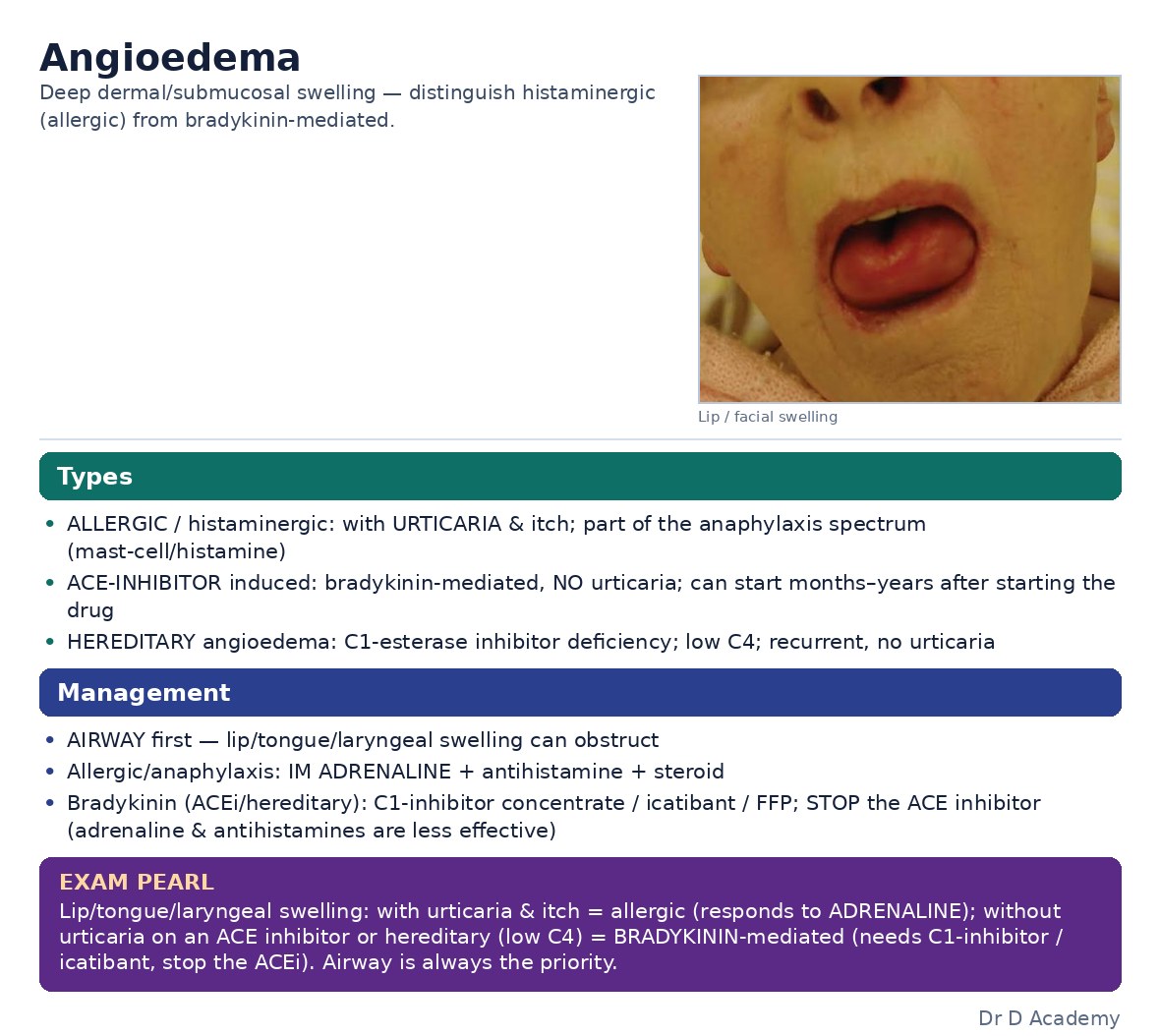
Red flags
- Tongue, uvular or laryngeal swelling with voice change or stridor
- Rapidly progressive facial swelling
- Angioedema unresponsive to antihistamines and steroids (suggests bradykinin cause)
- Low C4/C1-INH or low C1q on testing
- Weight loss or lymphadenopathy suggesting acquired deficiency
Assessment
Differential diagnosis
- Hereditary angioedema (C1-INH deficiency)
- Acquired C1-inhibitor deficiency (lymphoproliferative disease)
- ACE-inhibitor / bradykinin-mediated angioedema
- Chronic spontaneous urticaria with angioedema
- NSAID-induced angioedema
Investigations
- C4 level and C1-inhibitor level and function (normal here)
- C1q (low suggests acquired deficiency)
- FBC, tryptase, and ESR/CRP
- Medication review for ACE-inhibitors, ARBs, NSAIDs, gliptins
- Consider autoimmune/thyroid screen if associated urticaria
Management
- Assess airway: lip, tongue, floor-of-mouth and laryngeal involvement take priority
- If airway-threatening, treat as anaphylaxis with IM adrenaline and secure the airway early
- Stop any ACE-inhibitor, ARB or NSAID and document causality
- Give non-sedating H1 antihistamine as first-line for histaminergic attacks
- Add a short corticosteroid course for severe or persistent facial/airway swelling
- Send C4/C1-INH assays to exclude bradykinin-mediated disease before labelling idiopathic
- Start regular up-dosed antihistamine prophylaxis for frequent recurrences
- Refer to immunology/allergy for confirmation and omalizumab consideration if refractory
Drugs & doses
Cetirizine — 10 mg orally, up-dosed to 40 mg/day (up to 4x licensed dose) for prophylaxis
Chlorphenamine — 10 mg IV/IM for acute moderate attacks
Prednisolone — 40 mg orally once daily for 3-5 days for severe attacks
Adrenaline IM — 500 mcg (0.5 mL 1:1000) if airway compromise/anaphylaxis
Omalizumab — 300 mg SC every 4 weeks for refractory histaminergic angioedema (specialist)
Disposition
Discharge once airway is safe with an up-dosed antihistamine plan and allergy/immunology clinic referral; admit any airway-threatening attack.
Complications & pitfalls
- Airway obstruction and asphyxia
- Misdiagnosis delaying bradykinin-specific therapy
- Recurrent presentations and reduced quality of life
- Adverse effects of repeated corticosteroid courses
- Anxiety and avoidance behaviour
Exam pearls
- Angioedema that responds to antihistamines/steroids is histaminergic; failure to respond points to bradykinin-mediated disease needing icatibant or C1-INH
- Always exclude ACE-inhibitors even years into therapy — onset can be delayed
- Normal C4 between attacks makes hereditary angioedema unlikely but a low C4 warrants full complement work-up
- Idiopathic is a diagnosis of exclusion after complement testing
Disclaimer: Educational decision support for qualified clinicians and students — not a substitute for clinical judgement, local protocols or a full drug reference. Confirm every dose and contraindication against your formulary before prescribing.