Hymenoptera venom anaphylaxis
Anaphylaxis · Allergy / Immunology
Physician-written · Verified by three sets of doctors · Reviewed November 2026
Bedside summary
Systemic IgE-mediated anaphylaxis after a bee, wasp or hornet sting, with rapid airway, breathing and/or circulatory compromise and often urticaria/angioedema.
Figures & algorithms
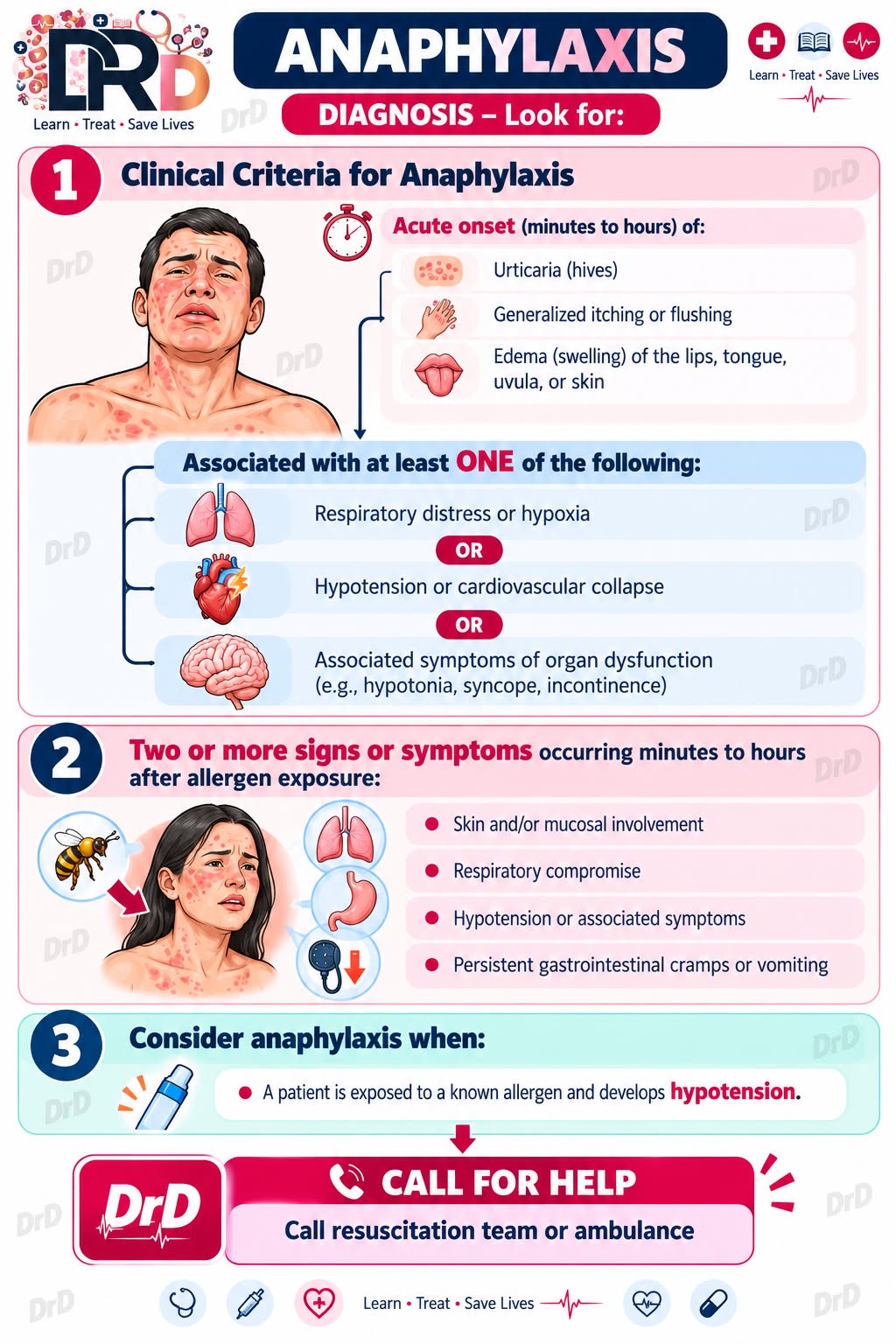
Red flags
- Airway swelling / stridor
- Bronchospasm and hypoxia
- Hypotension / collapse
- Poor response to initial adrenaline
Assessment
Differential diagnosis
- Vasovagal reaction to the sting
- Large local reaction (no systemic features)
- Panic attack
- Other cause of anaphylaxis
- Scombroid poisoning
Investigations
- Clinical diagnosis - do not delay treatment for tests
- Serial mast cell tryptase (acute and baseline) to confirm
- ECG / monitoring
- Later: specific IgE / venom skin testing and referral
Management
- Remove the stinger if visible (scrape, do not squeeze) and remove any further exposure
- Give IM adrenaline into the anterolateral thigh immediately
- Position appropriately (supine with legs raised, or sitting up if breathing difficulty) and give high-flow oxygen
- Give IV fluid bolus for hypotension
- Repeat IM adrenaline every 5 minutes if no improvement; start an adrenaline infusion for refractory cases
- Observe for a biphasic reaction and refer to allergy/immunology for venom immunotherapy
Drugs & doses
IM adrenaline 0.5 mg (0.5 mL of 1:1000), repeated every 5 min as needed
High-flow oxygen
IV crystalloid bolus for hypotension
Non-sedating antihistamine and steroids are second-line/for skin symptoms (do not delay adrenaline)
Disposition
Observe for biphasic reaction per local policy; discharge with auto-injectors and allergy referral.
Complications & pitfalls
- Airway obstruction
- Cardiovascular collapse
- Biphasic reaction
- Fatal anaphylaxis
Exam pearls
- Venom immunotherapy is highly effective and reduces future systemic sting reactions - refer all systemic reactors
- Provide adrenaline auto-injectors and an action plan on discharge
- A raised then falling tryptase supports the diagnosis retrospectively
Disclaimer: Educational decision support for qualified clinicians and students — not a substitute for clinical judgement, local protocols or a full drug reference. Confirm every dose and contraindication against your formulary before prescribing.