Food anaphylaxis — adrenaline auto-injector prescribing & discharge planning
Safe discharge and self-management after food anaphylaxis · Allergy / Immunology
Physician-written · Verified by three sets of doctors · Reviewed November 2026
Bedside summary
After treating food-triggered anaphylaxis, structured discharge planning reduces recurrence and death: every patient needs two adrenaline auto-injectors, training, a personalised emergency action plan and specialist referral. Device choice, dosing by weight, and addressing co-factors such as asthma are central.
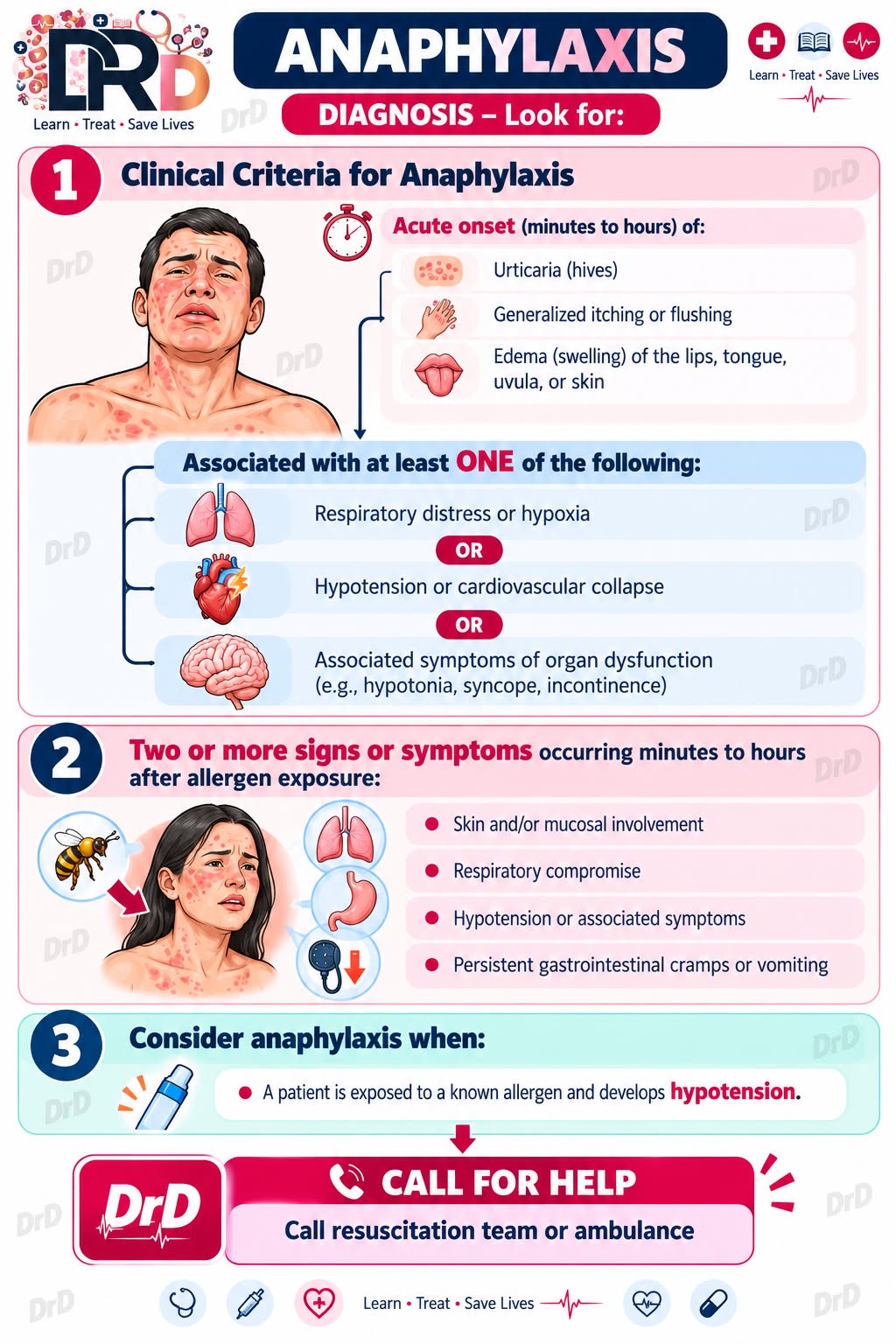
Figures & algorithms
Red flags
- Coexisting poorly controlled asthma
- Reaction to trace amounts of allergen
- Previous severe or biphasic reactions
- Teenagers/young adults (higher risk group for fatal food anaphylaxis)
- Ongoing symptoms at the end of the observation period
Assessment
Differential diagnosis
- IgE-mediated food anaphylaxis
- Oral allergy syndrome (usually oral symptoms only)
- Scombroid (histamine) poisoning
- Food-dependent exercise-induced anaphylaxis
- Non-allergic food intolerance
Investigations
- Serial mast cell tryptase to confirm the index reaction
- Document the food, quantity, timing and co-factors
- Arrange specific IgE / skin testing at allergy clinic (not acutely)
- Assess and optimise coexisting asthma (a key risk factor for fatal anaphylaxis)
- Weight to determine correct auto-injector dose
Management
- Observe after the acute reaction for the guideline-recommended period before discharge
- Prescribe two adrenaline auto-injectors and demonstrate correct technique with a trainer device
- Provide a written, personalised anaphylaxis emergency action plan
- Choose the device dose by weight and teach carrying two devices at all times
- Educate on allergen avoidance, label reading and informing schools/workplaces
- Optimise asthma control as it increases the risk of fatal anaphylaxis
- Advise calling emergency services and lying flat after any auto-injector use
- Refer to a specialist allergy service for all patients
Drugs & doses
Adrenaline auto-injector — 300 mcg IM for patients 30 kg and over; 150 mcg IM for 15-30 kg; two devices supplied
Adrenaline IM — 500 mcg (0.5 mL 1:1000) for any recurrence during observation
Cetirizine — 10 mg orally for residual urticaria
Prednisolone — 40 mg orally once daily up to 3 days if ongoing cutaneous/asthma symptoms
Disposition
Discharge after the appropriate observation period with two auto-injectors, a written action plan, asthma optimisation and mandatory allergy referral.
Complications & pitfalls
- Recurrent anaphylaxis without an action plan
- Fatal reaction, particularly with concurrent asthma
- Incorrect auto-injector technique or device left at home
- Accidental re-exposure from poor labelling awareness
- Biphasic reaction after discharge
Exam pearls
- Two auto-injectors should be prescribed and carried at all times — one may be insufficient
- Uncontrolled asthma is the strongest risk factor for fatal food anaphylaxis — treat it
- Teenagers and young adults carry the highest fatality risk and need targeted education
- A written action plan and specialist referral are part of every discharge
Disclaimer: Educational decision support for qualified clinicians and students — not a substitute for clinical judgement, local protocols or a full drug reference. Confirm every dose and contraindication against your formulary before prescribing.