Exercise-induced anaphylaxis (non-food-dependent)
Anaphylaxis provoked by exertion without a food co-factor · Allergy / Immunology
Physician-written · Verified by three sets of doctors · Reviewed November 2026
Bedside summary
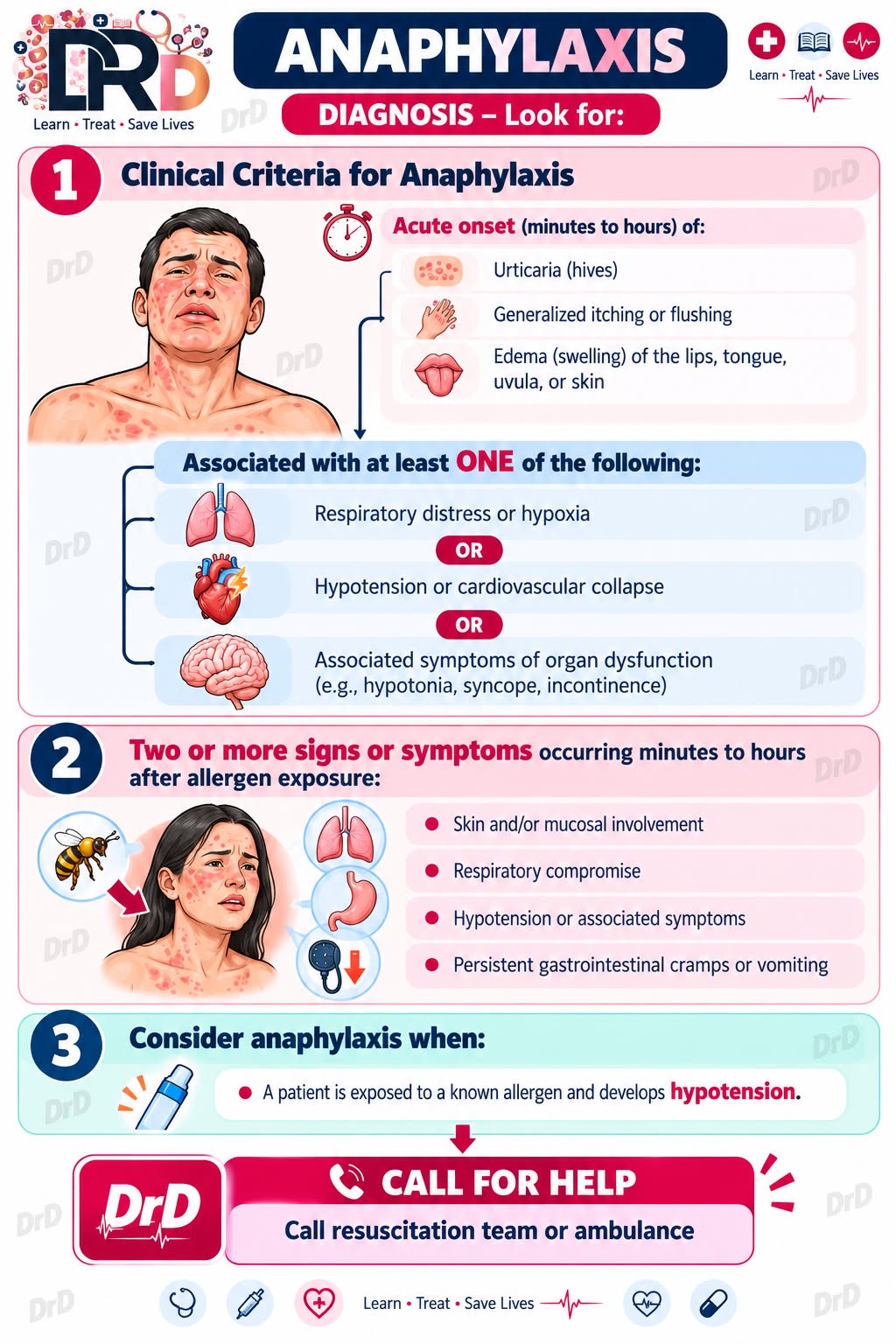
Exercise-induced anaphylaxis is a mast-cell-mediated reaction triggered by physical exertion, with pruritus, urticaria, angioedema, wheeze and hypotension, independent of any specific food. It is distinguished from food-dependent exercise-induced anaphylaxis, in which a food eaten before exercise is required.
Figures & algorithms
Red flags
- Hypotension or collapse during/after exercise
- Airway swelling or stridor
- Reactions occurring at progressively lower exertion thresholds
- Co-factor pattern suggesting food dependence
- Persistently raised baseline tryptase
Assessment
Differential diagnosis
- Food-dependent exercise-induced anaphylaxis
- Cholinergic urticaria (small weals, usually without hypotension)
- Exercise-induced bronchospasm/asthma
- Vasovagal syncope with exertion
- Cardiac arrhythmia / exertional cardiac cause
Investigations
- Detailed history of exertion timing, intensity and any food, drug or environmental co-factors
- Serial mast cell tryptase after an acute event
- Baseline tryptase (exclude mastocytosis)
- Specific IgE / skin testing to exclude food-dependent form (e.g. omega-5 gliadin for wheat)
- Exercise challenge (supervised, specialist) with/without food if diagnosis uncertain
Management
- Manage the acute episode as anaphylaxis with IM adrenaline, oxygen and fluids
- Stop exertion immediately and lie the patient flat with legs raised
- Take serial tryptase to confirm mast-cell activation
- Exclude a food co-factor and NSAID/alcohol co-triggers through history and testing
- Advise exercising with a companion and stopping at the first prodromal symptoms (flushing, itch)
- Avoid exercise after NSAIDs/alcohol and in extremes of temperature
- Prescribe two adrenaline auto-injectors with an action plan
- Refer to allergy for challenge testing and co-factor identification
Drugs & doses
Adrenaline IM — 500 mcg (0.5 mL 1:1000), repeat every 5 min
Adrenaline auto-injector — 300 mcg IM, two devices supplied
Cetirizine — 10 mg orally daily as background antihistamine (does not prevent anaphylaxis)
Hydrocortisone — 200 mg IV for severe/protracted reactions
Salbutamol — 5 mg nebulised for bronchospasm
Disposition
Observe for the standard post-anaphylaxis period, then discharge with auto-injectors, an action plan and allergy referral for challenge testing.
Complications & pitfalls
- Anaphylactic shock and cardiac arrest during exertion
- Injury from collapse while exercising
- Activity avoidance and deconditioning
- Biphasic reactions
- Misdiagnosis as asthma delaying adrenaline
Exam pearls
- Prodromal flushing and pruritus give a warning window to stop exercising
- Always look for a food, NSAID or alcohol co-factor before labelling it non-food-dependent
- Antihistamines do not reliably prevent attacks — adrenaline is the rescue
- Advise never exercising alone and stopping at first symptoms
Disclaimer: Educational decision support for qualified clinicians and students — not a substitute for clinical judgement, local protocols or a full drug reference. Confirm every dose and contraindication against your formulary before prescribing.