Exercise-induced anaphylaxis
Bedside summary
Anaphylaxis triggered by physical exertion. In many patients a COFACTOR is required — most commonly a food eaten within ~4–6 h before exercise (food-dependent exercise-induced anaphylaxis; wheat / omega-5-gliadin is classic), and also NSAIDs or alcohol. Symptoms (flushing, urticaria, then airway/cardiovascular compromise) begin during or shortly after exertion and may not occur if the cofactor is absent.
Figures & algorithms
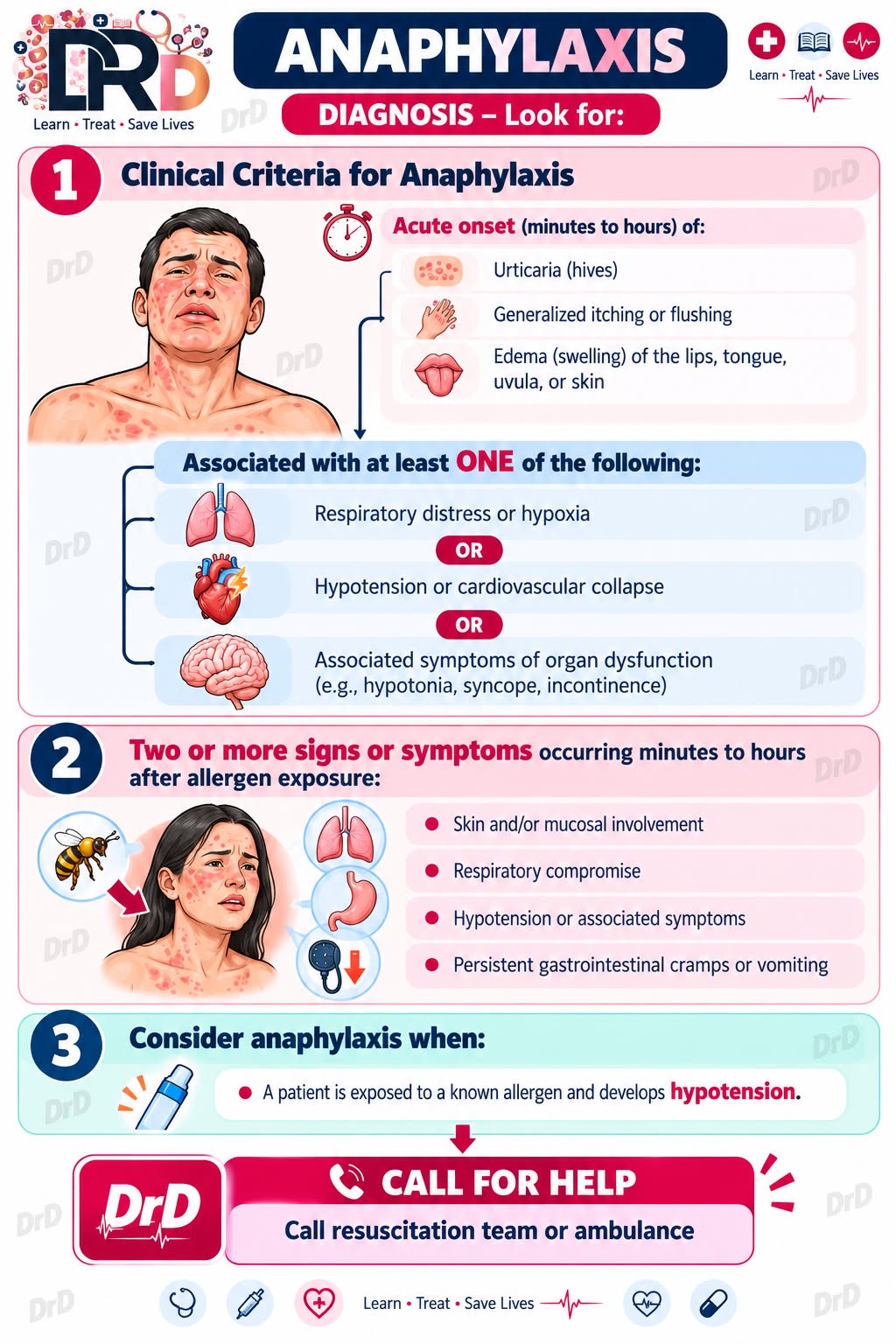
Red flags
- Airway/voice change, stridor, bronchospasm or hypotension
- Rapid progression after continuing to exercise through symptoms
- Recurrent episodes despite cofactor avoidance
Assessment
Differential diagnosis
- Other anaphylaxis (food, drug, venom)
- Exercise-induced bronchoconstriction (wheeze/cough without urticaria/hypotension)
- Cardiac cause of exertional collapse; vasovagal syncope
- Cholinergic urticaria (small weals with heat/exercise, usually without anaphylaxis)
Investigations
- History linking symptoms to exercise and to any food/NSAID/alcohol cofactor in the preceding hours
- Allergy referral for component testing (e.g. omega-5-gliadin for wheat-dependent EIA)
- Acute tryptase can support the diagnosis of an anaphylactic episode
Management
- ACUTE episode = anaphylaxis: STOP exercising immediately at the first symptom and give IM adrenaline; full anaphylaxis management (see Anaphylaxis).
- Prevention — identify and AVOID the culprit food before exercise; where food is the cofactor, avoid eating in the 4–6 h before exercising.
- Avoid other cofactors around exercise: NSAIDs and alcohol.
- Exercise with a partner who knows to give adrenaline, and stop at the earliest prodrome (itch, flush, fatigue).
- Carry two adrenaline autoinjectors (or a nasal device) at all times and have a written action plan.
- Refer to allergy/immunology to confirm cofactors and tailor advice.
Drugs & doses
Disposition
Complications & pitfalls
- Severe/fatal anaphylaxis if exercise is continued through the prodrome
- Recurrence with combined cofactors
Exam pearls
- Ask about food, NSAIDs and alcohol in the hours before exercise — removing the cofactor often prevents recurrence.
- Stopping exercise at the first symptom frequently aborts the reaction.
- Every patient needs two autoinjectors and an action plan.
Adapted from UpToDate "Exercise-induced anaphylaxis: Management and prognosis" (©2026). Educational — confirm doses locally.
Disclaimer: Educational decision support for qualified clinicians and students — not a substitute for clinical judgement, local protocols or a full drug reference. Confirm every dose and contraindication against your formulary before prescribing.