DRESS syndrome (drug reaction with eosinophilia & systemic symptoms)
Bedside summary
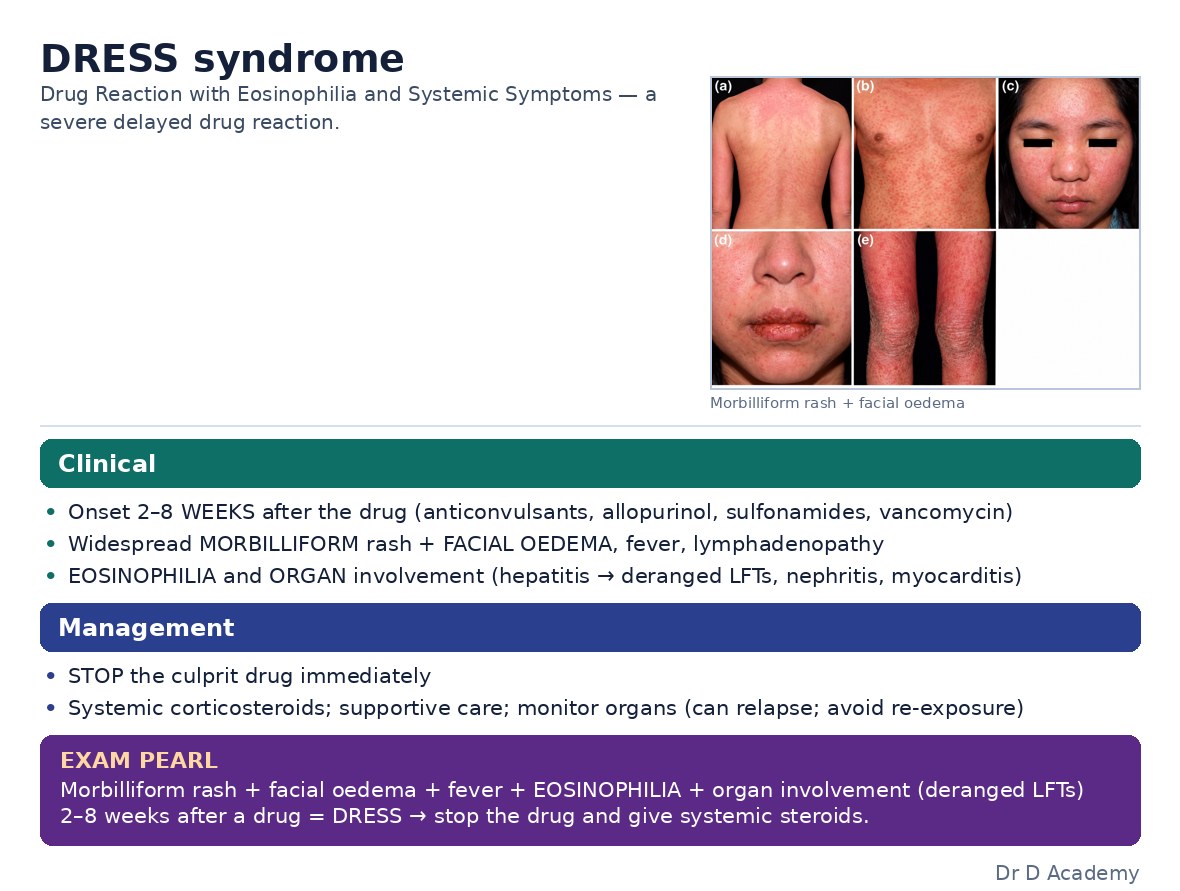
A severe, potentially fatal delayed drug hypersensitivity (a severe cutaneous adverse reaction) typically beginning 2–8 weeks after starting the culprit drug. It combines fever, an extensive rash, facial oedema, lymphadenopathy, eosinophilia and INTERNAL ORGAN involvement (most often hepatitis). The priorities are to STOP the culprit drug immediately, provide supportive/organ-directed care, and start systemic corticosteroids for significant organ involvement — with awareness of late complications such as autoimmune thyroiditis.
Figures & algorithms
Red flags
- Transaminitis/hepatitis (the leading cause of death)
- Myocarditis (chest pain, raised troponin, heart failure)
- Extensive skin involvement, mucosal involvement or blistering
- Renal impairment, respiratory failure or haemophagocytosis
Assessment
Differential diagnosis
- Other severe cutaneous adverse reactions: SJS/TEN, AGEP
- Acute viral infection (e.g. EBV, HHV-6, acute HIV), Kawasaki disease
- Sepsis, Still disease, acute leukaemia/lymphoma, hypereosinophilic syndrome
Investigations
- Identify the likely culprit by timing (common: anticonvulsants, allopurinol, sulfonamides, vancomycin, minocycline, dapsone)
- FBC with differential (eosinophilia, atypical lymphocytes), LFTs, renal function, CK, TFTs
- Assess organ involvement: liver, kidney, lung, heart (troponin/ECG if myocarditis suspected); consider RegiSCAR scoring and HHV-6 reactivation
Management
- STOP the suspected culprit drug immediately and avoid structurally related drugs.
- Assess for and quantify organ involvement (liver, kidney, lung, heart, haematological).
- Give supportive care: fluids, temperature control, skin care, and treat specific organ dysfunction.
- Start systemic corticosteroids for significant organ involvement; taper slowly over weeks to avoid relapse.
- For severe/refractory or life-threatening disease, involve specialists (dermatology, immunology) — options include ciclosporin, IVIG or other agents per local guidance.
- Document the culprit drug as a serious allergy, counsel the patient, and arrange follow-up for late autoimmune sequelae (e.g. thyroiditis, diabetes).
Drugs & doses
Disposition
Complications & pitfalls
- Fulminant hepatitis and liver failure
- Myocarditis
- Acute kidney injury, pneumonitis
- Relapse on steroid taper; late autoimmune disease (thyroiditis, type 1 diabetes)
Exam pearls
- DRESS is delayed — think of it 2–8 weeks after a new drug, not in the first days.
- Hepatitis and myocarditis drive mortality — screen organs even when the skin looks benign.
- Watch for late autoimmune sequelae (especially thyroiditis) for months after recovery.
Educational — confirm all doses against local policy.
Disclaimer: Educational decision support for qualified clinicians and students — not a substitute for clinical judgement, local protocols or a full drug reference. Confirm every dose and contraindication against your formulary before prescribing.