Chlorhexidine anaphylaxis
Anaphylaxis · Allergy / Immunology
Physician-written · Verified by three sets of doctors · Reviewed November 2026
Bedside summary
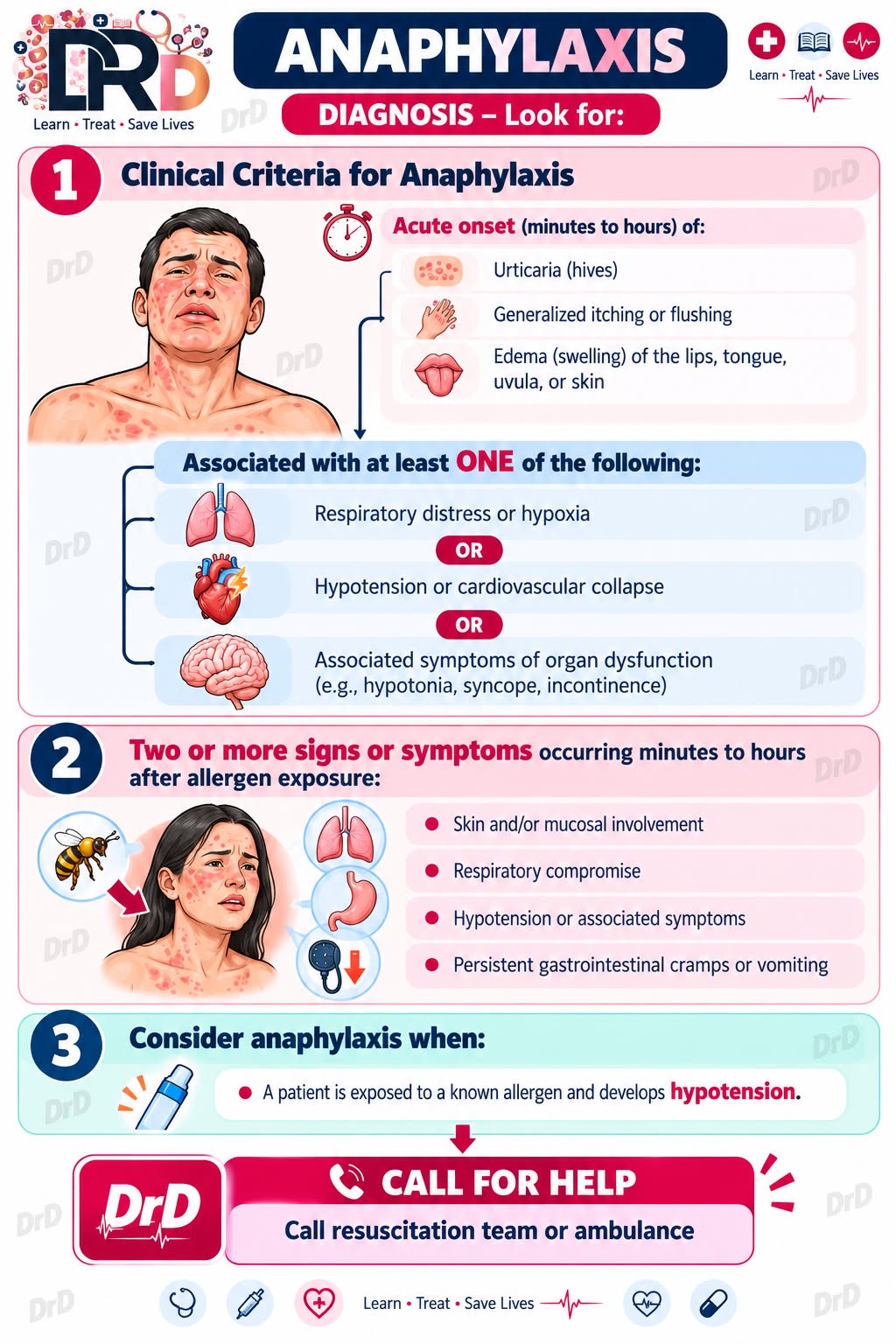
IgE-mediated anaphylaxis to chlorhexidine, an under-recognised cause of perioperative and procedural anaphylaxis (impregnated central lines, skin prep, lubricants, mouthwash); onset may be delayed relative to mucosal/deeper exposure.
Figures & algorithms
Red flags
- Cardiovascular collapse during a procedure using chlorhexidine products
- Refractory hypotension
- Airway/bronchospasm
- Recurrent unexplained perioperative anaphylaxis
Assessment
Differential diagnosis
- Anaphylaxis to other perioperative agents (neuromuscular blockers, antibiotics, latex)
- Vasovagal reaction
- Other cause of intraoperative collapse (bleeding, embolism)
Investigations
- Clinical recognition - treat immediately
- Serial mast cell tryptase (acute and baseline)
- Careful documentation of all exposures/timing
- Later specific IgE to chlorhexidine and skin testing
Management
- Stop/remove the chlorhexidine source (e.g. impregnated line, prep, lubricant)
- Give IM (or IV, if anaesthetised and monitored) adrenaline immediately
- Give high-flow oxygen and IV fluid resuscitation
- Repeat adrenaline and escalate to an infusion for refractory shock
- Continue standard anaphylaxis management and monitor for biphasic reaction
- Refer to allergy for confirmatory testing and future avoidance planning
Drugs & doses
Adrenaline (IM 0.5 mg, or titrated IV boluses in a monitored anaesthetised patient)
High-flow oxygen
IV crystalloid boluses (large volumes may be needed)
Antihistamine/steroids as adjuncts
Disposition
ICU/recovery observation; allergy referral for confirmation; flag on all future records.
Complications & pitfalls
- Cardiovascular collapse
- Airway obstruction
- Biphasic reaction
- Repeat exposure if source not identified
Exam pearls
- Consider chlorhexidine in any unexplained perioperative anaphylaxis - it is easily overlooked
- Exposure can be from impregnated devices as well as skin prep, and onset may be slightly delayed
- Label the allergy prominently to avoid ubiquitous re-exposure
Disclaimer: Educational decision support for qualified clinicians and students — not a substitute for clinical judgement, local protocols or a full drug reference. Confirm every dose and contraindication against your formulary before prescribing.