Anaphylaxis in infants
Bedside summary
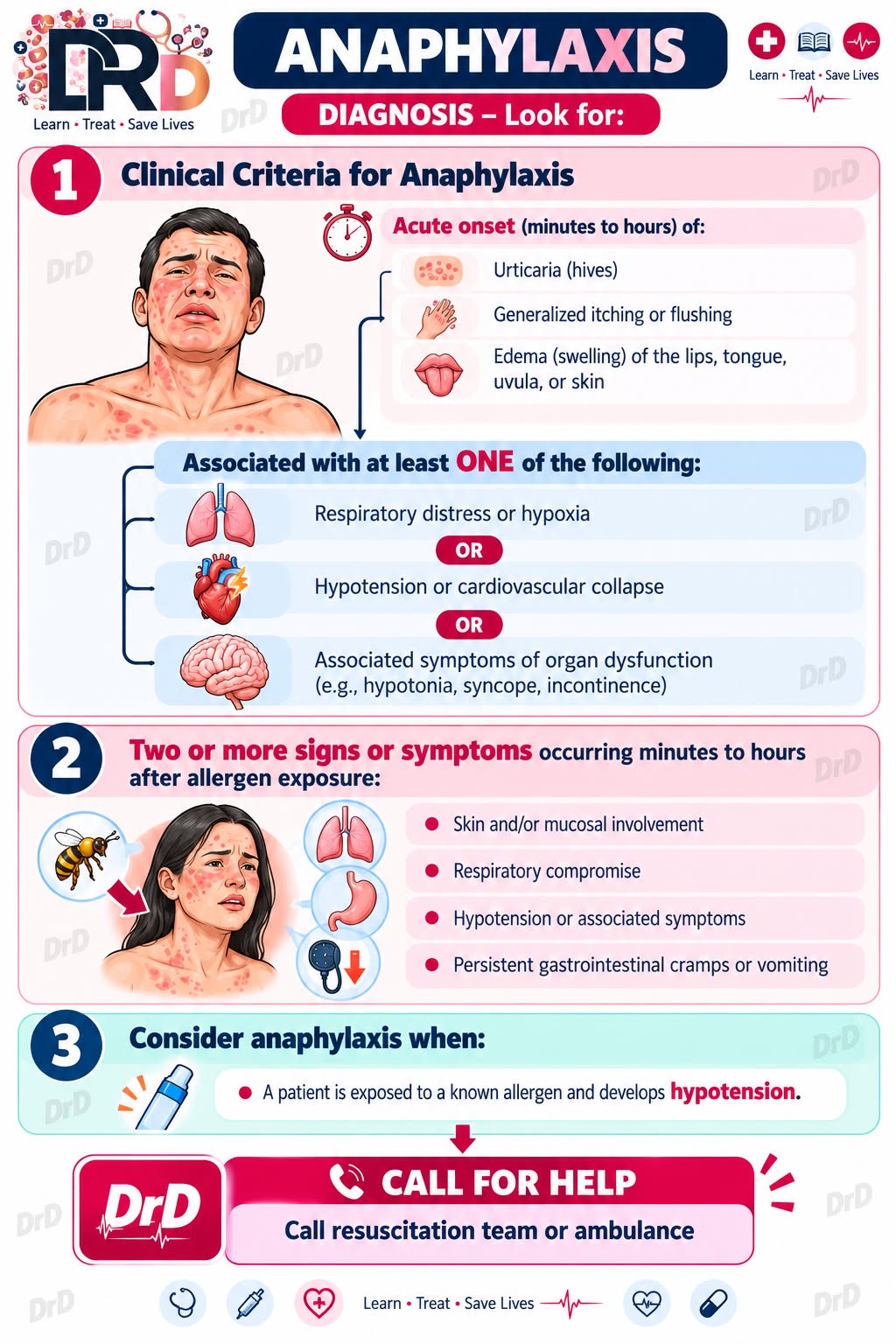
Anaphylaxis in infancy (birth to one year) is under-recognised: it is often the first episode, infants cannot describe symptoms, and many signs are non-specific (vomiting, flushing, irritability, lethargy, mottling, tongue-thrusting). Food (egg, milk, peanut) is the commonest trigger. Mucocutaneous and gastrointestinal features predominate while cardiovascular involvement is uncommon. Diagnosis depends on a high index of suspicion and meticulous exposure history.
Figures & algorithms
Red flags
- Sudden lethargy / hypotonia, abrupt cessation of play, clinging
- Skin mottling or cyanosis, poor perfusion, limpness
- Respiratory distress or stridor
- IV adrenaline overdose (ventricular arrhythmia, pulmonary oedema) - hard to recognise in infants
Assessment
Differential diagnosis
- Viral or food-triggered acute urticaria
- Gastrointestinal obstruction (pyloric stenosis, malrotation, intussusception)
- Gastroenteritis or food protein-induced enterocolitis syndrome (FPIES)
- Sepsis / shock, seizure, meningitis
- Croup, bronchiolitis, foreign-body aspiration
- BRUE / apparent life-threatening event, inborn errors of metabolism
Investigations
- Clinical diagnosis using NIAID/FAAN or WAO criteria (not validated in infants)
- Serum tryptase supports the diagnosis but is often normal, especially food-triggered and normotensive cases
- Baseline tryptase and skin examination for mastocytosis if non-immune / multiple / idiopathic triggers
- Note infant baseline tryptase is higher in early infancy and falls over the first year
Management
- Immediate intramuscular adrenaline into the mid-outer thigh (secure the leg)
- Supplemental oxygen and intravenous fluids as needed
- Position supine with legs raised (on the side if vomiting)
- Observe a minimum of 2h, preferably 8h
- Caregiver education, adrenaline autoinjector, written action plan and allergy referral
Drugs & doses
Disposition
Complications & pitfalls
- Hypoxic-ischaemic encephalopathy or death from delayed adrenaline
- Fatal anaphylaxis can occur in infancy
- Biphasic reaction (uncommon, <3% in infants) up to 72h
- Adrenaline overdose with the intravenous route
Exam pearls
- Infants present with hives and vomiting more than with respiratory or cardiovascular symptoms
- H1 antihistamines and glucocorticoids are adjuncts and must NOT replace adrenaline as initial treatment
- No ideal autoinjector exists below 7.5 kg; nasal adrenaline is not approved under 15 kg
- Patient age does not correlate with reaction severity
Intramuscular adrenaline is first-line and life-saving - never withhold it or substitute antihistamines; learn to recognise the subtle infant signs.
Disclaimer: Educational decision support for qualified clinicians and students — not a substitute for clinical judgement, local protocols or a full drug reference. Confirm every dose and contraindication against your formulary before prescribing.