Traumatic brain injury (severe)
Raised ICP · Trauma
Physician-written · Verified by three sets of doctors · Reviewed November 2026
Bedside summary
Significant head injury risks rising intracranial pressure and secondary brain damage. Preventing hypoxia and hypotension and urgent imaging protect the brain.
Figures & algorithms
Assessment
Investigations
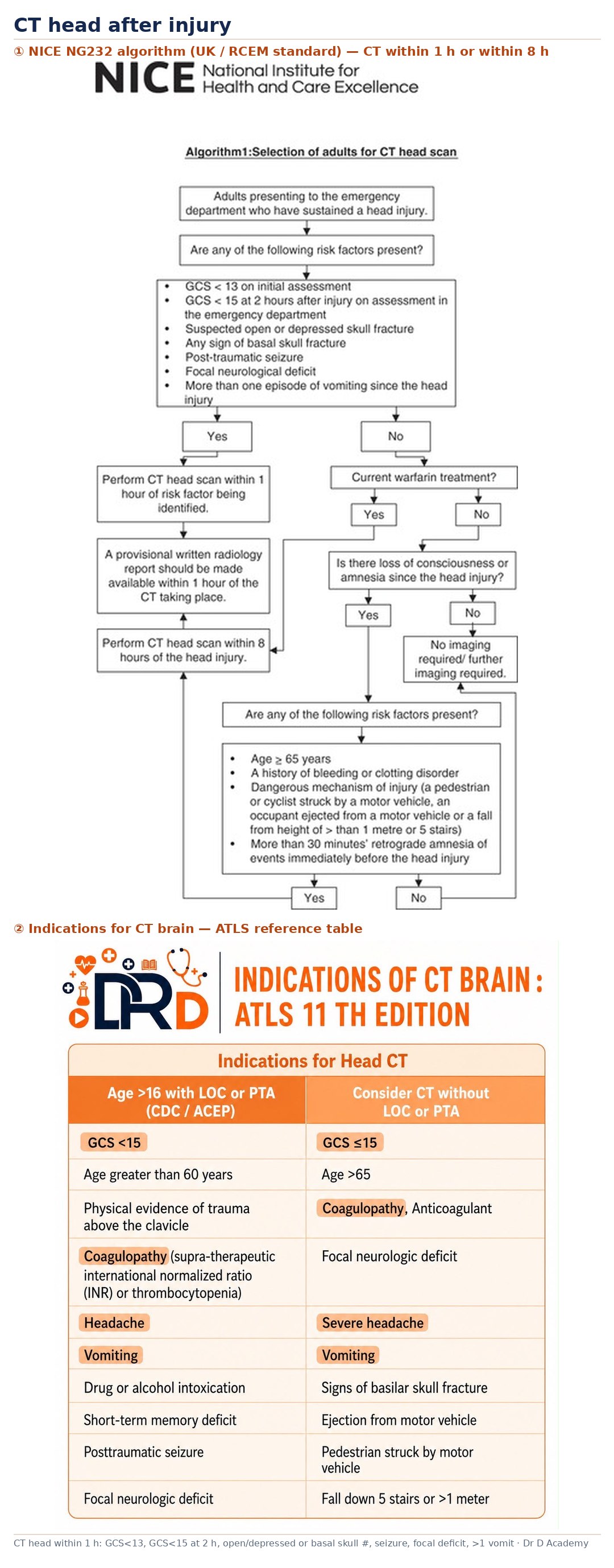
- Urgent CT head
- Coagulation
- Glucose
- Pupils and GCS trend
Management
- Optimise oxygenation and CO₂
- Maintain blood pressure (avoid hypotension)
- 30° head-up; osmotherapy for herniation
- Urgent CT and neurosurgical referral
- Reverse anticoagulation
Drugs & doses
Osmotherapy (selected)
Disposition
Neurosurgery; ICU.
Hypoxia and hypotension cause secondary brain injury — prevent both.
Disclaimer: Educational decision support for qualified clinicians and students — not a substitute for clinical judgement, local protocols or a full drug reference. Confirm every dose and contraindication against your formulary before prescribing.