Le Fort midface fracture
Midface fracture · Trauma
Physician-written · Verified by three sets of doctors · Reviewed November 2026
Bedside summary
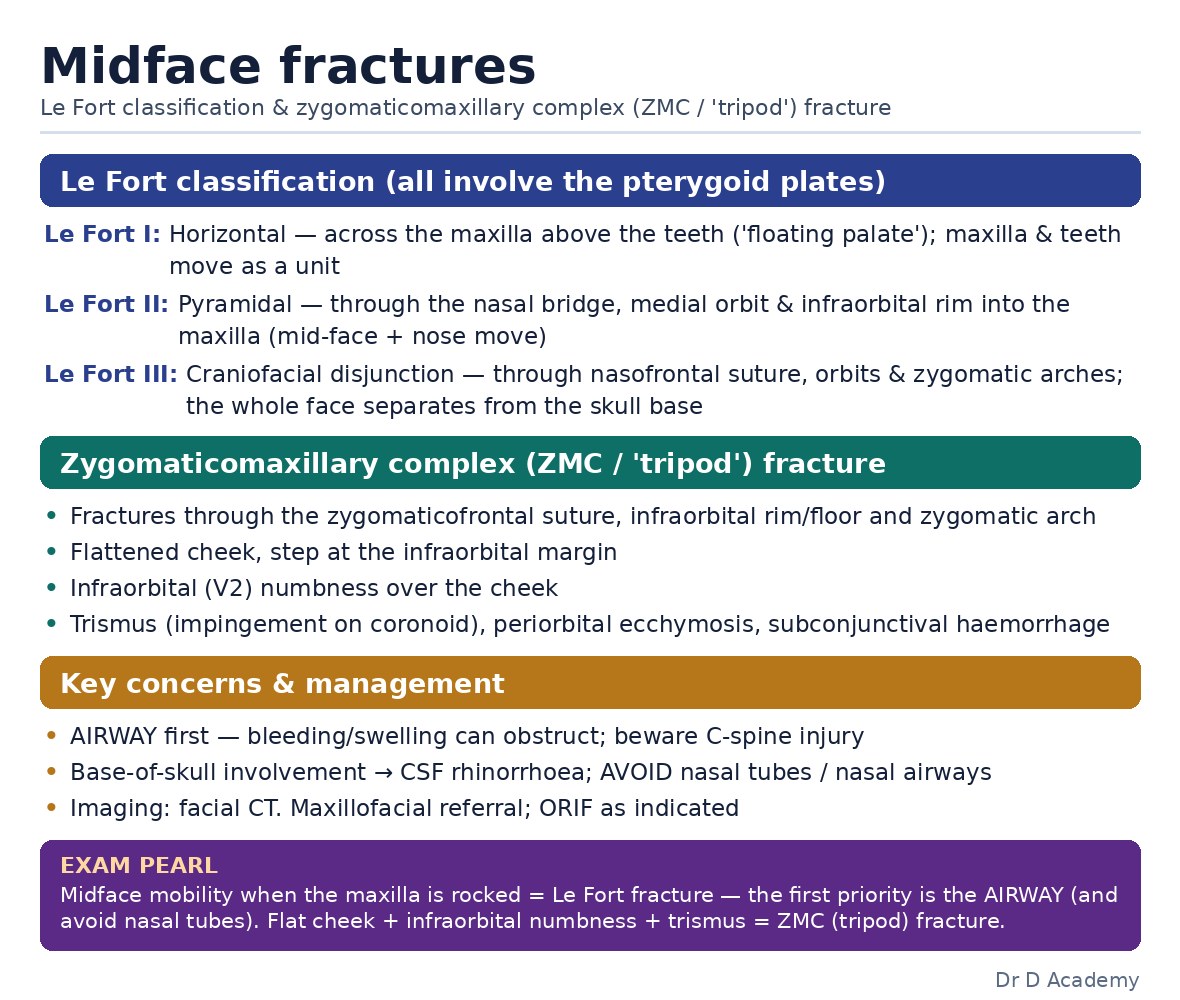
High-energy midface fractures separating the maxilla from the skull base: I (horizontal, palate), II (pyramidal), III (craniofacial disjunction). Threaten the airway and dura.
Figures & algorithms
Red flags
- Airway compromise / stridor
- Torrential epistaxis and shock
- CSF rhinorrhoea (dural breach)
- Reduced GCS / associated head injury
Assessment
Differential diagnosis
- Zygomatic complex fracture
- Nasal/naso-orbito-ethmoid fracture
- Mandibular fracture
- Basal skull fracture
Investigations
- CT face + head + C-spine
- Test midface mobility (grasp anterior maxilla)
- Look for CSF rhinorrhoea (halo sign / beta-2-transferrin)
- Group & save, coagulation
Management
- Airway first — blood, swelling and a mobile midface obstruct rapidly; early definitive airway if compromised
- Immobilise C-spine; full trauma primary survey
- Control epistaxis (posterior pack/balloon); watch for major haemorrhage
- CT imaging; maxillofacial + neurosurgical referral
- CSF-leak precautions; avoid nasal tubes/NG if base-of-skull injury
Drugs & doses
Analgesia
Tranexamic acid for major facial haemorrhage
Antibiotics per local policy if CSF leak
Disposition
Resus + maxillofacial/neurosurgical admission; theatre for airway or haemorrhage; ICU/HDU.
Complications & pitfalls
- Airway obstruction
- Haemorrhagic shock
- Meningitis (CSF leak)
- Malocclusion, blindness
Exam pearls
- A mobile hard palate on gentle traction signals a Le Fort
- Avoid nasal airways/NG tubes when base-of-skull fracture is possible
- Secure the airway before it swells shut
Airway and haemorrhage kill first — a mobile, bleeding midface can obstruct within minutes.
Disclaimer: Educational decision support for qualified clinicians and students — not a substitute for clinical judgement, local protocols or a full drug reference. Confirm every dose and contraindication against your formulary before prescribing.