Tetanus-prone wound management & prophylaxis
Bedside summary
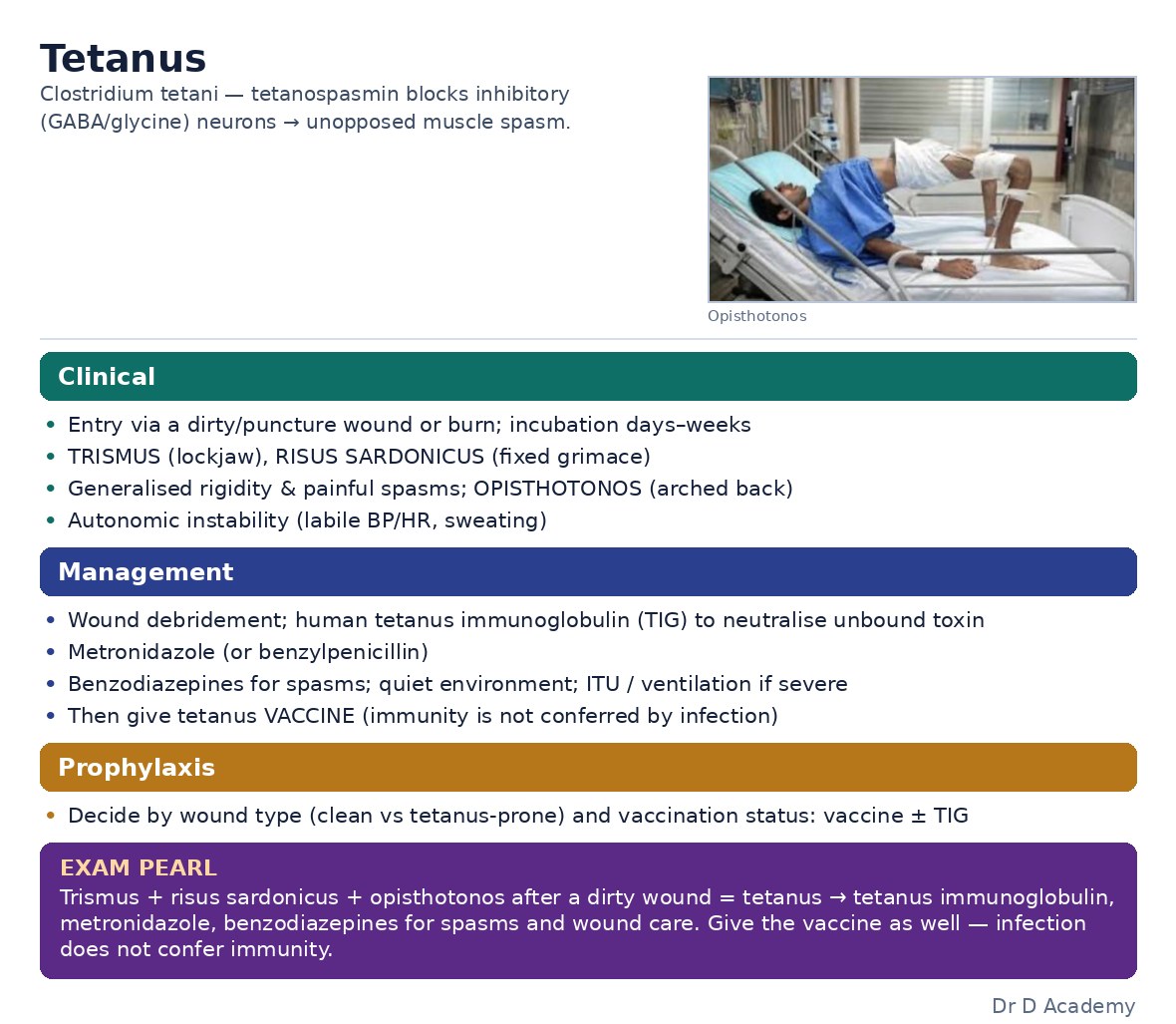
Tetanus is a preventable, potentially fatal toxin-mediated disease following contaminated wounds. Prophylaxis after injury depends on the WOUND (clean vs tetanus-prone/high-risk) and the patient's IMMUNISATION history. Key decisions are whether to give a tetanus-containing vaccine and whether to add tetanus immunoglobulin, alongside thorough wound cleaning and debridement.
Figures & algorithms
Red flags
- Deep puncture or heavily soil/manure-contaminated wound
- Unknown or incomplete vaccination history with a tetanus-prone wound
- Immunocompromise (may need immunoglobulin even for clean wounds)
- Established tetanus (trismus, spasms, autonomic instability) — a medical emergency
Assessment
Differential diagnosis
- Classify the wound: clean minor vs TETANUS-PRONE (puncture, >6 h old, soil/manure/saliva contamination, devitalised/ischaemic tissue, burns, bites) vs HIGH-RISK (heavy contamination, extensive devitalised tissue)
- Establish immunisation status: fully immunised and up to date, partial/uncertain, or unimmunised
- Consider rabies and bacterial infection for bites
Investigations
- Clinical assessment of wound type and contamination
- Reliable vaccination history (number of doses, timing of last dose)
- No routine bloods; assess for established infection
Management
- Clean and DEBRIDE the wound thoroughly; remove foreign material and devitalised tissue (reduces the anaerobic environment Clostridium tetani needs).
- For patients fully immunised and up to date: wound care alone, no vaccine/immunoglobulin needed.
- For tetanus-prone or high-risk wounds in those not up to date or with uncertain history: give a tetanus-containing vaccine.
- ADD tetanus immunoglobulin for tetanus-prone/high-risk wounds when immunisation is incomplete, uncertain, or in immunocompromise — and for all high-risk wounds regardless where recommended locally.
- Give vaccine and immunoglobulin at different sites with different syringes; arrange completion of a full primary course if needed.
- Treat bacterial infection and address rabies/other prophylaxis for bites.
Drugs & doses
Disposition
Complications & pitfalls
- Clinical tetanus (muscle spasms, respiratory failure, autonomic instability)
- Wound infection
- Missed opportunity for prophylaxis
Exam pearls
- Both the wound type AND the immunisation history drive the decision.
- Immunoglobulin plus vaccine (at separate sites) for tetanus-prone wounds in the under-immunised.
- Thorough wound cleaning and debridement is itself key prophylaxis.
Educational — confirm all doses against local policy. Antibiotic doses per BNF (current edition); confirm choice in the in-app Antibiotic Dosing tool.
Disclaimer: Educational decision support for qualified clinicians and students — not a substitute for clinical judgement, local protocols or a full drug reference. Confirm every dose and contraindication against your formulary before prescribing.