Meningococcal septicaemia (Waterhouse-Friderichsen)
Fulminant meningococcal shock · Shock / Sepsis
Physician-written · Verified by three sets of doctors · Reviewed November 2026
Bedside summary
Fulminant Neisseria meningitidis sepsis with a non-blanching rash, shock and adrenal haemorrhage (Waterhouse-Friderichsen), which is rapidly fatal without prompt antibiotics.
Figures & algorithms
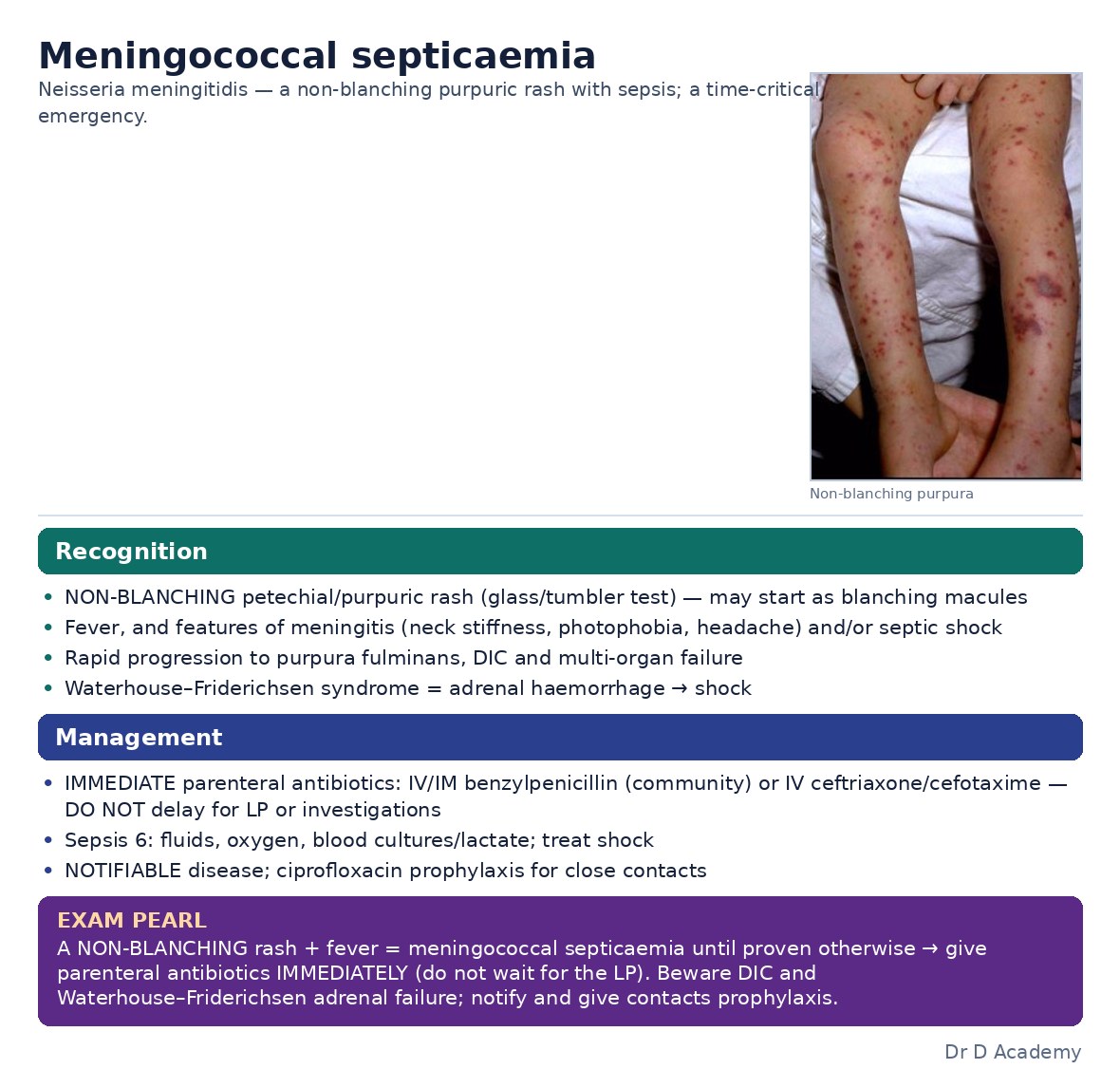
Red flags
- Rapidly spreading non-blanching rash
- Refractory shock
- Coagulopathy/bleeding
- Reduced consciousness
Assessment
Differential diagnosis
- Other bacterial sepsis
- Toxic shock syndrome
- IgA vasculitis
- Thrombotic microangiopathy
- Rickettsial disease
Investigations
- Blood cultures and meningococcal PCR (do not delay antibiotics)
- FBC, coagulation/DIC screen, lactate
- VBG and renal function
- Consider LP once stable/safe
Management
- Recognise sepsis and give parenteral antibiotics immediately (within the first hour)
- Aggressive fluid resuscitation and early vasopressors
- Treat DIC and support organs
- Consider corticosteroids for refractory shock (relative adrenal insufficiency)
- Notify public health and give contact prophylaxis
- ICU admission
Drugs & doses
Ceftriaxone (cephalosporin antibiotic) - IV immediately
IV crystalloid then noradrenaline (vasopressor)
Hydrocortisone (glucocorticoid) - if refractory shock
Disposition
ICU; notify public health.
Complications & pitfalls
- DIC and purpura fulminans
- Adrenal failure
- Limb ischaemia/amputation
- Death
Exam pearls
- Antibiotics take priority over LP and imaging
- Adrenal haemorrhage causes refractory shock
- Arrange contact prophylaxis and notification
Disclaimer: Educational decision support for qualified clinicians and students — not a substitute for clinical judgement, local protocols or a full drug reference. Confirm every dose and contraindication against your formulary before prescribing.