Osmotic demyelination syndrome (overcorrection risk)
Electrolyte · Renal / Electrolyte
Physician-written · Verified by three sets of doctors · Reviewed November 2026
Bedside summary
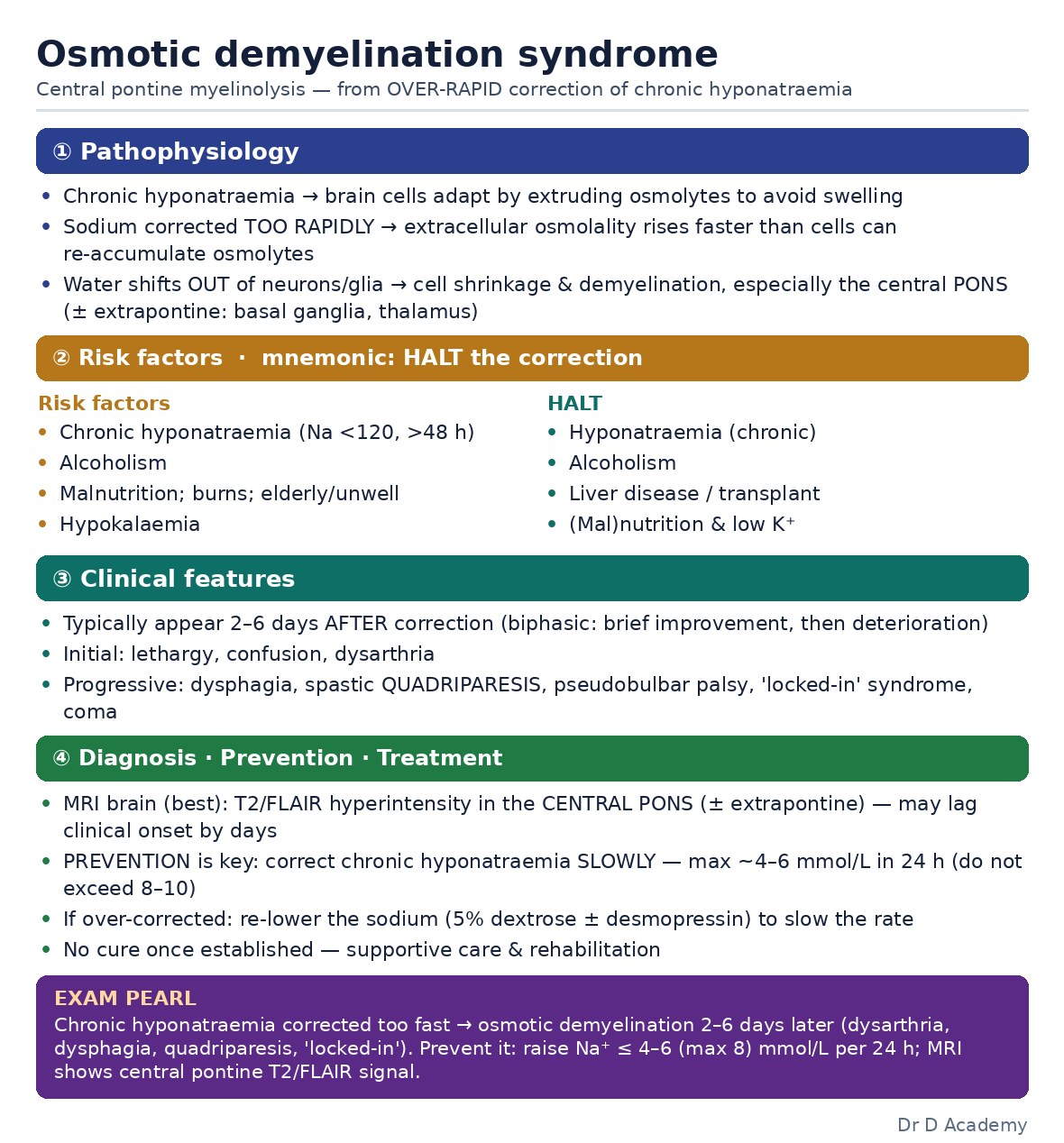
Demyelination (classically central pontine) from too-rapid correction of chronic hyponatraemia, presenting days later with dysarthria, dysphagia, quadriparesis and altered consciousness.
Figures & algorithms
Red flags
- Rapid sodium rise beyond target
- New brainstem signs after correction
- High-risk patient (alcohol, malnutrition, liver disease)
- Decreasing consciousness
Assessment
Differential diagnosis
- Stroke/brainstem event
- Hepatic encephalopathy
- Wernicke encephalopathy
- Persistent hyponatraemic encephalopathy
Investigations
- Serial serum sodium (rate of rise)
- U&E, glucose, magnesium, LFTs
- MRI brain (pontine/extrapontine changes, may lag clinically)
- Assess risk factors (alcoholism, malnutrition, liver disease, hypokalaemia)
Management
- Prevention is key - limit sodium correction to safe rates (about 8-10 mmol/L per 24h, less in high-risk)
- Monitor sodium frequently during correction of chronic hyponatraemia
- If overcorrection occurs, re-lower sodium with hypotonic fluids +/- desmopressin
- Supportive neuro care if syndrome develops
- Address nutritional deficiencies and hypokalaemia
- Rehabilitation as recovery can be partial
Drugs & doses
5% dextrose to re-lower overcorrected sodium
Desmopressin to limit further water loss during rescue
Supportive care
Correct hypokalaemia/nutrition
Disposition
ICU/HDU; nephrology and neurology involvement.
Complications & pitfalls
- Permanent neurological disability
- Locked-in syndrome
- Death
Exam pearls
- Chronic (not acute) hyponatraemia carries the demyelination risk
- Re-lowering sodium after overcorrection can prevent injury
- High-risk patients need even slower correction (about 4-6 mmol/L per 24h)
Disclaimer: Educational decision support for qualified clinicians and students — not a substitute for clinical judgement, local protocols or a full drug reference. Confirm every dose and contraindication against your formulary before prescribing.