Chronic hyperkalaemia — outpatient management
chronic hyperK · Renal / Electrolyte
Physician-written · Verified by three sets of doctors · Reviewed November 2026
Bedside summary
Persistent mild-to-moderate hyperkalaemia in CKD, diabetes or on RAAS/MRA therapy, managed to allow continuation of prognostically important drugs while avoiding dangerous peaks. Dietary measures, drug review and potassium binders are the mainstays.
Figures & algorithms
Red flags
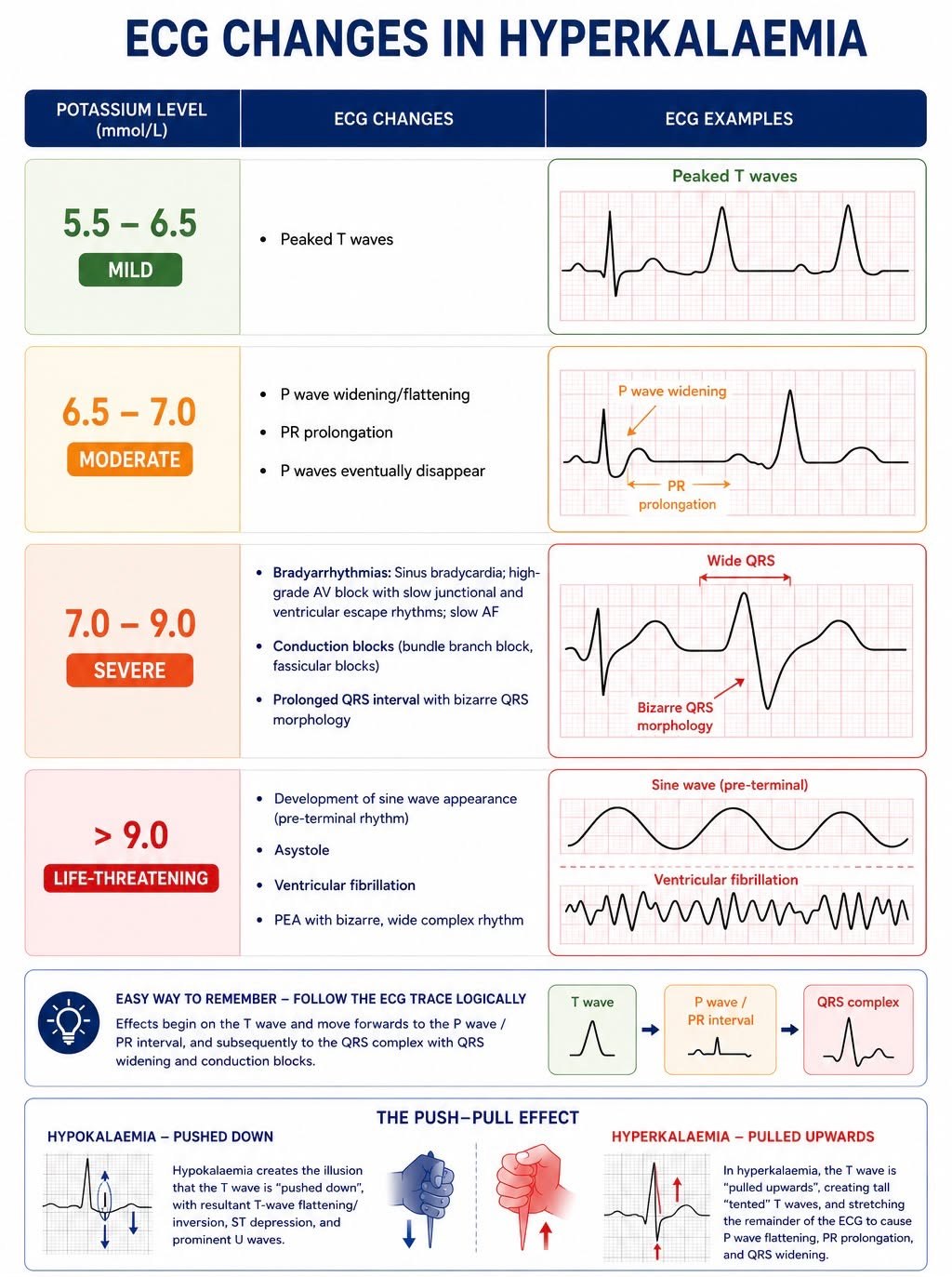
- Potassium >=6.5 mmol/L or ECG changes (peaked T waves, widened QRS)
- Muscle weakness or paralysis
- Rapidly rising potassium
- New bradyarrhythmia
- Oliguria/AKI superimposed on CKD
Assessment
Differential diagnosis
- CKD with reduced potassium excretion
- RAAS inhibitor / MRA / potassium-sparing diuretic effect
- Type 4 RTA (hyporeninaemic hypoaldosteronism, diabetes)
- Metabolic acidosis shifting potassium out
- Dietary potassium excess / supplements
- Pseudohyperkalaemia (haemolysed sample, thrombocytosis)
Investigations
- Repeat serum potassium on a non-haemolysed sample (exclude pseudohyperkalaemia)
- U&E, eGFR and bicarbonate
- ECG if potassium >=6.0 or symptomatic
- Medication and diet review
- Glucose/HbA1c (consider type 4 RTA in diabetes)
- Urinary potassium / aldosterone if cause unclear
Management
- Confirm true hyperkalaemia and exclude pseudohyperkalaemia (haemolysis, fist-clenching, delayed processing)
- Assess acuity: obtain an ECG and treat as an emergency if potassium >=6.5 or ECG changes
- Review medications: potassium supplements, NSAIDs, trimethoprim, and the balance of RAAS/MRA benefit vs risk
- Provide dietary potassium education (limit high-potassium foods, cooking methods) via a dietitian
- Correct metabolic acidosis with oral sodium bicarbonate to shift potassium and aid excretion
- Optimise volume/use of a loop or thiazide diuretic to enhance kaliuresis where appropriate
- Add a potassium binder (patiromer or sodium zirconium cyclosilicate) to enable continuation of RAAS/MRA therapy
- Avoid routinely stopping prognostically important RAAS/MRA drugs — down-titrate and bind potassium instead where feasible
- Treat underlying type 4 RTA (fludrocortisone in selected cases) if present
- Monitor potassium after each change and periodically thereafter
- Give sick-day advice to hold RAAS blockade during dehydrating illnesses
- Escalate to nephrology for refractory or severe hyperkalaemia
Drugs & doses
Patiromer 8.4 g PO once daily, titrated (chronic potassium binder)
Sodium zirconium cyclosilicate 5-10 g PO once daily maintenance
Sodium bicarbonate 500-1000 mg PO two to three times daily (acidosis)
Furosemide 20-80 mg PO daily (enhance kaliuresis if volume permits)
Fludrocortisone 50-100 micrograms PO daily (selected type 4 RTA)
Disposition
Primary care/CKD clinic with dietitian input. Emergency treatment for potassium >=6.5 or ECG changes. Nephrology referral for refractory hyperkalaemia.
Complications & pitfalls
- Life-threatening arrhythmia
- Forced discontinuation of beneficial RAAS/MRA therapy
- GI side effects of binders
- Sodium/volume load from binders in heart failure
- Recurrent acute hyperkalaemia episodes
Exam pearls
- Exclude pseudohyperkalaemia before acting on a surprising result
- Potassium binders let patients stay on prognostically important RAAS/MRA therapy
- Correcting acidosis improves potassium handling
- Trimethoprim and NSAIDs are common hidden culprits
- Give explicit sick-day rules to pause RAAS blockade during acute illness
Disclaimer: Educational decision support for qualified clinicians and students — not a substitute for clinical judgement, local protocols or a full drug reference. Confirm every dose and contraindication against your formulary before prescribing.