Wernicke encephalopathy — acute treatment
Bedside summary
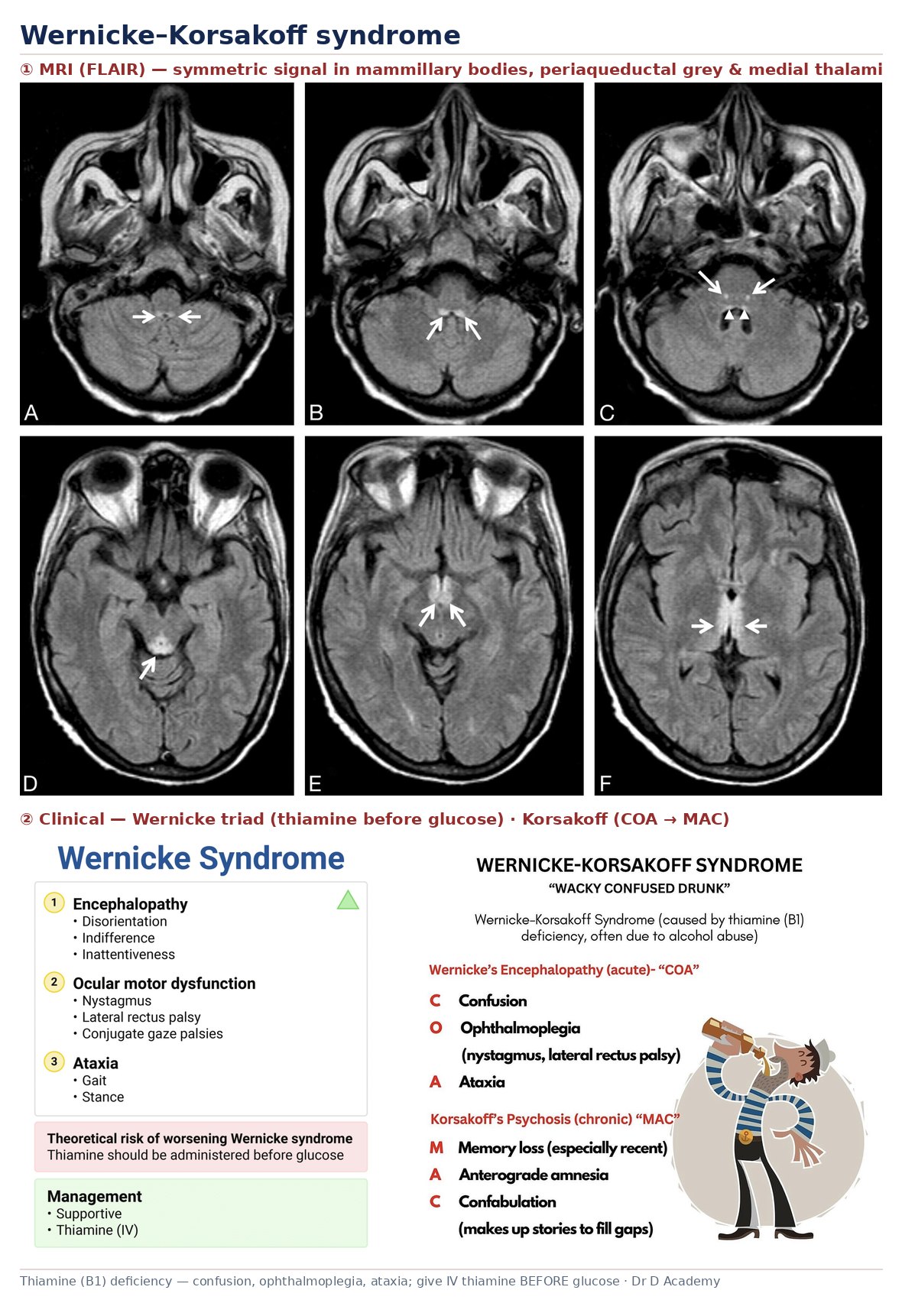
An acute, reversible thiamine-deficiency encephalopathy, classically from alcohol use disorder but also hyperemesis, bariatric surgery, malnutrition or refeeding. The full triad (confusion, ophthalmoplegia/nystagmus, ataxia) is present in a MINORITY — treat on suspicion. Give high-dose PARENTERAL thiamine and give it BEFORE any glucose, because a glucose load can precipitate or worsen Wernicke's. This is treatment of established/suspected disease, which uses higher doses than prophylaxis.
Figures & algorithms
Red flags
- Giving glucose before thiamine in an at-risk patient
- Reduced conscious level / coma (advanced disease)
- Hypothermia and hypotension (hypothalamic involvement)
- Evolving memory impairment (Korsakoff)
Assessment
Differential diagnosis
- Alcohol intoxication/withdrawal, hepatic encephalopathy, hypoglycaemia, sepsis, intracranial event
- Other causes of acute confusion/ophthalmoplegia (brainstem stroke, Miller-Fisher, drug toxicity)
- Use Caine criteria (dietary deficiency, oculomotor signs, cerebellar signs, altered mental state/memory) — 2 of 4 supports the diagnosis
Investigations
- Bedside glucose; FBC, U&E, LFTs, magnesium, blood gas; thiamine level does not guide acute treatment
- MRI (symmetrical signal change in mamillary bodies/medial thalami/periaqueductal grey) supports but is not required to treat
- Screen for refeeding risk and correct magnesium (a cofactor — thiamine may be ineffective if hypomagnesaemic)
Management
- Have a LOW threshold to treat — do not wait for the classic triad or confirmatory tests.
- Give high-dose parenteral (IV) thiamine BEFORE any carbohydrate/glucose; if glucose is needed urgently, give thiamine alongside/first.
- Use treatment-level dosing (higher and more frequent than prophylaxis), continued for several days then stepped down.
- Correct magnesium and other electrolytes; manage coexisting alcohol withdrawal with benzodiazepines.
- Monitor for and manage progression to Korsakoff syndrome; continue oral thiamine after the parenteral course.
- Admit for observation, ongoing thiamine and treatment of the underlying cause.
Drugs & doses
Disposition
Complications & pitfalls
- Irreversible Korsakoff amnestic syndrome
- Coma and death if untreated
- Persistent ataxia/ophthalmoplegia
Exam pearls
- Treat on suspicion — the complete triad is the exception, not the rule.
- Thiamine before glucose, always, in the at-risk patient.
- Correct magnesium or thiamine may not work; established disease needs treatment-dose (not prophylactic) thiamine.
Educational — confirm all doses against local policy.
Disclaimer: Educational decision support for qualified clinicians and students — not a substitute for clinical judgement, local protocols or a full drug reference. Confirm every dose and contraindication against your formulary before prescribing.