Fournier gangrene (vulval/perineal)
Infection · Gynaecology
Physician-written · Verified by three sets of doctors · Reviewed November 2026
Bedside summary
Necrotising fasciitis of the perineum/vulva, a rapidly spreading polymicrobial infection with high mortality. Risk factors include diabetes, immunosuppression and local trauma or abscess.
Figures & algorithms
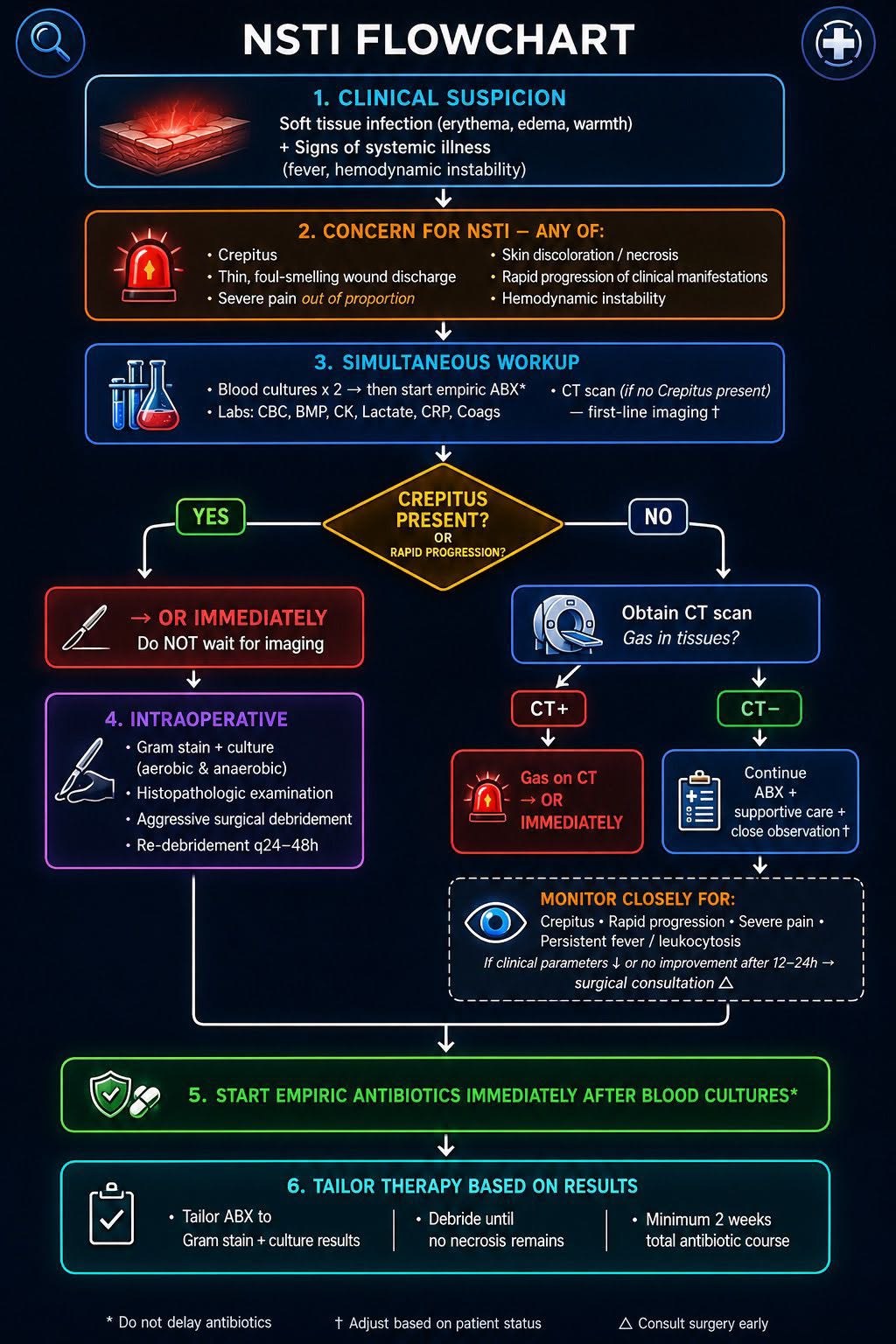
Red flags
- Pain out of proportion to skin findings
- Crepitus, skin necrosis or bullae
- Rapid spread and systemic toxicity
- Septic shock
Assessment
Differential diagnosis
- Cellulitis
- Bartholin abscess
- Vulval abscess
- Perianal abscess
Investigations
- Clinical diagnosis - do not delay for imaging
- FBC, CRP, U&E, lactate, glucose, coagulation
- Blood cultures and wound swabs
- Group and crossmatch
- CT if it will not delay surgery
Management
- Resuscitate aggressively; treat as septic shock
- Start broad-spectrum IV antibiotics including anaerobic and MRSA cover
- Immediate surgical referral for urgent extensive debridement
- Optimise glucose and correct coagulopathy
- Repeat debridement as needed; consider critical care
- Multidisciplinary care (surgery, urology, plastics, ICU)
Drugs & doses
Broad-spectrum IV antibiotics (e.g. piperacillin-tazobactam plus clindamycin +/- MRSA cover)
IV crystalloid resuscitation
Vasopressors if shocked (in critical care)
Analgesia
Disposition
Emergency theatre and ICU; multidisciplinary surgical care.
Complications & pitfalls
- Septic shock and multi-organ failure
- Extensive tissue loss
- Death
Exam pearls
- Surgical debridement is the definitive treatment - antibiotics alone are insufficient
- Clindamycin adds anti-toxin effect
- High index of suspicion in diabetics with severe perineal pain
Disclaimer: Educational decision support for qualified clinicians and students — not a substitute for clinical judgement, local protocols or a full drug reference. Confirm every dose and contraindication against your formulary before prescribing.