Acute coronary syndrome & SCAD in pregnancy
Cardiac · Obstetric
Physician-written · Verified by three sets of doctors · Reviewed November 2026
Bedside summary
Acute myocardial infarction in pregnancy or the puerperium is uncommon but increasing; spontaneous coronary artery dissection (SCAD) is a leading cause and behaves differently from atherosclerotic MI. Pregnancy-related chest pain with ischaemic features must be taken seriously — the management is largely standard ACS care, but SCAD is often managed conservatively rather than with routine stenting.
Figures & algorithms
Red flags
- Ischaemic chest pain with ECG changes or raised troponin
- Haemodynamic instability, arrhythmia or cardiogenic shock
- Peripartum woman with MI and few atherosclerotic risk factors (suspect SCAD)
- Signs suggesting aortic dissection
Assessment
Differential diagnosis
- SCAD (common in peripartum women, often without classic risk factors) versus atherosclerotic/thrombotic MI
- Aortic dissection, pulmonary embolism, pre-eclampsia, peripartum cardiomyopathy, amniotic fluid embolism, oesophageal/musculoskeletal pain
Investigations
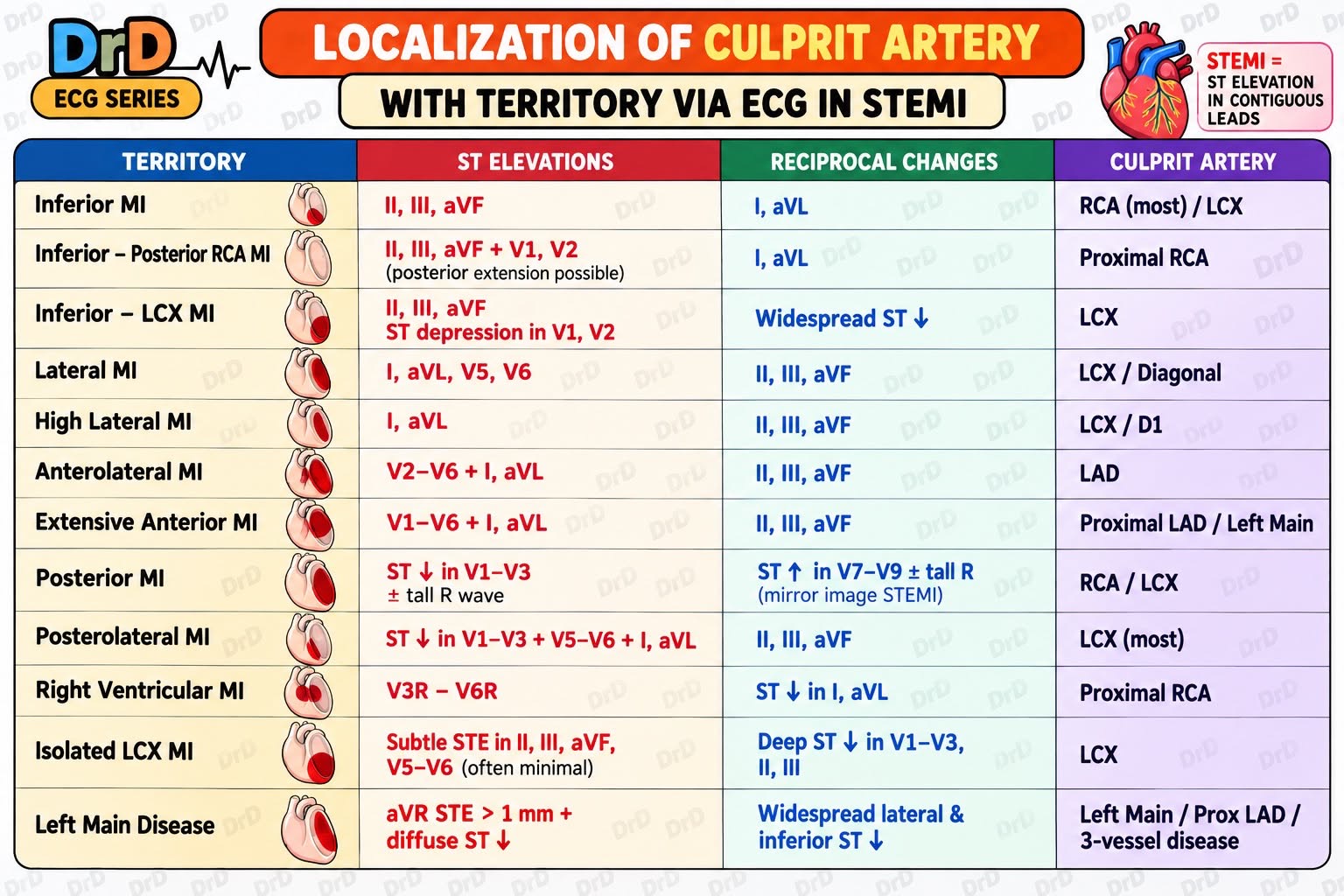
- ECG (serial) and troponin; do not withhold because of pregnancy
- Echocardiography; coronary angiography where indicated (shielded) — the definitive test for SCAD
- Assess for pre-eclampsia and other peripartum cardiac causes; continuous fetal monitoring at viable gestations
Management
- Treat as ACS: oxygen if hypoxic, analgesia, continuous ECG monitoring, and urgent cardiology involvement; position in left lateral tilt.
- Obtain early ECG and troponin and risk-stratify (STEMI vs NSTEMI); activate the primary PCI pathway for STEMI with a multidisciplinary (cardiology + obstetric + anaesthetic) discussion.
- Recognise SCAD: angiography often shows dissection rather than thrombus; many SCAD cases are managed CONSERVATIVELY as intervention can extend the dissection — decisions are made by cardiology.
- Use standard ACS drug therapy judiciously, individualising antiplatelet/anticoagulant and other agents to pregnancy and bleeding risk (avoid known teratogens where alternatives exist).
- Monitor mother and fetus; plan delivery mode and timing with the MDT based on maternal stability and gestation (avoid precipitating ischaemia).
- Arrange cardiac/critical care monitoring; provide secondary prevention and counselling appropriate to the aetiology (especially SCAD recurrence risk).
Drugs & doses
Standard ACS therapy individualised to pregnancy: antiplatelet(s), anticoagulation, nitrates, beta-blocker as appropriate per cardiology (confirm against local policy)
Primary PCI for STEMI where indicated; conservative management often preferred for SCAD per cardiology (confirm against local policy)
Analgesia and oxygen if hypoxic (confirm against local policy)
Avoid agents contraindicated in pregnancy where alternatives exist; review each drug with cardiology/obstetrics (confirm against local policy)
Disposition
Coronary/critical care with cardiology and obstetric input; MDT delivery planning and tailored secondary prevention with SCAD counselling.
Complications & pitfalls
- Cardiogenic shock, arrhythmia, cardiac arrest
- Extension of coronary dissection (SCAD)
- Heart failure
- Maternal and fetal death
Exam pearls
- Suspect SCAD in a peripartum woman with MI and no classic risk factors.
- Many SCAD cases are managed conservatively — intervention can propagate the dissection.
- Do not withhold ECG, troponin or angiography because the patient is pregnant.
Educational — confirm all doses against local policy.
Disclaimer: Educational decision support for qualified clinicians and students — not a substitute for clinical judgement, local protocols or a full drug reference. Confirm every dose and contraindication against your formulary before prescribing.