Trigeminal neuralgia (tic douloureux, TN)
Facial pain / cranial neuralgia · Neurology
Physician-written · Verified by three sets of doctors · Reviewed November 2026
Bedside summary
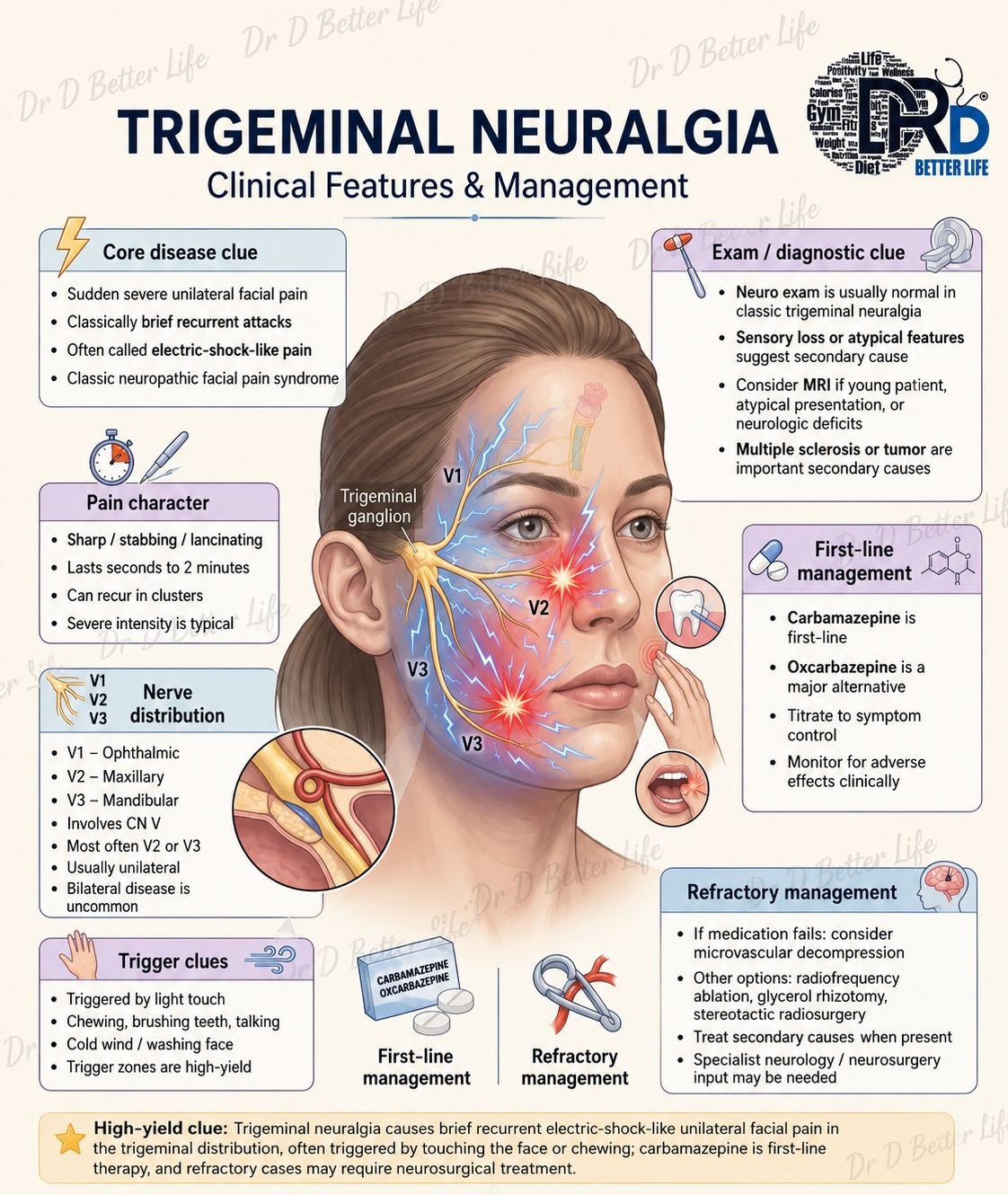
Paroxysmal, severe, electric-shock/stabbing unilateral facial pain in one or more trigeminal divisions (usually V2/V3), triggered by light touch, chewing, talking, cold wind, or tooth-brushing. Classic TN is from neurovascular compression; secondary TN (MS, tumour) must be excluded. Distinct from trigeminal autonomic cephalalgias (covered).
Figures & algorithms
Red flags
- Sensory loss, bilateral pain, other cranial nerve signs, age <40 — secondary TN (MS, tumour) — image urgently
- Jaw claudication, scalp tenderness, raised ESR in >50y — giant cell arteritis
- Unable to eat/drink due to pain — dehydration, admit
- Ophthalmic (V1) involvement with eye signs — exclude ocular/other pathology
- Carbamazepine rash — stop, SJS/TEN risk
Assessment
Differential diagnosis
- Dental/odontogenic pain (common misdiagnosis — many have teeth extracted)
- Trigeminal autonomic cephalalgias (cluster, SUNCT/SUNA) — covered
- Giant cell arteritis (jaw claudication)
- Temporomandibular joint dysfunction
- Postherpetic neuralgia
- Glossopharyngeal neuralgia
- Secondary TN: multiple sclerosis, cerebellopontine angle tumour, skull-base lesion
- Sinusitis, atypical facial pain
Investigations
- Clinical diagnosis (paroxysmal, triggered, trigeminal distribution, refractory between attacks)
- MRI brain (with trigeminal/vascular sequences) in ALL — identify neurovascular compression and exclude MS/tumour (secondary TN)
- ESR/CRP if GCA possible (age >50, jaw claudication)
- Dental assessment to exclude odontogenic cause
- Examine for sensory loss / corneal reflex (abnormal neuro exam suggests secondary cause)
Management
- Confirm the typical paroxysmal triggered character; look for trigger zones
- Examine cranial nerves — any sensory deficit, bilateral symptoms, or age <40 raises suspicion of secondary TN (esp. MS)
- Arrange MRI brain for all patients
- Start first-line medical therapy: carbamazepine (or oxcarbazepine) — titrate to pain control
- Monitor sodium (hyponatraemia), FBC, LFTs with carbamazepine; warn of rash (HLA-B*1502 risk of SJS in some Asian populations — screen where relevant)
- Acute severe crisis unable to eat/drink: consider admission, IV fosphenytoin/lidocaine (specialist) or escalate oral dose
- Refer to neurology; if medically refractory or intolerant, neurosurgical referral — microvascular decompression (best durable outcome in classic TN), or ablative (gamma knife, radiofrequency, balloon, glycerol)
- Treat secondary TN by treating the cause (MS, tumour)
Drugs & doses
First-line: carbamazepine 100 mg PO BD, titrate by 100-200 mg every few days to pain control; usual 600-1200 mg/day (max ~1600 mg/day) in divided doses — monitor Na, FBC, LFT [verify local dose]
OR oxcarbazepine 300 mg PO BD, titrate to 600-1800 mg/day (fewer interactions, still causes hyponatraemia)
Second-line / add-on (specialist): lamotrigine, baclofen 5-10 mg PO TDS titrated, gabapentin, pregabalin [verify local dose]
Acute crisis (specialist, inpatient): IV/IM options e.g. fosphenytoin or lidocaine infusion [verify local]
Screen HLA-B*1502 (Han Chinese, Thai, some South/SE Asian) before carbamazepine where available — SJS/TEN risk
Disposition
Discharge with carbamazepine/oxcarbazepine, MRI request and neurology referral. Admit for IV therapy/hydration if intractable crisis preventing oral intake. Neurosurgical referral if refractory/intolerant.
Complications & pitfalls
- Weight loss, dehydration, depression and suicidality from uncontrolled pain
- Drug toxicity: carbamazepine hyponatraemia, ataxia, marrow suppression, SJS/TEN, drug interactions (enzyme inducer)
- Medically refractory disease requiring surgery
- Sensory loss / anaesthesia dolorosa after ablative procedures
Exam pearls
- Carbamazepine is first-line (AAN/EFNS Level A); oxcarbazepine is effective (Level B) with fewer interactions and easier monitoring
- Response to carbamazepine is near-diagnostic of classic TN
- MRI is indicated in all to exclude secondary causes — young patients and those with sensory signs especially (think MS)
- Microvascular decompression gives the best long-term pain-free outcome in classic TN with neurovascular conflict
- Beware GCA and dental causes — do not attribute all facial pain to TN
Disclaimer: Educational decision support for qualified clinicians and students — not a substitute for clinical judgement, local protocols or a full drug reference. Confirm every dose and contraindication against your formulary before prescribing.