Idiopathic intracranial hypertension (acute visual threat)
Raised ICP · Neurology
Physician-written · Verified by three sets of doctors · Reviewed November 2026
Bedside summary
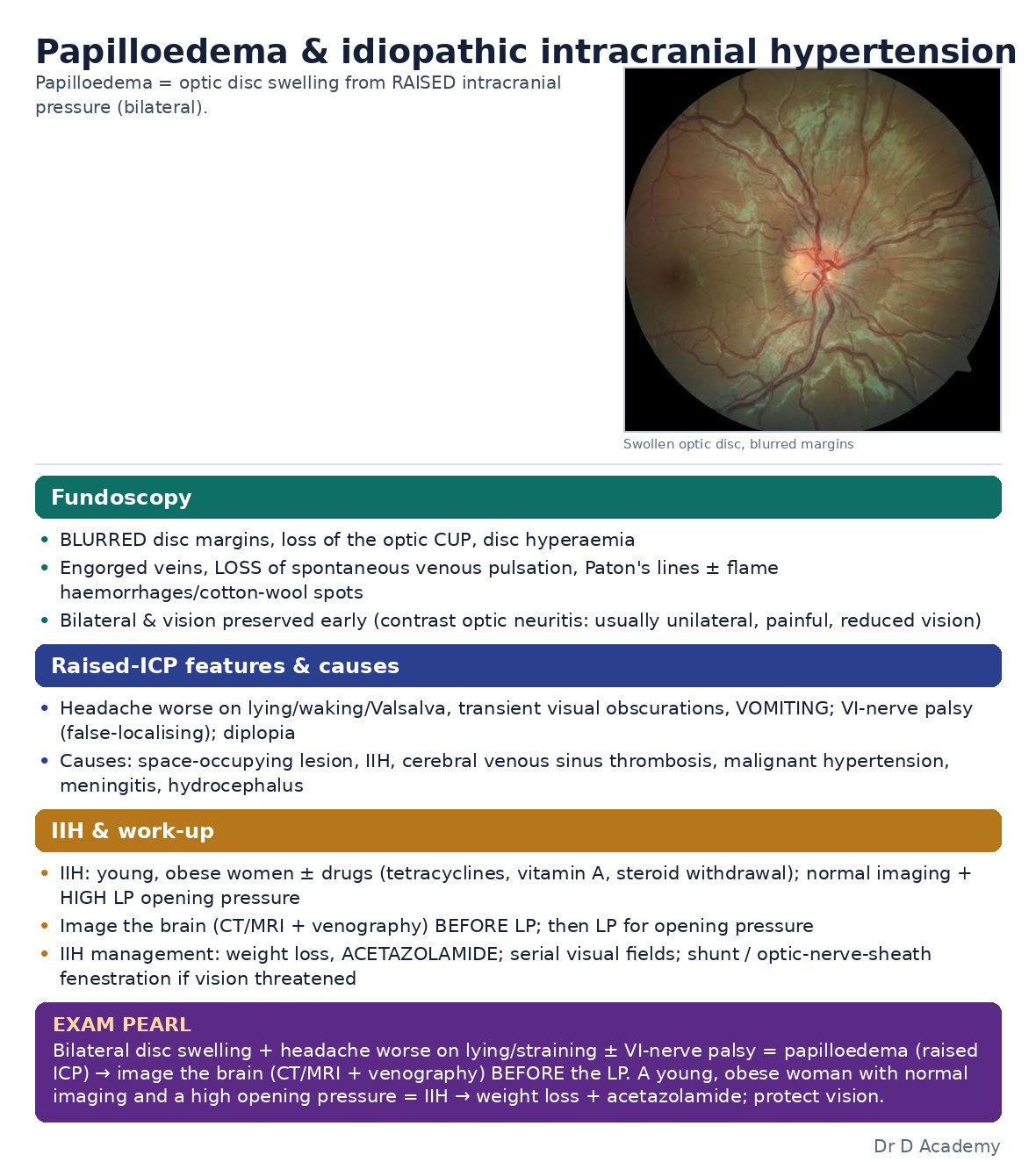
Raised intracranial pressure without a mass causes headache, papilloedema and visual loss, typically in young obese women. Protecting vision and lowering pressure are key.
Figures & algorithms
Assessment
Investigations
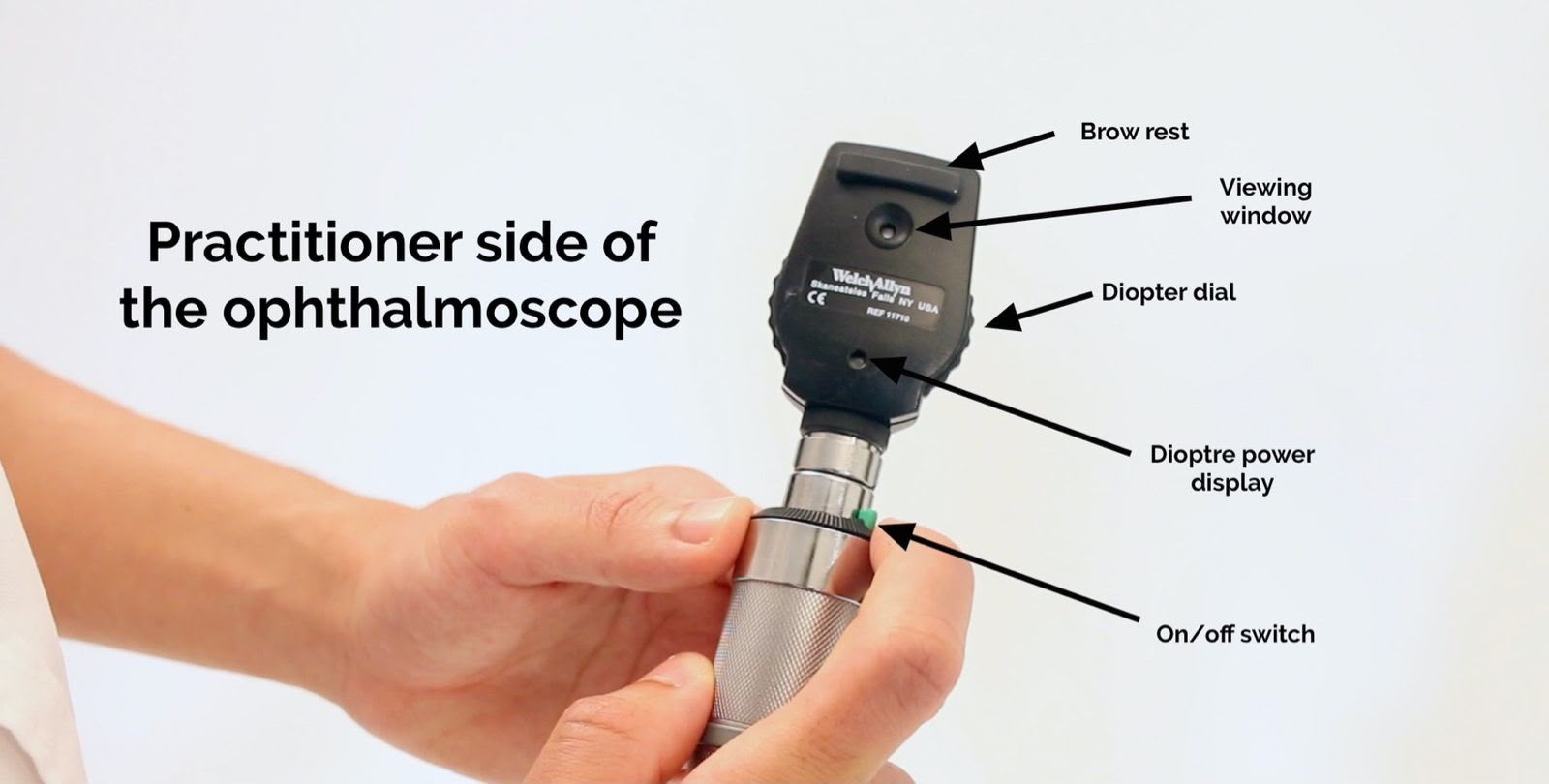
- Fundoscopy (papilloedema)
- Neuroimaging then LP (opening pressure)
- Visual fields/acuity
Management
- Confirm with imaging then LP opening pressure
- Acetazolamide to lower pressure
- Urgent ophthalmology if vision threatened
- Weight and drug review
- Neurology follow-up
Drugs & doses
Acetazolamide
Disposition
Neurology/ophthalmology.
Threatened vision in IIH is an emergency needing pressure reduction.
Disclaimer: Educational decision support for qualified clinicians and students — not a substitute for clinical judgement, local protocols or a full drug reference. Confirm every dose and contraindication against your formulary before prescribing.