Concussion & mild traumatic brain injury (mTBI, post-concussion syndrome)
Head injury (mild) · Neurology
Physician-written · Verified by three sets of doctors · Reviewed November 2026
Bedside summary
Trauma-induced transient disturbance of brain function (GCS 13-15), with brief LOC, amnesia, confusion, headache, dizziness, nausea; normal or no indicated CT. ED role: apply a validated CT-decision rule to exclude surgical bleed, manage symptoms, and give graded return-to-activity/sport advice. (Moderate-severe TBI/raised ICP covered separately.)
Figures & algorithms
Red flags
- Deteriorating GCS, increasing drowsiness, repeated vomiting, worsening/severe headache — intracranial haemorrhage, re-image/neurosurgery
- Seizure, focal neurological deficit, unequal pupils
- Anticoagulated/antiplatelet patient — delayed bleed risk, image and observe
- CSF rhinorrhoea/otorrhoea, battle sign, raccoon eyes, haemotympanum — basal skull fracture
- Repeat concussion while still symptomatic — second-impact syndrome risk (young athletes)
Assessment
Differential diagnosis
- Moderate-severe TBI with intracranial haemorrhage (covered) — exclude
- Cervical spine injury (coexists) — assess/clear
- Post-traumatic seizure
- Vestibular/BPPV from trauma
- Migraine, whiplash-associated neck pain
- Non-traumatic cause of collapse (syncope, seizure, hypoglycaemia) preceding the fall
- Intoxication masking injury
Investigations
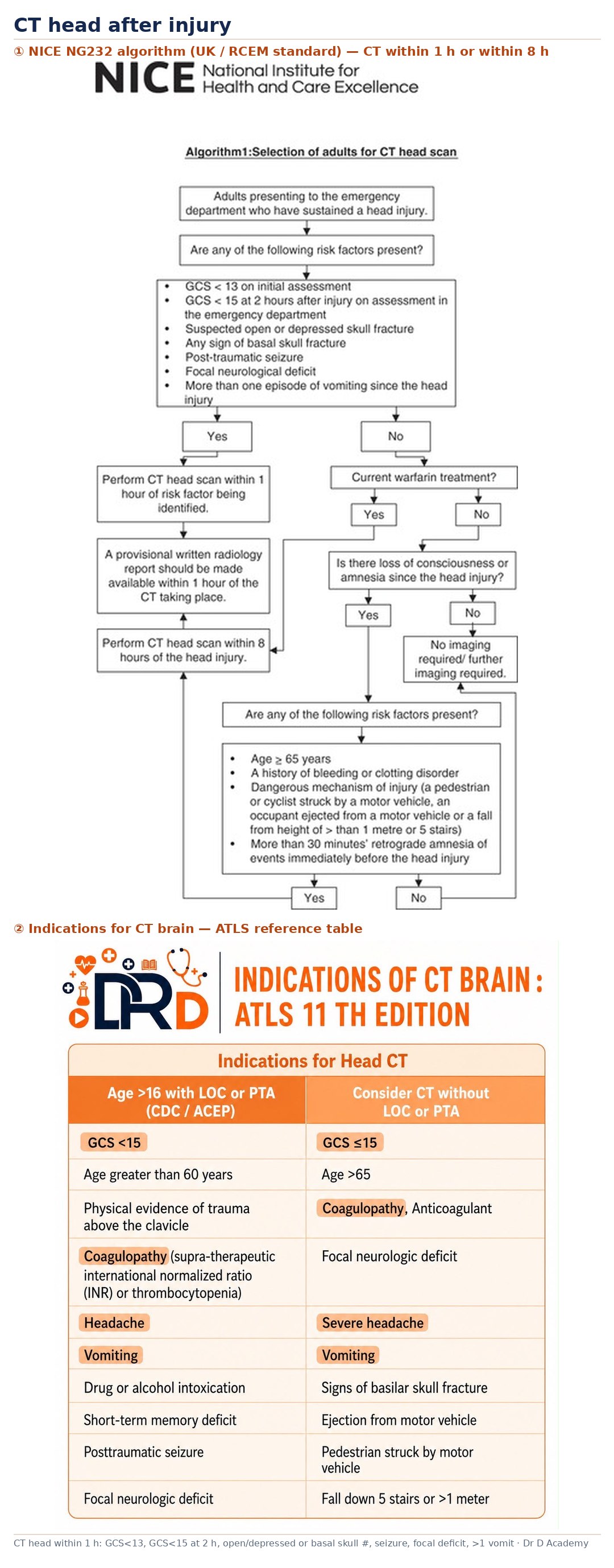
- Apply CT head decision rule (NICE head injury / Canadian CT Head Rule): CT within 1 hour if GCS <13 on arrival, GCS <15 at 2h, suspected open/depressed/basal skull fracture, post-traumatic seizure, focal deficit, >1 episode vomiting; CT within 8h if anticoagulated, or age >=65 / dangerous mechanism / retrograde amnesia >30 min with any LOC/amnesia [verify local rule]
- Anticoagulated patients: CT head within 8 hours (sooner if symptomatic) regardless of other features
- Assess and document GCS, pupils, focal signs, amnesia duration, C-spine
- Glucose, consider alcohol/drugs; pregnancy test if relevant
- No routine neuroimaging in mTBI meeting low-risk criteria with normal exam
Management
- Primary survey and C-spine assessment; establish mechanism, LOC, amnesia, anticoagulation
- Apply CT decision rule; image those meeting criteria to exclude surgical haemorrhage
- If CT normal / not indicated and GCS 15 with reliable observer: discharge with written head-injury advice and safety-netting
- Symptom management: rest for 24-48h then graded return to activity (prolonged strict rest NOT recommended); simple analgesia for headache (avoid medication overuse), hydration, reassurance
- Return-to-sport: stepwise graded return-to-play protocol, no same-day return; no return while symptomatic; specialist/SCAT guidance for athletes
- Advise no alcohol, no driving until recovered, no contact sport until cleared; avoid repeat concussion before recovery (second-impact risk)
- Arrange GP/specialist follow-up; refer to concussion/neuro clinic if symptoms persist >4 weeks (post-concussion syndrome)
- Treat specific symptoms: vestibular rehab for dizziness, cervical physio for neck pain, cognitive pacing
Drugs & doses
Simple analgesia: paracetamol 1 g PO QDS +/- ibuprofen 400 mg TDS for headache — limit frequency to avoid medication-overuse headache
Antiemetic if nausea: ondansetron 4 mg or cyclizine 50 mg [verify local dose]
Persistent post-concussion headache: consider amitriptyline 10-25 mg nocte (specialist) [verify local]
Avoid opioids, sedatives and alcohol
No specific drug reverses concussion — management is symptomatic and graded return to activity
Disposition
Discharge most mTBI with normal/absent-indication CT, GCS 15 and reliable observer, with written safety-netting. Observe/admit if abnormal CT, anticoagulated with symptoms, persistent GCS <15, vomiting, or no safe home/observer. Refer concussion/neuro clinic if symptoms persist beyond 4 weeks.
Complications & pitfalls
- Intracranial haemorrhage (early or delayed, esp. anticoagulated/elderly)
- Post-concussion syndrome (persistent headache, dizziness, cognitive/mood symptoms)
- Second-impact syndrome (rare, catastrophic in young athletes)
- Chronic traumatic encephalopathy (repetitive injury — long term)
- Post-traumatic headache, vestibular dysfunction, mood disorder
Exam pearls
- Use a validated rule (NICE / Canadian CT Head) — do not CT every mild head injury, but DO image anticoagulated and high-risk patients
- Prolonged strict rest is outdated — brief rest (24-48h) then graded, symptom-limited return to activity aids recovery
- No same-day return to sport; no return to contact sport while symptomatic — repeat concussion before recovery risks second-impact syndrome
- Give every discharged patient written head-injury advice with a reliable observer and clear deterioration criteria
- Anticoagulated or elderly patients can have delayed intracranial bleeds — lower threshold to image and observe
Disclaimer: Educational decision support for qualified clinicians and students — not a substitute for clinical judgement, local protocols or a full drug reference. Confirm every dose and contraindication against your formulary before prescribing.