Acute ischaemic stroke - thrombolysis & thrombectomy pathway
Reperfusion pathway · Neurology
Physician-written · Verified by three sets of doctors · Reviewed November 2026
Bedside summary
Acute ischaemic stroke managed on the time-critical UK reperfusion pathway. Rapid recognition, urgent imaging and reperfusion (IV thrombolysis and/or mechanical thrombectomy for large-vessel occlusion) save brain - time is brain.
Figures & algorithms
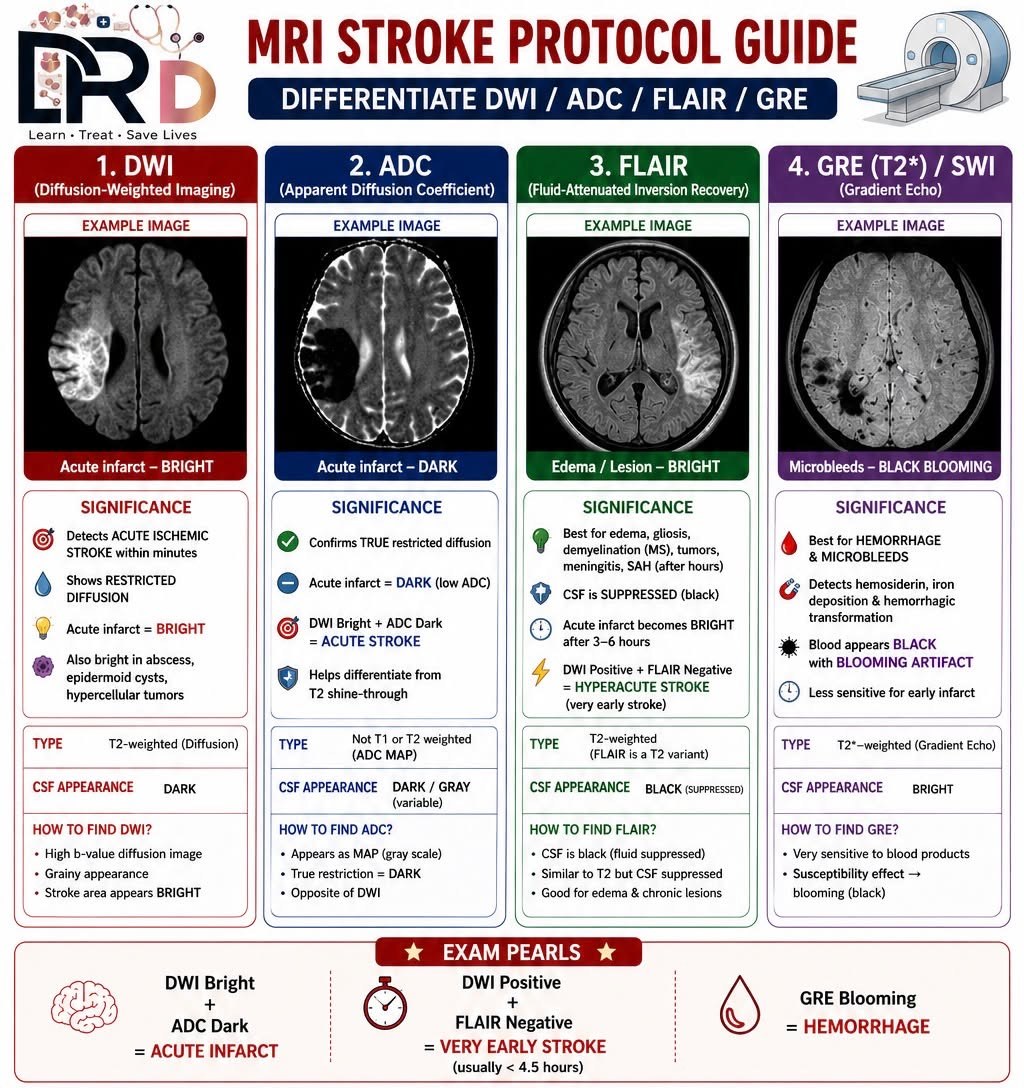
Assessment
Investigations
- Determine time of onset / last known well; NIHSS
- Immediate CT head + CT angiography (exclude haemorrhage, find large-vessel occlusion)
- Glucose, coagulation; screen thrombolysis contraindications
Management
- Activate the stroke pathway; protect airway and maintain oxygenation/glucose
- IV thrombolysis (alteplase/tenecteplase) if within window and no contraindication
- Mechanical thrombectomy for large-vessel occlusion (extended windows with perfusion imaging)
- Do NOT lower blood pressure aggressively unless for thrombolysis (target <185/110) or other indication
- Aspirin 300 mg after haemorrhage excluded (and after 24 h if thrombolysed)
- Admit to a stroke unit; swallow screen before oral intake
- Treat the cause; secondary prevention
Drugs & doses
Alteplase / tenecteplase (if eligible)
Mechanical thrombectomy (LVO)
Aspirin 300 mg (post-imaging)
Disposition
Hyperacute stroke unit.
Time is brain - get the CT/CTA immediately, thrombolyse eligible patients fast, and refer large-vessel occlusions for thrombectomy.
Disclaimer: Educational decision support for qualified clinicians and students — not a substitute for clinical judgement, local protocols or a full drug reference. Confirm every dose and contraindication against your formulary before prescribing.