Gas gangrene (clostridial myonecrosis)
Infection · Musculoskeletal
Physician-written · Verified by three sets of doctors · Reviewed November 2026
Bedside summary
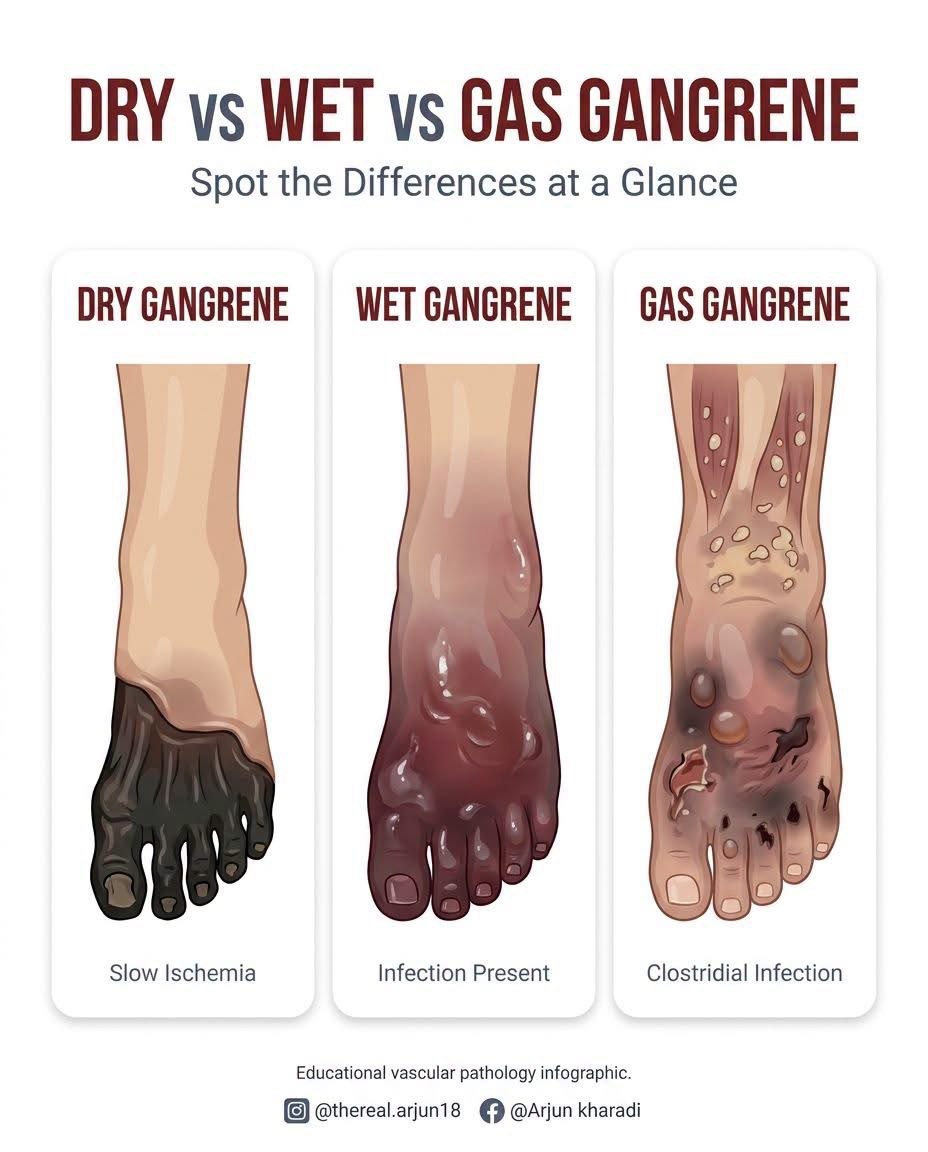
A fulminant necrotising infection of MUSCLE, classically caused by Clostridium perfringens, after traumatic/contaminated or surgical wounds (or spontaneously with C. septicum in malignancy). It produces gas, myonecrosis and alpha-toxin–mediated shock and haemolysis. Survival depends on IMMEDIATE radical surgical debridement plus high-dose antibiotics; it progresses over hours.
Figures & algorithms
Red flags
- Crepitus and gas in muscle
- Severe toxaemia disproportionate to local signs
- Intravascular haemolysis / bronze skin discolouration
- Rapid hour-by-hour progression
Assessment
Differential diagnosis
- Necrotising fasciitis (fascial rather than muscle plane; polymicrobial or streptococcal)
- Non-clostridial gas-forming infection (e.g. in diabetics)
- Simple wound infection / abscess, crepitant cellulitis
Investigations
- Clinical and surgical diagnosis — do not delay theatre
- Gram stain of wound fluid: Gram-positive rods with few leucocytes is classic; blood cultures, FBC, haemolysis screen, CK, renal function
- Plain film/CT may show gas within muscle, but normal imaging does not exclude it
Management
- Resuscitate aggressively; recognise the brown, boggy, crepitant muscle with foul serosanguinous discharge and marked toxaemia.
- Give high-dose IV penicillin PLUS clindamycin (antitoxin) without delay.
- Arrange EMERGENCY radical surgical debridement/fasciotomy; amputation is frequently required and life-saving.
- Support haemolysis, AKI and shock; transfuse and provide organ support in ICU.
- Consider hyperbaric oxygen as an adjunct where available — but it must NOT delay surgery or antibiotics.
- Repeat debridement until viable tissue is reached; take cultures to confirm organism.
Drugs & doses
Benzylpenicillin high-dose IV PLUS clindamycin IV (toxin suppression) — confirm against local policy
Broaden to cover polymicrobial/non-clostridial organisms if the picture is uncertain (confirm against local policy)
Aggressive IV fluids, blood products and vasopressors for shock
Hyperbaric oxygen only as an adjunct and only if it does not delay surgery
Disposition
Emergency theatre and ICU; radical repeated debridement/amputation with microbiology and critical-care input.
Complications & pitfalls
- Myonecrosis and limb loss
- Haemolysis, AKI, multi-organ failure
- Septic shock and death
- Spontaneous C. septicum gangrene flags occult malignancy
Exam pearls
- Penicillin + clindamycin, and theatre within the hour.
- Spontaneous (non-traumatic) gas gangrene should prompt a search for colonic malignancy.
- Hyperbaric oxygen is adjunctive only and never delays debridement.
Educational — confirm all doses against local policy.
Disclaimer: Educational decision support for qualified clinicians and students — not a substitute for clinical judgement, local protocols or a full drug reference. Confirm every dose and contraindication against your formulary before prescribing.