Monoclonal gammopathy of undetermined significance (MGUS; incl. smouldering myeloma triage)
Plasma cell disorder · Haematology / Oncology
Physician-written · Verified by three sets of doctors · Reviewed November 2026
Bedside summary
Asymptomatic monoclonal paraprotein (<30 g/L), clonal plasma cells <10% in marrow, and NO myeloma-defining end-organ damage (no CRAB). Common incidental finding; ~1%/year progression to myeloma/lymphoma/amyloidosis. ED role: distinguish benign MGUS from active myeloma by screening for CRAB features, and refer for surveillance.
Figures & algorithms
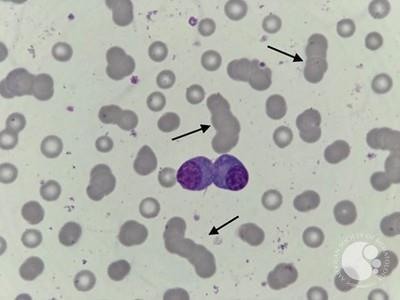
Red flags
- Bone pain / pathological fracture / lytic lesions
- Hypercalcaemia
- Unexplained renal impairment (cast nephropathy)
- Anaemia or other cytopenias
- Recurrent infections
- Features of amyloidosis (nephrotic syndrome, cardiac failure, neuropathy, macroglossia) - needs urgent referral
Assessment
Differential diagnosis
- Multiple myeloma (end-organ damage / CRAB, or myeloma-defining biomarkers)
- Smouldering (asymptomatic) myeloma (paraprotein >=30 g/L or plasma cells 10-60%, no CRAB)
- Waldenstrom macroglobulinaemia (IgM)
- AL amyloidosis / light chain deposition
- Reactive polyclonal gammopathy (infection, inflammation, liver disease)
Investigations
- Serum protein electrophoresis + immunofixation (identify and quantify paraprotein, type)
- Serum free light chains + ratio
- FBC (anaemia), U&E + corrected calcium, albumin (CRAB screen)
- 24h urine / urine electrophoresis for Bence-Jones protein
- Skeletal review only if symptomatic/red flags (whole-body MRI or low-dose CT if myeloma suspected, not needed for low-risk MGUS)
- LDH, beta-2 microglobulin if progression suspected
Management
- Screen for CRAB: hyperCalcaemia, Renal impairment, Anaemia, Bone lesions - any present means NOT MGUS, investigate for myeloma
- Confirm paraprotein <30 g/L, no CRAB, and no myeloma-defining biomarker
- Risk-stratify (non-IgG type, paraprotein >=15 g/L, abnormal free light chain ratio = higher risk)
- No treatment for MGUS - surveillance only
- Arrange follow-up monitoring (paraprotein + bloods) - interval per risk (e.g. 6 months then annually)
- Safety-net: advise re-presentation with bone pain, infections, symptoms of hypercalcaemia/renal failure
- Refer to haematology (low-risk may be GP-monitored per local pathway)
Drugs & doses
No specific treatment for MGUS - surveillance only
Treat any incidentally found complication on its own pathway (e.g. hypercalcaemia, renal impairment -> then investigate as myeloma)
Disposition
Outpatient - haematology referral for risk stratification and surveillance. Admit only if a red flag reveals active myeloma or end-organ complication.
Complications & pitfalls
- Progression to multiple myeloma / smouldering myeloma
- Waldenstrom macroglobulinaemia / lymphoma
- AL amyloidosis
- MGRS (monoclonal gammopathy of renal significance) - kidney damage despite low burden
Exam pearls
- MGUS is a diagnosis of exclusion - the job in ED is to rule out CRAB/myeloma, not to treat
- Any CRAB feature upgrades the diagnosis and mandates myeloma workup
- Remember MGRS and AL amyloidosis - a small paraprotein can still cause major renal/cardiac damage
- IgM MGUS can progress to Waldenstrom/lymphoma rather than myeloma
- Do not over-image low-risk MGUS; do fully image if any red flag
Disclaimer: Educational decision support for qualified clinicians and students — not a substitute for clinical judgement, local protocols or a full drug reference. Confirm every dose and contraindication against your formulary before prescribing.