Dizziness & vertigo in the older adult
Bedside summary
Dizziness in older people is common, often MULTIFACTORIAL, and a major cause of falls. The first task is to characterise the symptom (true rotatory vertigo vs presyncope/light-headedness vs disequilibrium vs non-specific) and, crucially, to separate benign peripheral causes from dangerous central ones (posterior-circulation stroke). Beware attributing everything to 'labyrinthitis' — in older adults a central cause and medication/orthostatic contributions must be actively excluded.
Figures & algorithms
Red flags
- Acute vertigo with any central sign (diplopia, dysarthria, limb/facial weakness, severe truncal ataxia) — posterior-circulation stroke
- Sudden unilateral hearing loss with vertigo
- New severe headache or neck pain (vertebral dissection)
- Dizziness with syncope, chest pain or an abnormal ECG (cardiac cause)
Assessment
Differential diagnosis
- Peripheral vestibular — BPPV (brief, positional), vestibular neuritis/labyrinthitis (acute sustained), Ménière disease
- Central — posterior-circulation TIA/stroke, cerebellar lesion (do not miss)
- Presyncope — orthostatic hypotension, arrhythmia, aortic stenosis, dehydration, anaemia
- Disequilibrium — polyneuropathy, parkinsonism, visual impairment, deconditioning (multisensory)
- Medication-induced and psychogenic dizziness
Investigations
- Focused history: timing/triggers, associated neurology, cardiac symptoms; TiTrATe approach (Timing, Triggers, And Targeted Examination)
- Lying/standing blood pressure; cardiac exam and ECG if presyncopal
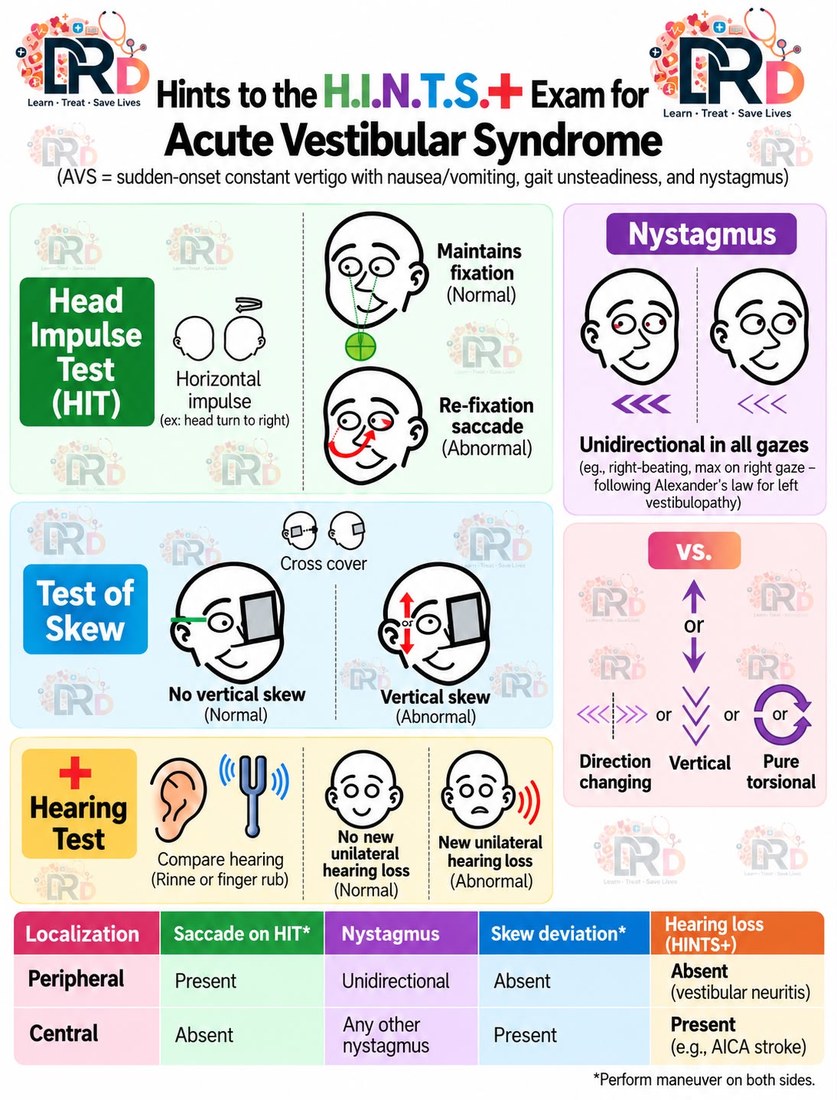
- Dix–Hallpike for suspected posterior-canal BPPV; HINTS exam in acute continuous vestibular syndrome to screen for central cause
- Neurological and gait assessment; otoscopy and hearing
- Medication review (antihypertensives, sedatives, ototoxics) and bloods (FBC, glucose, electrolytes) as indicated; neuroimaging (MRI) if central cause suspected
Management
- Characterise the dizziness and look first for RED-FLAG central features — new headache, diplopia, dysarthria, focal weakness/numbness, inability to walk unaided, or an abnormal HINTS exam — and treat as possible stroke if present.
- For positional vertigo with a positive Dix–Hallpike (BPPV), perform a canalith-repositioning (Epley) manoeuvre — highly effective and avoids sedating drugs.
- For acute sustained vestibular neuritis, a SHORT course of vestibular suppressant may ease severe acute symptoms, then STOP it early and start vestibular rehabilitation exercises (prolonged suppressants delay compensation).
- Check and treat orthostatic/cardiac contributors — review and rationalise culprit medications; manage arrhythmia or aortic stenosis appropriately.
- Address multisensory disequilibrium — vision and hearing optimisation, footwear, strength/balance training and vestibular rehab.
- Minimise sedating/anticholinergic drugs that worsen balance; treat the whole falls-risk picture.
- Safety-net and arrange follow-up; refer to ENT/neurology or falls service for persistent, recurrent or uncertain cases.
Drugs & doses
Disposition
Complications & pitfalls
- Falls and fractures
- Prolonged disability if vestibular suppressants used long-term
- Missed posterior-circulation stroke
- Fear of falling and social withdrawal
Exam pearls
- In the older adult assume dizziness is multifactorial and never settle on "labyrinthitis" before excluding central and cardiac causes.
- HINTS (done correctly in acute continuous vertigo) can outperform early MRI for posterior-circulation stroke.
- Treat BPPV with an Epley manoeuvre, not sedatives.
- Vestibular suppressants are for days, not weeks — they delay central compensation and add to falls risk.
Educational — confirm all doses against local policy.
Disclaimer: Educational decision support for qualified clinicians and students — not a substitute for clinical judgement, local protocols or a full drug reference. Confirm every dose and contraindication against your formulary before prescribing.