Neonatal (perinatal) testicular torsion
Paediatric · Genitourinary
Physician-written · Verified by three sets of doctors · Reviewed November 2026
Bedside summary
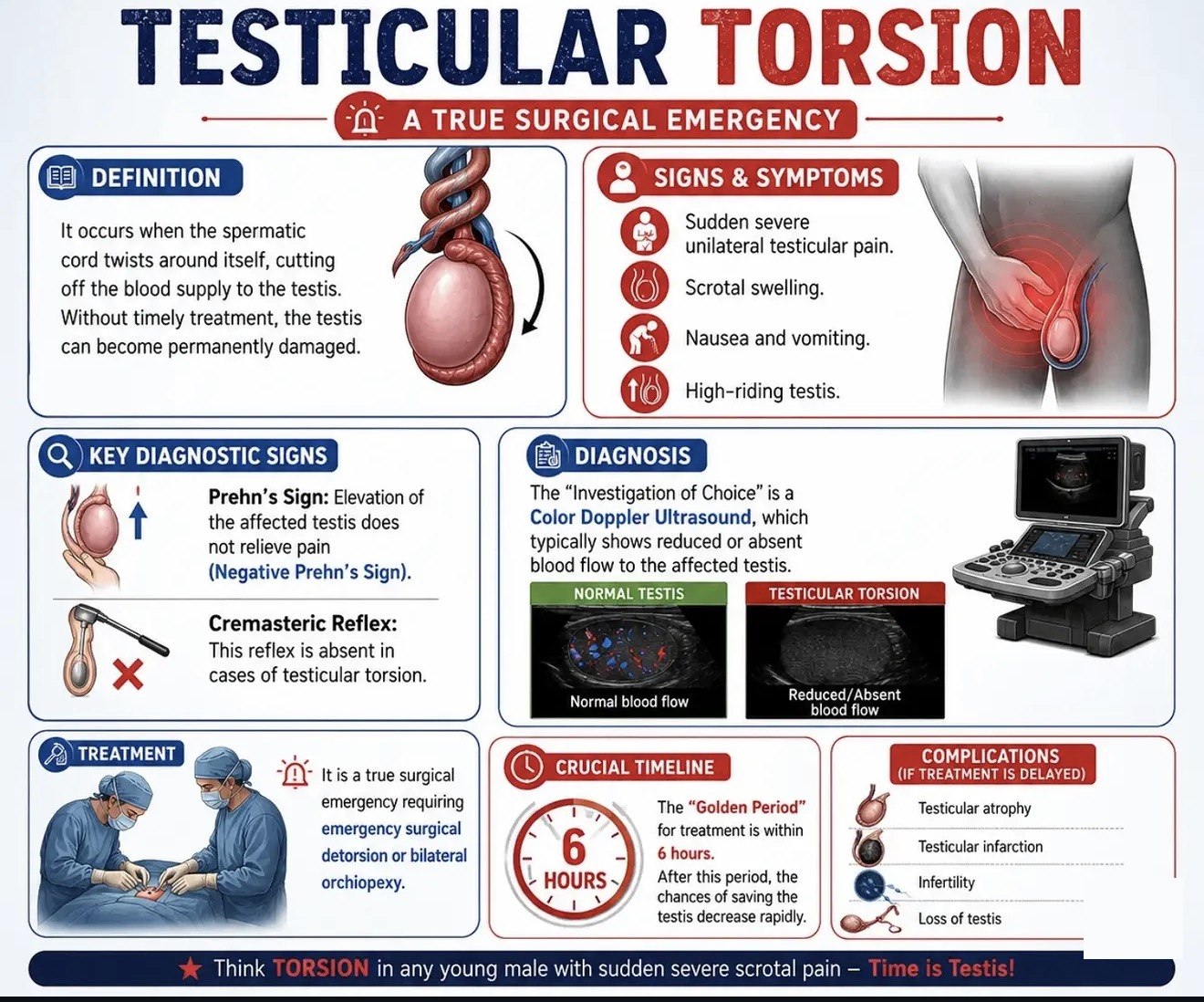
Perinatal torsion is usually extravaginal and occurs antenatally or around the time of birth. It presents as a firm, non-tender, discoloured hemiscrotum, and the affected testis is often already non-viable. The overriding concern is protecting the contralateral testis; synchronous bilateral torsion is a true emergency. Management (urgent vs delayed exploration and contralateral fixation) is debated — involve paediatric urology promptly.
Figures & algorithms
Red flags
- Bilateral involvement
- Acute postnatal change (possible salvage)
- Systemic illness
Assessment
Differential diagnosis
- Perinatal torsion vs hydrocele, hernia, tumour, scrotal haematoma
- Antenatal (usually non-salvageable) vs acute postnatal onset (possible salvage)
Investigations
- Examination (hard, dusky, non-tender testis; negative transillumination)
- Doppler ultrasound may help but must not delay surgical decision-making
Management
- Refer urgently to paediatric urology.
- Differentiate antenatal torsion (usually non-salvageable, firm from birth) from acute postnatal change.
- Explore urgently for a postnatal/acute presentation or any diagnostic doubt, chiefly to assess and fix the contralateral testis.
- Bilateral simultaneous torsion mandates emergency bilateral exploration.
- Counsel and support the parents.
Drugs & doses
Supportive care per surgical management
Disposition
Paediatric urology.
Complications & pitfalls
- Testicular loss
- Contralateral (asynchronous) torsion
- Subfertility
Exam pearls
- The priority is protecting the other testis.
- Bilateral neonatal torsion is a surgical emergency.
- A hard, non-tender, discoloured neonatal scrotum is torsion until proven otherwise.
Educational — confirm all doses against local policy.
Disclaimer: Educational decision support for qualified clinicians and students — not a substitute for clinical judgement, local protocols or a full drug reference. Confirm every dose and contraindication against your formulary before prescribing.