Necrotising fasciitis of the abdominal wall
Surgical-Sepsis · GI / Surgical
Physician-written · Verified by three sets of doctors · Reviewed November 2026
Bedside summary
Rapidly spreading necrotising soft-tissue infection of the abdominal wall, often after surgery, stoma or intra-abdominal sepsis; pain out of proportion with systemic toxicity.
Figures & algorithms
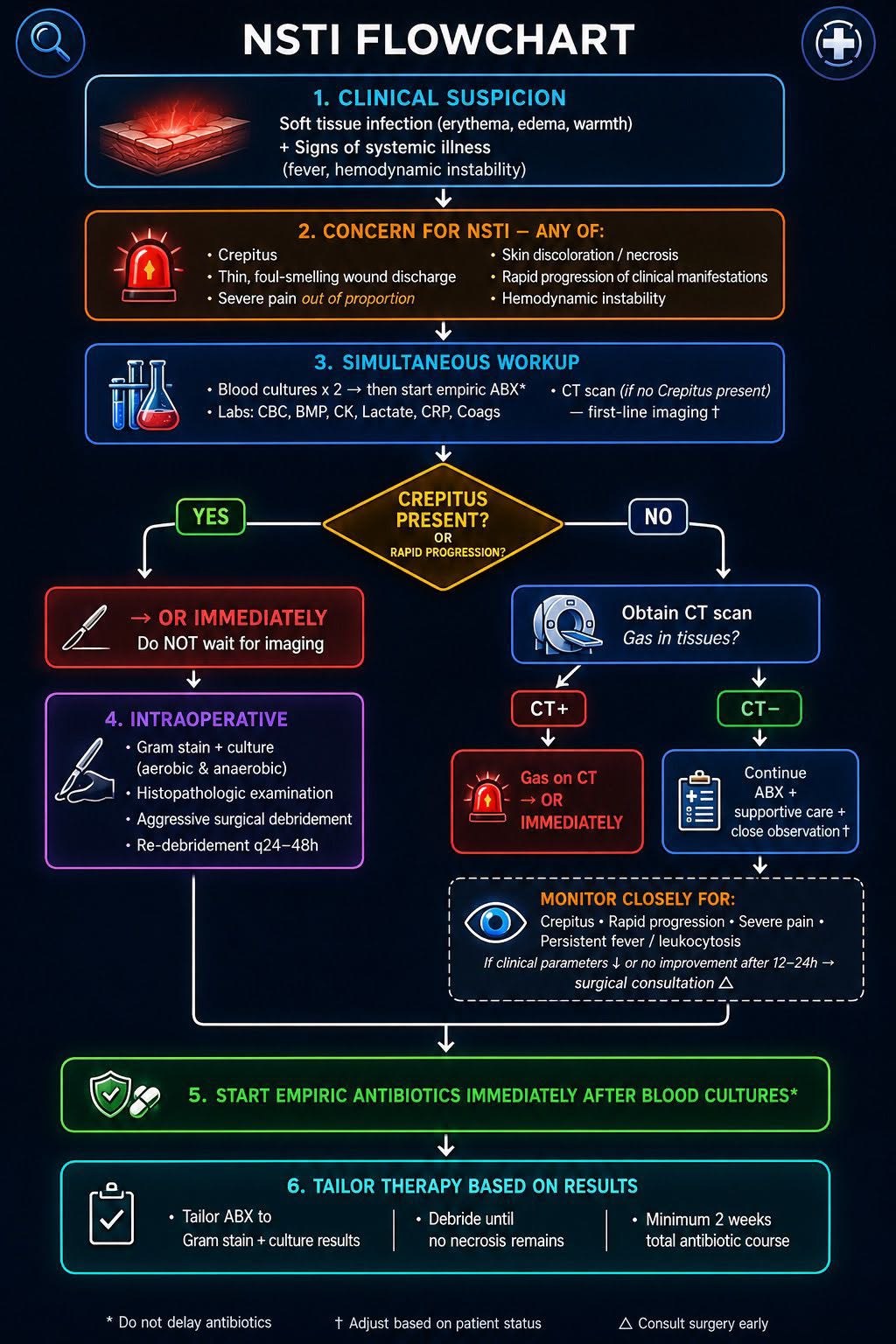
Red flags
- Pain out of proportion to skin findings
- Crepitus/gas, rapidly spreading erythema, bullae
- Septic shock, high lactate
- Skin anaesthesia over affected area
Assessment
Differential diagnosis
- Cellulitis
- Wound infection/abscess
- Fournier gangrene
- Pyoderma gangrenosum
- Rectus sheath haematoma
Investigations
- FBC, U&E, CRP, glucose, lactate, creatinine, blood cultures (LRINEC score)
- Group and save, coagulation
- CT/MRI (gas, fascial fluid) - do not delay surgery for imaging
- Wound swabs and tissue at debridement
Management
- Recognise disproportionate pain, crepitus, skin necrosis and toxicity
- Aggressive fluid resuscitation and sepsis management
- Early broad-spectrum antibiotics including anaerobic and clindamycin cover
- URGENT surgical debridement - the definitive treatment
- Repeat debridements until clean; ICU support
- Consider IVIG in streptococcal toxic shock
Drugs & doses
Broad-spectrum antibiotics (e.g. piperacillin-tazobactam or meropenem plus clindamycin)
IV crystalloid resuscitation
Vasopressors as needed
Clindamycin for antitoxin effect
Disposition
Immediate theatre; ICU; multidisciplinary care.
Complications & pitfalls
- Septic shock and multiorgan failure
- Extensive tissue loss
- Death without prompt debridement
Exam pearls
- Surgery is the priority - antibiotics alone will not control it
- LRINEC supports but does not exclude the diagnosis
- Clindamycin reduces exotoxin production
Disclaimer: Educational decision support for qualified clinicians and students — not a substitute for clinical judgement, local protocols or a full drug reference. Confirm every dose and contraindication against your formulary before prescribing.