Acute pancreatitis — severity assessment & early management
Bedside summary
Acute inflammation of the pancreas, most often from gallstones or alcohol. The first 24–48 hours determine outcome: diagnose on 2 of 3 criteria (typical pain, lipase/amylase >3x upper limit, or imaging), risk-stratify, and give GOAL-DIRECTED (moderate, not aggressive) fluid resuscitation with early enteral feeding. Antibiotics are NOT given routinely — only for proven infection.
Figures & algorithms
Red flags
- Persistent organ failure >48h (severe acute pancreatitis)
- Hypoxia / ARDS
- Oliguria, rising urea/haematocrit
- Concurrent cholangitis (fever + jaundice)
- Abdominal compartment syndrome
Assessment
Differential diagnosis
- Perforated peptic ulcer, acute cholangitis/cholecystitis, mesenteric ischaemia, ruptured AAA, inferior MI, DKA
- Identify the cause early: gallstones (commonest) vs alcohol vs hypertriglyceridaemia vs drugs/post-ERCP
Investigations
- Lipase (preferred) or amylase >3x upper limit of normal; FBC, U&E, LFTs, calcium, glucose, CRP, triglycerides, blood gas/lactate
- Transabdominal ultrasound within 24h to look for gallstones/biliary dilatation; CT is NOT needed early for diagnosis — reserve contrast CT for day 3–5 if deteriorating or diagnosis unclear
- Severity scores (e.g. modified Glasgow/APACHE II, BISAP); rising CRP (>150 at 48h), persistent organ failure and haematocrit/urea trends predict severity
Management
- Resuscitate and treat as potentially severe: ABC, oxygen, large-bore IV access, analgesia and antiemetic.
- Give goal-directed moderate fluid resuscitation — Hartmann's/lactated Ringer's preferred over 0.9% saline; titrate to urine output, heart rate and lactate rather than fixed high-volume boluses (aggressive fluids increase harm — WATERFALL trial).
- Monitor for organ failure (respiratory, cardiovascular, renal) — persistent organ failure >48h defines severe pancreatitis; escalate to HDU/ICU early.
- Start EARLY enteral nutrition (oral or NG within 24–72h as tolerated) — do not keep nil-by-mouth unnecessarily; parenteral nutrition only if enteral fails.
- Do NOT give prophylactic antibiotics; treat specific infection (cholangitis, infected necrosis) when proven or strongly suspected.
- For gallstone pancreatitis: urgent ERCP only if concurrent cholangitis or persistent biliary obstruction; arrange same-admission cholecystectomy for mild gallstone pancreatitis.
- Correct precipitants: hypertriglyceridaemia, hypercalcaemia; stop causative drugs.
Drugs & doses
Disposition
Complications & pitfalls
- Pancreatic necrosis and infected necrosis
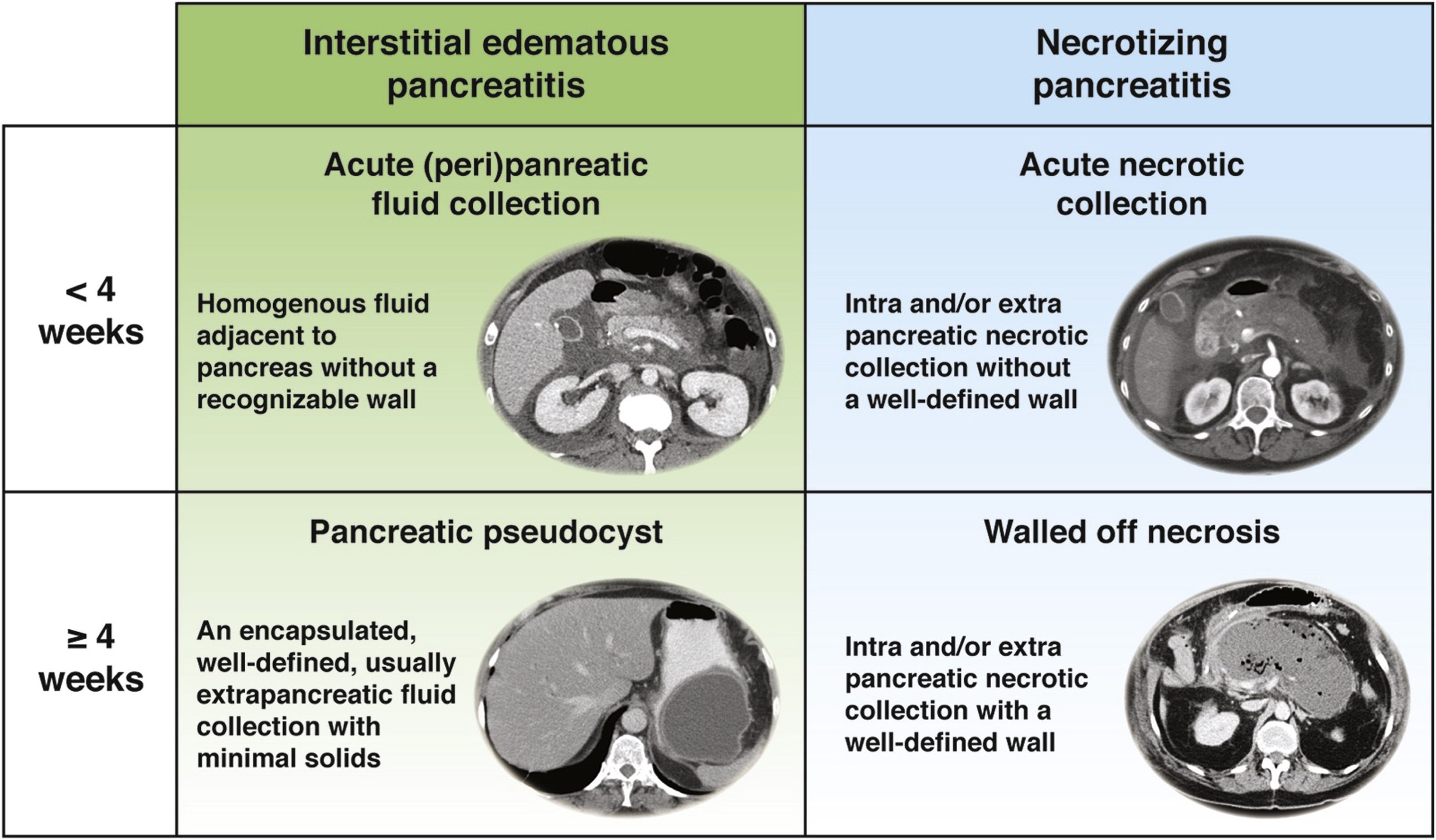
- Peripancreatic fluid collections / pseudocyst / walled-off necrosis
- ARDS, AKI, multi-organ failure
- Splanchnic vein thrombosis, pseudoaneurysm
Exam pearls
- Moderate goal-directed fluids beat aggressive resuscitation — over-filling worsens outcomes.
- Early enteral feeding is protective; routine nil-by-mouth is outdated.
- No prophylactic antibiotics — only treat proven infection.
Educational — confirm all doses against local policy. Antibiotic doses per BNF (current edition); confirm choice in the in-app Antibiotic Dosing tool.
Disclaimer: Educational decision support for qualified clinicians and students — not a substitute for clinical judgement, local protocols or a full drug reference. Confirm every dose and contraindication against your formulary before prescribing.