Wells syndrome (eosinophilic cellulitis)
Inflammatory · Dermatology
Physician-written · Verified by three sets of doctors · Reviewed November 2026
Bedside summary
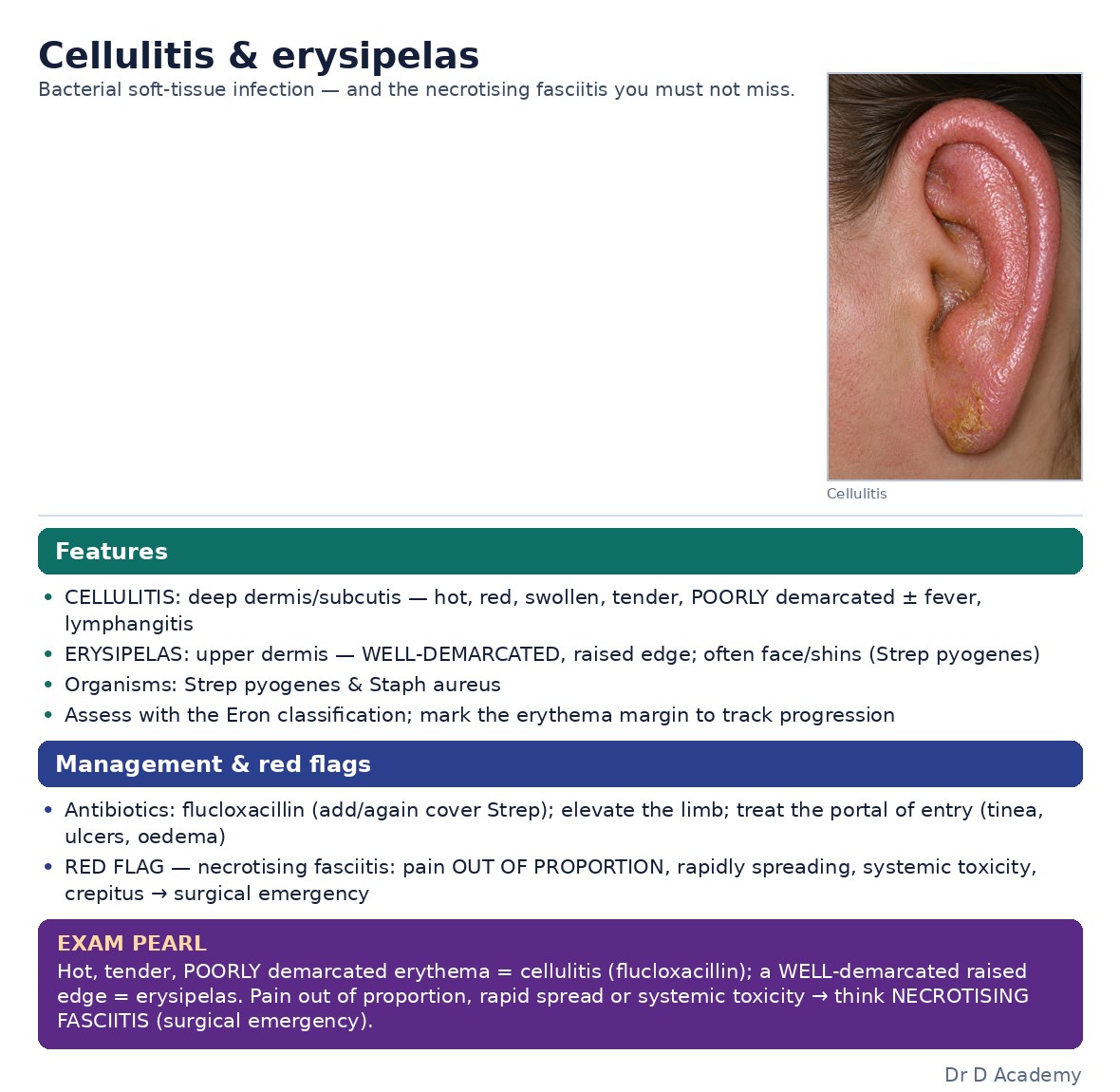
Eosinophilic cellulitis presenting as recurrent tender oedematous plaques resembling cellulitis but failing antibiotics, with peripheral/tissue eosinophilia.
Figures & algorithms
Red flags
- True infection not excluded
- Marked systemic eosinophilia
- Systemic symptoms (consider hypereosinophilic syndrome)
- Extensive involvement
Assessment
Differential diagnosis
- Bacterial cellulitis
- Contact dermatitis
- Urticaria / angioedema
- Hypereosinophilic syndrome
- Insect bite reaction
Investigations
- FBC (eosinophilia)
- Inflammatory markers
- Skin biopsy (flame figures)
- Screen for triggers / underlying disease
- Rule out infection
Management
- Consider it when cellulitis fails to respond to antibiotics
- Check FBC for eosinophilia
- Skin biopsy to confirm
- Stop unnecessary antibiotics
- Corticosteroids for treatment
- Dermatology referral and trigger avoidance
Drugs & doses
Corticosteroids (topical or systemic)
Antihistamines
Analgesia
Disposition
Dermatology referral; usually outpatient.
Complications & pitfalls
- Recurrent flares
- Misdiagnosis / antibiotic overuse
- Residual skin changes
Exam pearls
- Suspect it in antibiotic-unresponsive "cellulitis" with eosinophilia.
- Biopsy showing flame figures is characteristic.
Disclaimer: Educational decision support for qualified clinicians and students — not a substitute for clinical judgement, local protocols or a full drug reference. Confirm every dose and contraindication against your formulary before prescribing.