The acute red leg (cellulitis mimics)
Cellulitis mimics · Dermatology
Physician-written · Verified by three sets of doctors · Reviewed November 2026
Bedside summary
A red leg is frequently NOT cellulitis - especially when bilateral. Common mimics include venous eczema/stasis dermatitis, lipodermatosclerosis, DVT, acute gout and contact dermatitis. Recognising them avoids unnecessary antibiotics and admission.
Figures & algorithms
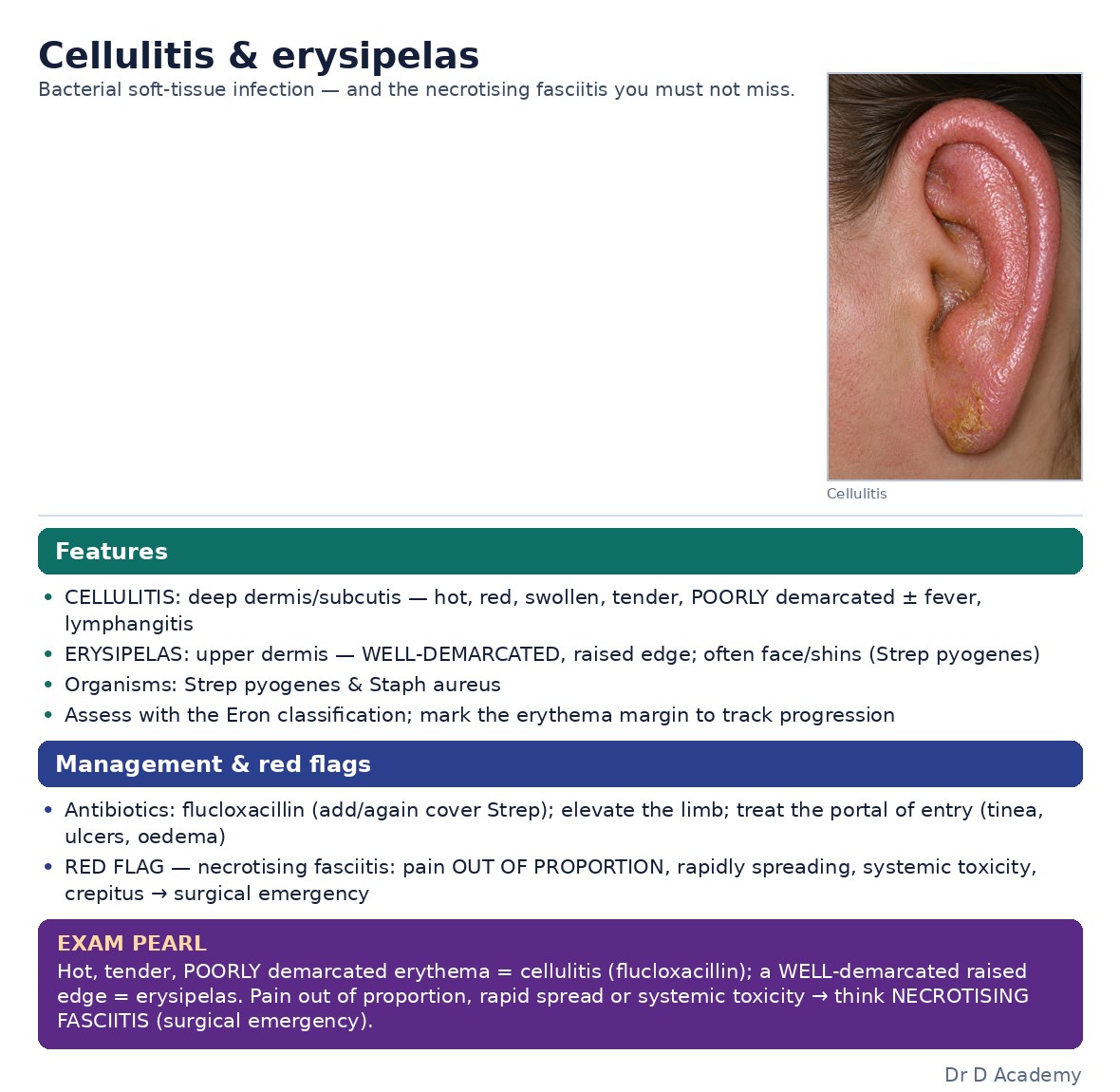
Assessment
Investigations
- Bilateral red legs are rarely cellulitis - reconsider the diagnosis
- Assess for venous disease, DVT (Wells), gout, contact dermatitis
- Check temperature, systemic features and demarcation
Management
- Diagnose and treat the actual cause (emollients/steroid for venous eczema, anticoagulate DVT, treat gout)
- Reserve antibiotics for genuine cellulitis (usually unilateral, hot, spreading, systemic upset)
- Elevation and compression for venous causes (once DVT excluded)
- Avoid unnecessary antibiotics and admission
- Dermatology/vascular follow-up as needed
Drugs & doses
Treat the real cause
Flucloxacillin 1 g IV/PO QDS (clindamycin 600 mg QDS if penicillin-allergic) — BNF
Disposition
Per cause.
Bilateral red legs are almost never cellulitis - think venous eczema, lipodermatosclerosis, DVT or gout before reaching for antibiotics. Antibiotic doses per BNF (current edition); confirm choice in the in-app Antibiotic Dosing tool.
Disclaimer: Educational decision support for qualified clinicians and students — not a substitute for clinical judgement, local protocols or a full drug reference. Confirm every dose and contraindication against your formulary before prescribing.