Severe / complicated varicella in adults & immunocompromised
Bedside summary
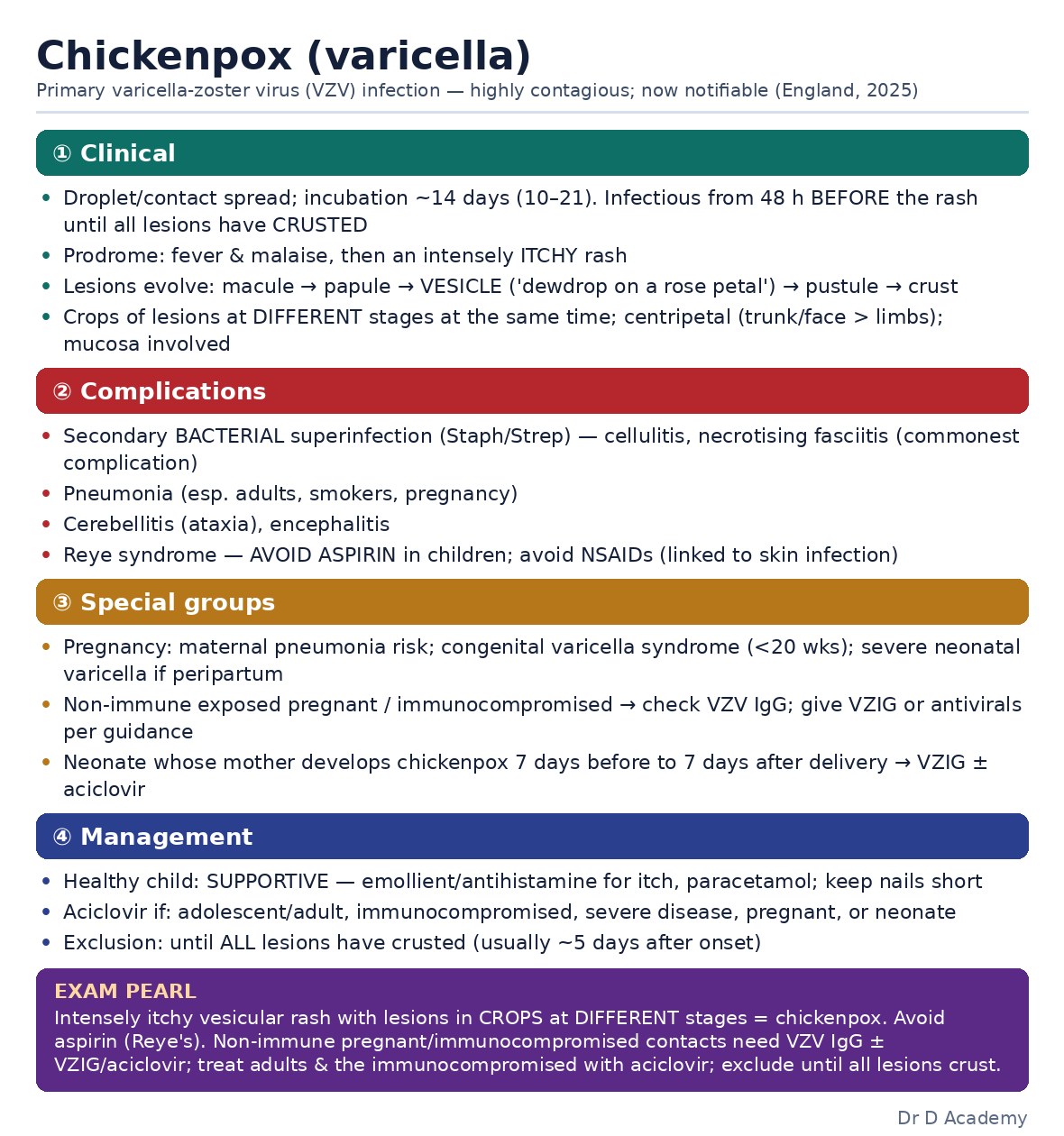
Primary varicella (chickenpox) is usually benign in children but can be severe or life-threatening in adults, pregnant women, neonates and the immunocompromised, who are at risk of visceral dissemination (pneumonia, hepatitis, encephalitis). Prompt systemic aciclovir, careful supportive care and isolation are essential, and susceptible high-risk contacts need post-exposure prophylaxis.
Figures & algorithms
Red flags
- Breathlessness/hypoxia (varicella pneumonia — high mortality in adults/pregnancy)
- Confusion, seizures or ataxia (CNS involvement)
- Haemorrhagic lesions or rapidly worsening systemic illness (immunocompromised)
- Secondary invasive group A streptococcal infection / necrotising fasciitis
Assessment
Differential diagnosis
- Disseminated herpes zoster and herpes simplex
- Mpox and other vesiculopustular eruptions
- Eczema herpeticum, bullous/drug eruptions
- Hand-foot-mouth disease, rickettsialpox
Investigations
- Usually clinical (crops of lesions at different stages); confirm with vesicle-fluid VZV PCR when uncertain or in immunocompromised/atypical cases
- Assess for complications: chest signs/hypoxia (pneumonia), hepatitis (LFTs), neurology (encephalitis/cerebellar ataxia), secondary bacterial infection
- Check pregnancy and immune status; identify exposed susceptible contacts
- Baseline bloods including LFTs and renal function (aciclovir dosing/hydration)
Management
- Isolate the patient and identify risk group (adult, pregnant, neonate, immunocompromised) — these patients need active treatment.
- Start systemic aciclovir promptly (IV for severe/disseminated disease, pneumonia, encephalitis, or the significantly immunocompromised; oral antiviral for milder adult disease within 24 h of rash).
- Provide supportive care: hydration, analgesia/antipruritics, and treat secondary bacterial infection of lesions.
- Monitor for and manage visceral complications: respiratory support for varicella pneumonia, neurological assessment for encephalitis/ataxia.
- Give post-exposure prophylaxis to susceptible high-risk contacts — varicella-zoster immunoglobulin (or antiviral prophylaxis) for pregnant/immunocompromised/neonatal contacts, or vaccine for eligible immunocompetent contacts.
- Involve obstetrics for pregnant patients and specialists for the immunocompromised; ensure appropriate ventilation/isolation precautions.
Drugs & doses
Disposition
Complications & pitfalls
- Varicella pneumonia
- Encephalitis and cerebellar ataxia
- Hepatitis and disseminated disease
- Secondary bacterial infection including necrotising fasciitis; congenital/neonatal varicella
Exam pearls
- Chickenpox in an adult, pregnant or immunocompromised patient is potentially serious — treat with antivirals, do not just observe.
- New breathlessness in adult varicella suggests pneumonia and needs urgent assessment.
- Protect susceptible high-risk contacts with VZIG/antiviral prophylaxis after exposure.
Educational — confirm all doses against local policy. Antibiotic doses per BNF (current edition); confirm choice in the in-app Antibiotic Dosing tool.
Disclaimer: Educational decision support for qualified clinicians and students — not a substitute for clinical judgement, local protocols or a full drug reference. Confirm every dose and contraindication against your formulary before prescribing.