Retrobulbar haemorrhage / orbital compartment syndrome
Sight-threatening · Ophthalmology
Physician-written · Verified by three sets of doctors · Reviewed November 2026
Bedside summary
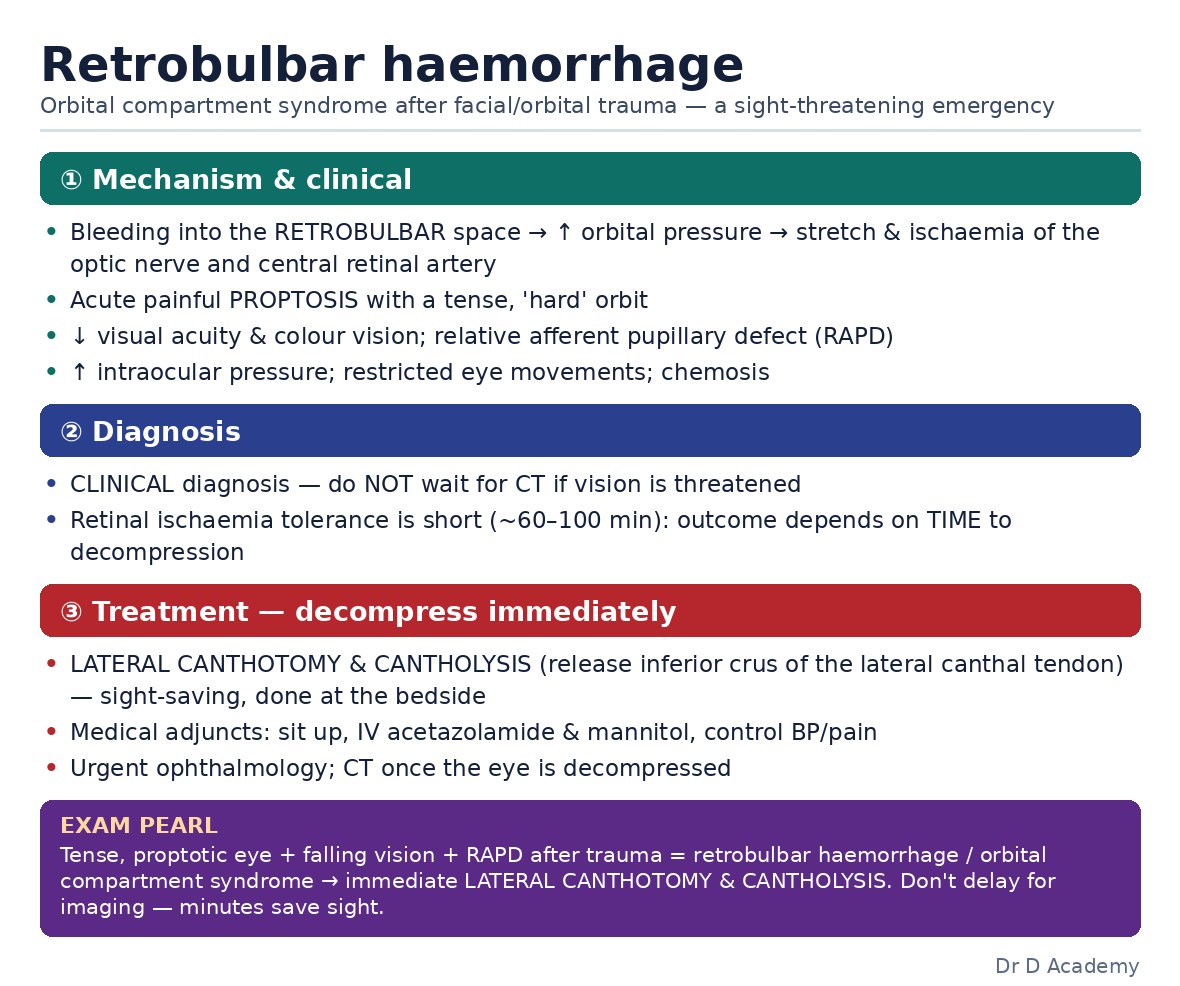
Bleeding behind the globe (trauma, surgery, anticoagulation) raises orbital pressure and compresses the optic nerve and its blood supply, causing rapid irreversible blindness. Lateral canthotomy and cantholysis decompress the orbit and must be done within minutes.
Figures & algorithms
Assessment
Investigations
- Proptosis, tense globe, painful ophthalmoplegia
- Reduced acuity / RAPD
- Raised intra-ocular pressure
- Do NOT delay for CT if vision threatened
Management
- Recognise the sight-threatening emergency
- Perform lateral canthotomy and inferior cantholysis immediately
- Stop/reverse anticoagulation; control blood pressure
- Reduce IOP medically (acetazolamide, topical agents) as adjunct
- Urgent ophthalmology referral
Drugs & doses
Acetazolamide 500 mg IV
Topical IOP-lowering drops
Disposition
Ophthalmology; theatre.
A tense proptosed eye with falling vision needs lateral canthotomy at the bedside - imaging can wait, the optic nerve cannot.
Disclaimer: Educational decision support for qualified clinicians and students — not a substitute for clinical judgement, local protocols or a full drug reference. Confirm every dose and contraindication against your formulary before prescribing.