Peritonsillar abscess (quinsy)
Infection · ENT
Physician-written · Verified by three sets of doctors · Reviewed November 2026
Bedside summary
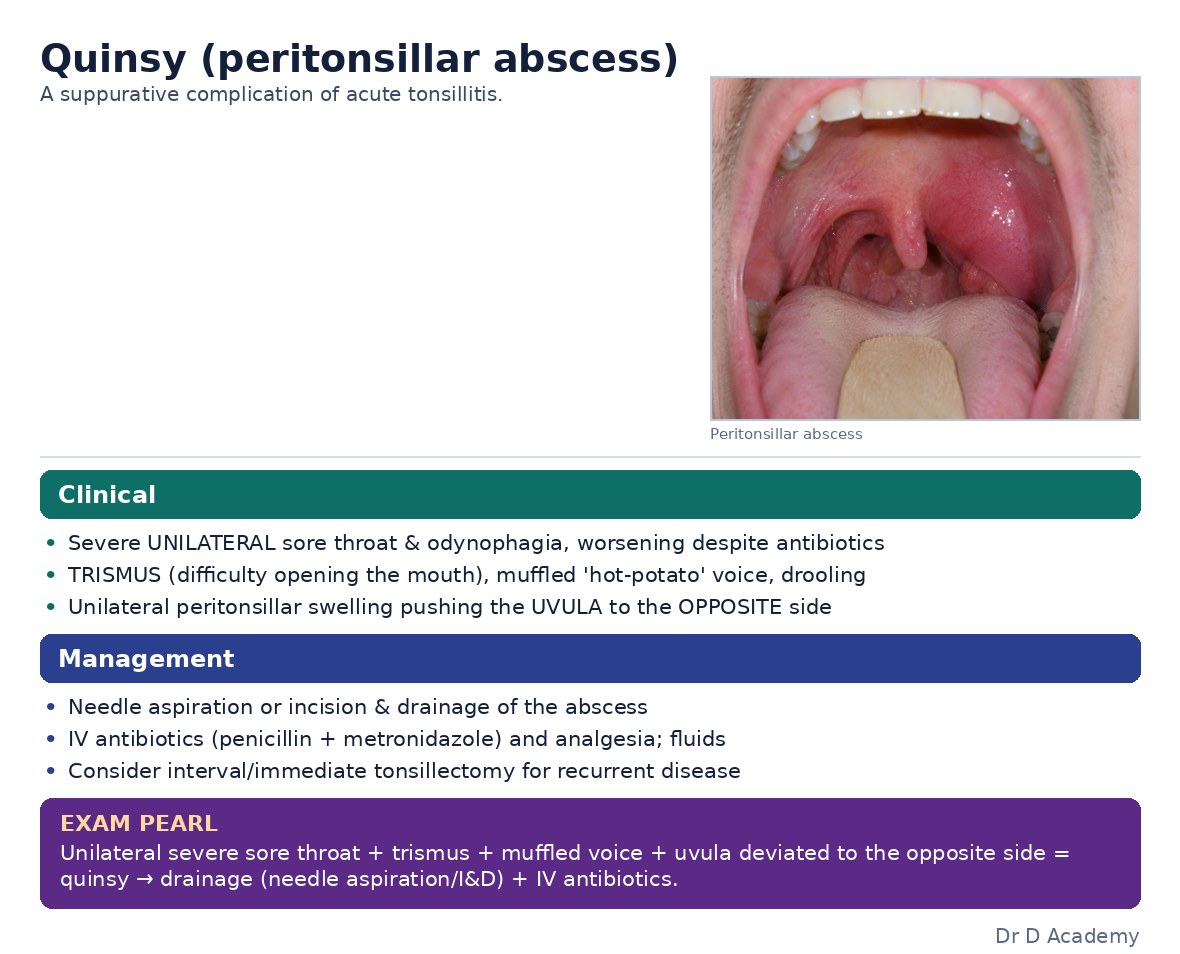
Collection of pus between the tonsillar capsule and pharyngeal muscles. Trismus, “hot potato” voice and uvular deviation.
Figures & algorithms
Red flags
- Airway compromise, drooling, stridor
- Inability to swallow saliva
- Spread to deep neck spaces
Assessment
Differential diagnosis
- Severe tonsillitis
- Parapharyngeal abscess
- Epiglottitis
- Infectious mononucleosis
- Retropharyngeal abscess
Investigations
- Clinical diagnosis (unilateral swelling, uvular deviation, trismus)
- Bloods incl. cultures, monospot if EBV suspected
- CT if deep-space spread suspected
Management
- Analgesia; assess airway and hydration
- Needle aspiration or incision & drainage of the abscess
- IV antibiotics (cover streptococci/anaerobes) + steroids (per practice)
- IV fluids if dehydrated; ENT referral
- Watch for airway compromise/deep spread
Drugs & doses
IV benzylpenicillin/co-amoxiclav + metronidazole (local)
Dexamethasone; analgesia; IV fluids
Disposition
ENT referral; admit if airway risk/unable to swallow.
Complications & pitfalls
- Airway obstruction
- Parapharyngeal/retropharyngeal spread
- Lemierre’s syndrome
Exam pearls
- Drainage is therapeutic and diagnostic
- Trismus + uvular deviation + hot-potato voice = quinsy
- Steroids reduce symptoms and speed recovery
Drain the abscess, give IV antibiotics and steroids, hydrate, and involve ENT.
Disclaimer: Educational decision support for qualified clinicians and students — not a substitute for clinical judgement, local protocols or a full drug reference. Confirm every dose and contraindication against your formulary before prescribing.