Oral pemphigus vulgaris & mucous membrane pemphigoid
Bedside summary
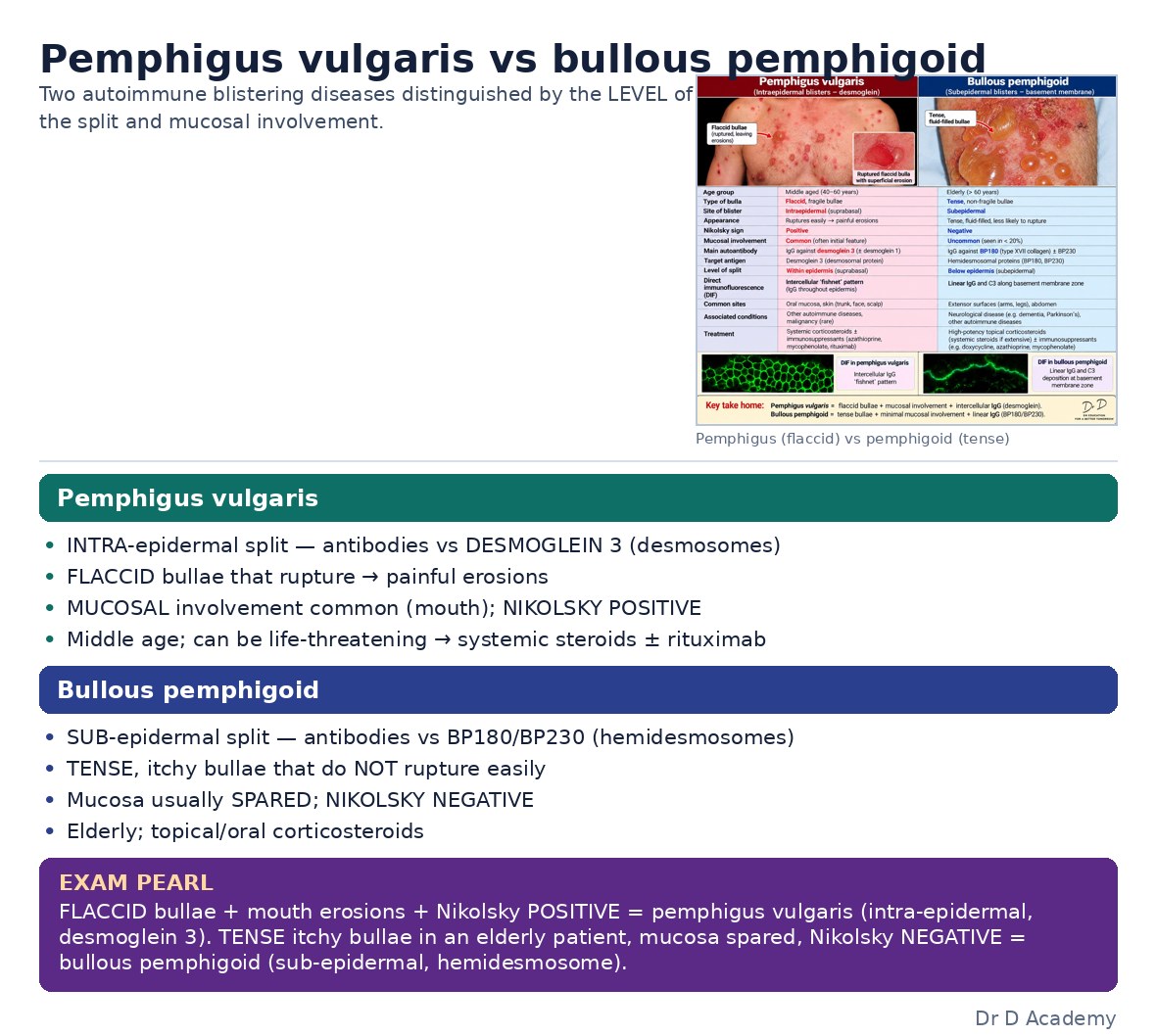
Autoimmune blistering diseases that frequently present first in the mouth. Pemphigus vulgaris (anti-desmoglein) causes fragile intra-epithelial bullae that rupture to painful erosions and a positive Nikolsky sign, and can be life-threatening with skin involvement. Mucous membrane pemphigoid (sub-epithelial) causes more robust blisters and desquamative gingivitis and threatens the eyes with scarring. Early diagnosis (biopsy with immunofluorescence) and immunosuppression are key.
Figures & algorithms
Red flags
- Extensive skin blistering/erosions with fluid loss or sepsis (pemphigus — can be fatal)
- Ocular involvement (pemphigoid — risk of blinding scarring)
- Dysphagia/airway or oesophageal involvement
- Positive Nikolsky sign with rapid spread
Assessment
Differential diagnosis
- Erosive oral lichen planus
- Erythema multiforme / Stevens-Johnson syndrome
- Recurrent aphthous stomatitis, viral stomatitis
- Other causes of desquamative gingivitis
Investigations
- Perilesional incisional biopsy for histology AND direct immunofluorescence (essential to distinguish the two)
- Serum for indirect immunofluorescence / autoantibodies (anti-desmoglein for pemphigus; BP180/laminin for pemphigoid)
- Assess for extra-oral involvement: skin, eyes (ophthalmology for pemphigoid), oesophagus, genital mucosa
Management
- Recognise persistent, painful oral erosions/blisters and desquamative gingivitis, and arrange biopsy with immunofluorescence promptly.
- Assess severity and extent: widespread skin involvement in pemphigus can cause fluid loss, infection and sepsis (manage like a burn).
- Start immunosuppression — systemic corticosteroids are the mainstay, with steroid-sparing agents (and rituximab for pemphigus) under specialist care.
- Use potent topical corticosteroids for localised oral disease.
- Supportive care: analgesia, soft diet, meticulous oral hygiene, treat secondary infection (candida/bacterial).
- Refer early to dermatology/oral medicine (and ophthalmology for mucous membrane pemphigoid) to prevent scarring and complications.
Drugs & doses
Disposition
Complications & pitfalls
- Sepsis and fluid/electrolyte loss (widespread pemphigus)
- Ocular scarring and blindness (mucous membrane pemphigoid)
- Scarring strictures (oesophageal, laryngeal)
- Immunosuppression-related infection
Exam pearls
- Persistent painful oral erosions that will not heal need a biopsy WITH immunofluorescence — do not just keep treating as aphthae.
- Pemphigus with skin involvement is potentially life-threatening; manage fluid loss and infection like a burn.
- Mucous membrane pemphigoid threatens the eyes — refer to ophthalmology early.
Educational — confirm all doses against local policy.
Disclaimer: Educational decision support for qualified clinicians and students — not a substitute for clinical judgement, local protocols or a full drug reference. Confirm every dose and contraindication against your formulary before prescribing.