Herpangina and hand-foot-and-mouth disease
Enteroviral oral vesicles, child · Dental & Oral
Physician-written · Verified by three sets of doctors · Reviewed November 2026
Bedside summary
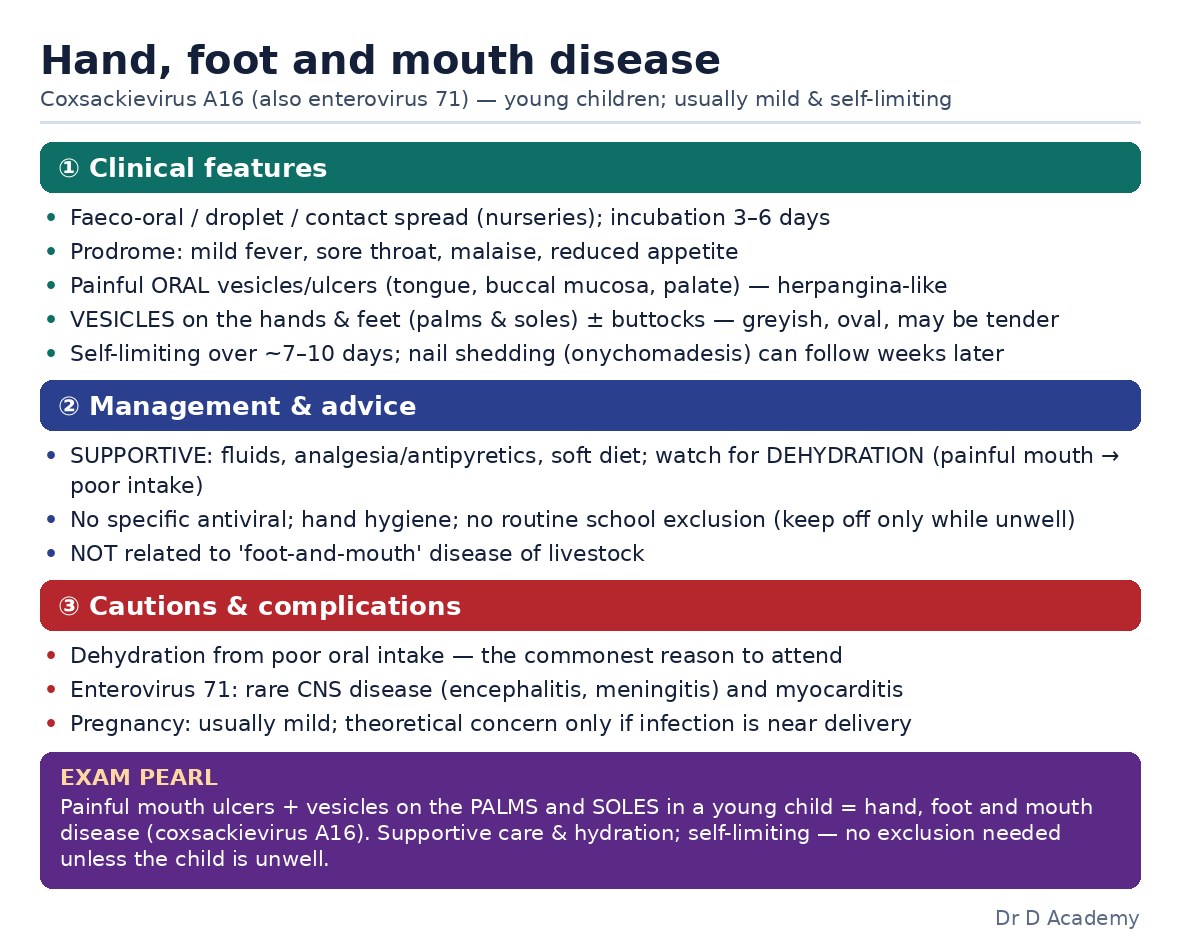
Enteroviral (coxsackievirus A, enterovirus 71) infections causing painful oral vesicles/ulcers. Herpangina affects the soft palate and tonsillar pillars; hand-foot-and-mouth disease adds vesicles on hands, feet and buttocks. Usually self-limiting but can cause dehydration in young children.
Figures & algorithms
Red flags
- Dehydration / refusal of fluids
- Lethargy, ataxia, myoclonus or seizures (EV71 CNS involvement)
- High fever with marked systemic upset
- Immunocompromised host
Assessment
Differential diagnosis
- Primary herpetic gingivostomatitis
- Aphthous stomatitis
- Streptococcal/viral tonsillitis
- Erythema multiforme
- Varicella
- Chickenpox
Investigations
- Clinical diagnosis — posterior oral vesicles (herpangina) +/- hand/foot/buttock rash
- Assess hydration and oral intake
- Temperature and systemic assessment
- Enteroviral PCR only if atypical/severe or outbreak surveillance
- Check for rare neurological complications (EV71)
Management
- Confirm diagnosis and reassure — self-limiting over 7-10 days
- Assess and support hydration — the main concern in young children
- Analgesia and topical soothing agents to enable drinking
- Encourage cool fluids and soft, bland diet
- Antipyretics for fever/discomfort
- Advise hand hygiene to limit spread (faecal-oral/respiratory)
- Admit for IV fluids if intake inadequate
- Safety-net: return for dehydration, lethargy or neurological signs
Drugs & doses
Paracetamol — 15 mg/kg PO QDS (adult 1 g QDS) — analgesia/antipyretic
Ibuprofen — 5-10 mg/kg PO TDS (adult 400 mg TDS) — analgesia
Benzydamine 0.15% oral rinse/spray — topical analgesia (older children/adults)
Lidocaine 2% gel — sparing topical use before meals
Disposition
Discharge most with hydration and analgesia advice; admit for IV fluids if intake poor; return advice for dehydration or neurological features.
Complications & pitfalls
- Dehydration
- Rarely encephalitis/meningitis (enterovirus 71)
- Myocarditis (rare)
- Nail shedding (onychomadesis) weeks later
- Secondary bacterial infection
Exam pearls
- Antivirals are ineffective — management is supportive hydration and analgesia
- Lesions confined to the posterior oropharynx suggest herpangina; anterior gums/lips suggest HSV
- EV71 outbreaks carry a small risk of serious neurological disease — safety-net clearly
Disclaimer: Educational decision support for qualified clinicians and students — not a substitute for clinical judgement, local protocols or a full drug reference. Confirm every dose and contraindication against your formulary before prescribing.