Cellulitis / erysipelas (severe)
Skin infection · Dermatology
Physician-written · Verified by three sets of doctors · Reviewed November 2026
Bedside summary
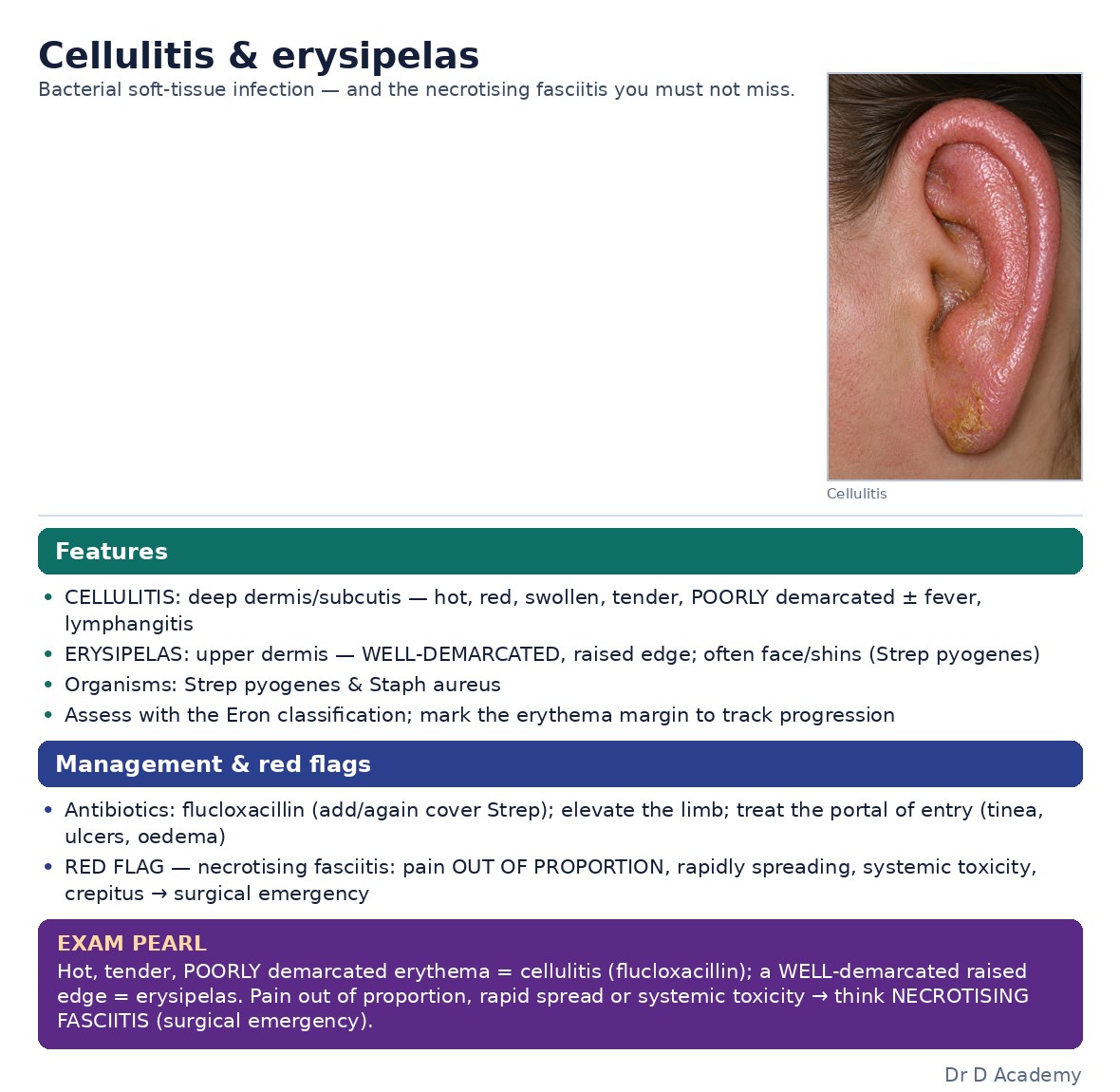
Acute spreading bacterial infection of the dermis/subcutis (cellulitis) or upper dermis with sharp raised borders (erysipelas), usually streptococcal/staphylococcal. ED role is grading severity and excluding necrotising infection.
Figures & algorithms
Red flags
- Pain out of proportion, crepitus, dusky/necrotic skin (necrotising)
- Sepsis
- Rapidly advancing border
- Orbital/peri-orbital or facial involvement
Assessment
Differential diagnosis
- Necrotising fasciitis
- DVT
- Acute gout
- Stasis dermatitis / venous eczema
- Contact dermatitis
- Septic arthritis (periarticular)
Investigations
- FBC, CRP, U&E, blood cultures if systemic
- Mark the erythema border to track progression
- Wound swab if discharge; glucose
- Consider imaging if abscess/necrotising suspected
Management
- Grade severity (Eron/CREST); identify entry point (tinea, ulcer)
- Oral antibiotics for mild; IV for systemic upset or rapid spread
- Elevate the limb; analgesia; treat any portal of entry
- Mark and review the border; watch for failure to improve
- Admit for IV therapy / OPAT if moderate-severe
Drugs & doses
Flucloxacillin (or clindamycin/doxycycline if penicillin-allergic)
Flucloxacillin 1 g IV/PO QDS (clindamycin 600 mg QDS if penicillin-allergic) — BNF
Analgesia
Disposition
Discharge mild with oral antibiotics + review; admit/OPAT for systemic or severe disease.
Complications & pitfalls
- Necrotising fasciitis
- Abscess
- Sepsis
- Recurrence/lymphoedema
Exam pearls
- Pain out of proportion to appearance = think necrotising infection
- Bilateral lower-leg “cellulitis” is usually venous eczema, not infection
- Mark the border to judge response
Grade severity, treat the entry point, and stay alert for necrotising infection. Antibiotic doses per BNF (current edition); confirm choice in the in-app Antibiotic Dosing tool.
Disclaimer: Educational decision support for qualified clinicians and students — not a substitute for clinical judgement, local protocols or a full drug reference. Confirm every dose and contraindication against your formulary before prescribing.