Bullous impetigo
Staphylococcal skin infection · Dermatology
Physician-written · Verified by three sets of doctors · Reviewed November 2026
Bedside summary
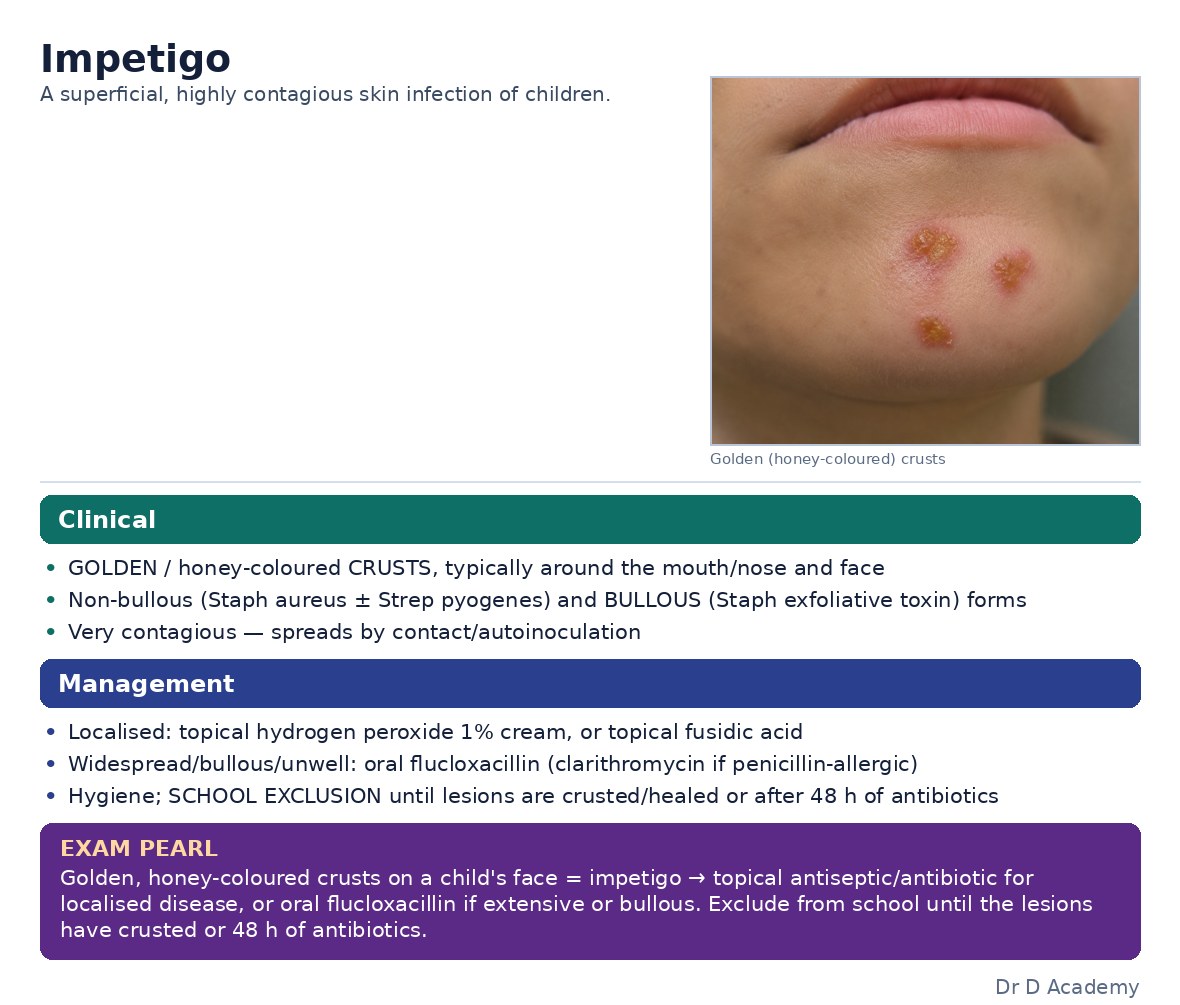
Staphylococcal toxin causes flaccid blisters that rupture to leave a varnish-like crust, mainly in children, and is contagious. Topical or oral antibiotics and hygiene measures treat it; watch for widespread disease (SSSS spectrum).
Figures & algorithms
Assessment
Investigations
- Inspect flaccid bullae/golden crusts
- Assess extent and systemic features
- Swab if extensive/treatment failure
Management
- Localised: topical antibiotic (e.g. fusidic acid) or short oral course
- Widespread/systemic: oral anti-staphylococcal antibiotics
- Hygiene and exclusion from school until lesions crust/treated
- Watch for staphylococcal scalded skin syndrome
- Safety-net and follow-up
Drugs & doses
Empirical antibiotics per BNF — see the in-app Antibiotic Dosing tool
Disposition
Discharge with advice.
Flaccid blisters with a varnish-like crust are bullous impetigo - treat the staph and watch extensive cases for scalded skin syndrome. Antibiotic doses per BNF (current edition); confirm choice in the in-app Antibiotic Dosing tool.
Disclaimer: Educational decision support for qualified clinicians and students — not a substitute for clinical judgement, local protocols or a full drug reference. Confirm every dose and contraindication against your formulary before prescribing.