Thyroid eye disease (Graves orbitopathy)
TED · Endocrine
Physician-written · Verified by three sets of doctors · Reviewed November 2026
Bedside summary
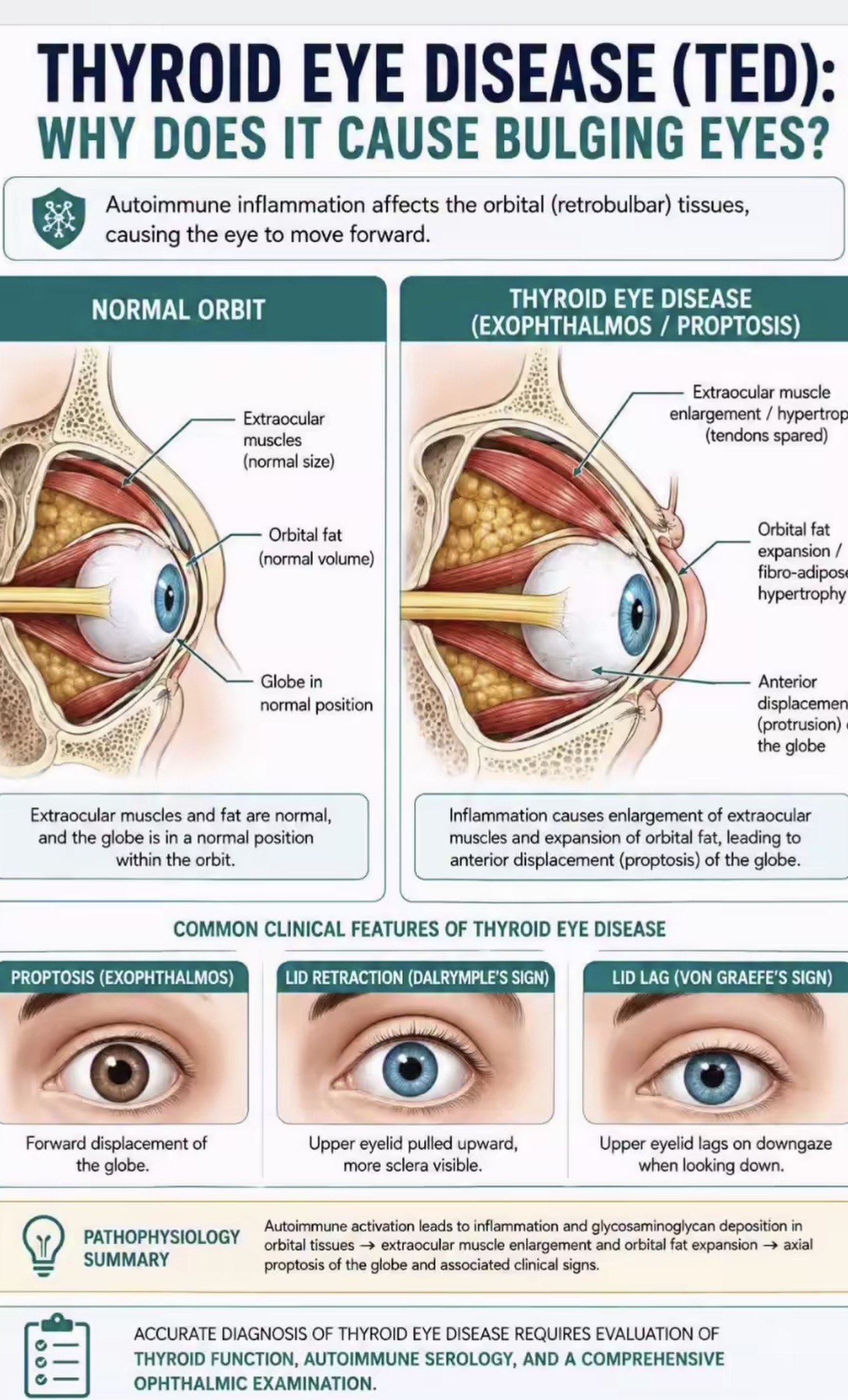
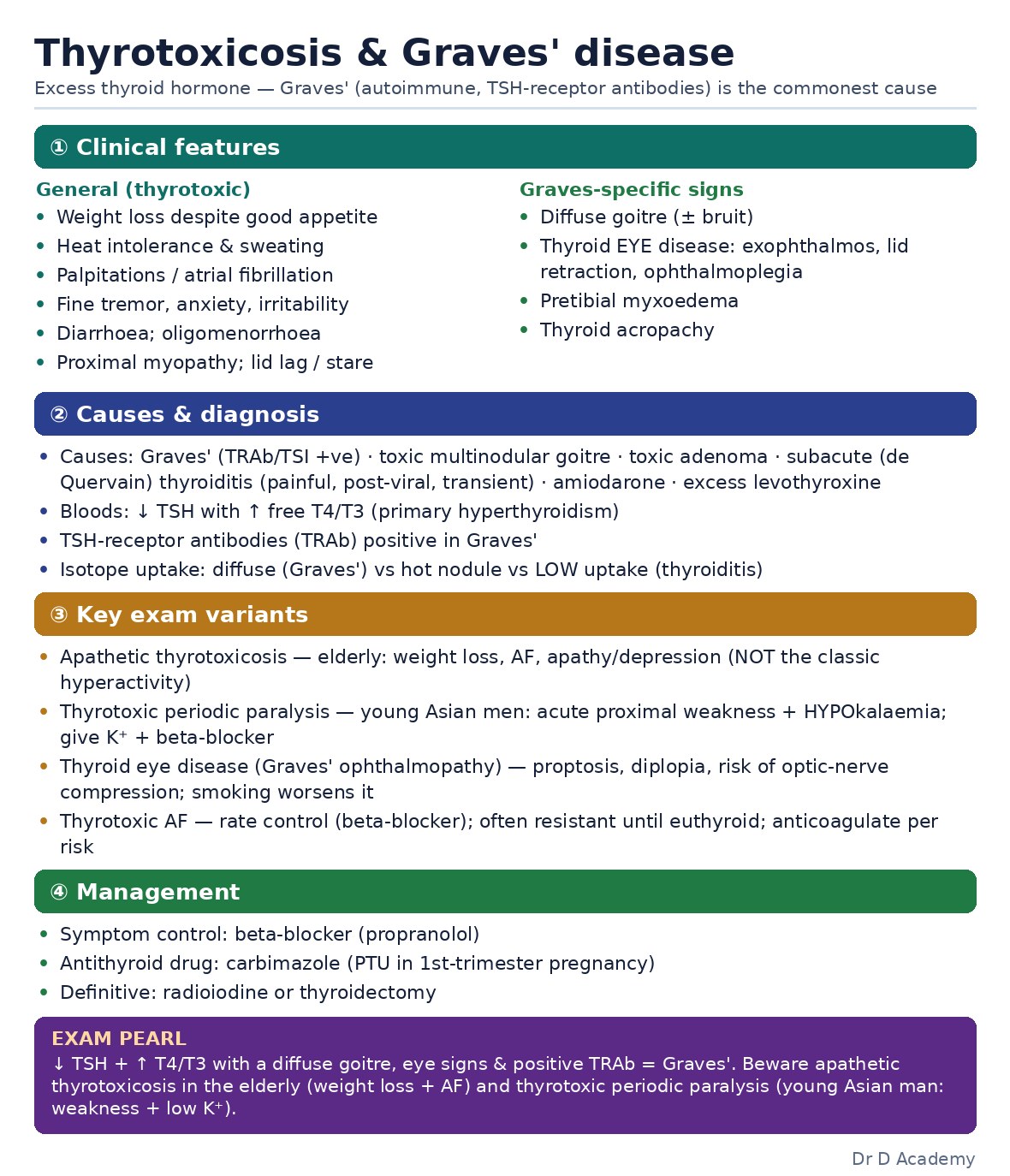
Autoimmune inflammation of orbital fat and extraocular muscles associated with Graves disease, causing proptosis, diplopia and lid retraction. Early control of smoking and thyroid status, plus immunomodulation in active moderate-severe disease, preserves vision.
Figures & algorithms
Red flags
- Reduced visual acuity or colour vision (optic neuropathy)
- New relative afferent pupillary defect
- Corneal exposure/ulceration from severe proptosis
- Globe subluxation
- Rapidly progressive proptosis or diplopia
Assessment
Differential diagnosis
- Orbital cellulitis
- Orbital tumour/lymphoma
- Idiopathic orbital inflammation (pseudotumour)
- Carotid-cavernous fistula
- IgG4-related orbital disease
Investigations
- Visual acuity, colour vision and relative afferent pupillary defect
- Clinical Activity Score assessment
- Exophthalmometry and ocular motility testing
- TSH, free T4/T3 and TSH-receptor antibodies
- Orbital CT or MRI (muscle enlargement, apical crowding)
Management
- Stop smoking (strongest modifiable risk factor) and restore euthyroidism promptly
- Avoid radioiodine in active moderate-severe disease, or cover with steroids
- Grade severity and activity using Clinical Activity Score and sight-threatening features
- Treat mild disease with lubricants, selenium and local measures
- Treat active moderate-severe disease with IV methylprednisolone pulses
- Consider teprotumumab, mycophenolate, rituximab or orbital radiotherapy for refractory disease
- Refer sight-threatening optic neuropathy or corneal breakdown emergently
- Offer rehabilitative surgery (decompression, squint, lid) once inactive
- Monitor vision and activity throughout
Drugs & doses
Methylprednisolone 500 mg IV weekly x6 then 250 mg weekly x6 (cumulative <8 g)
Selenium 100 micrograms PO twice daily for mild active disease (6 months)
Teprotumumab 10 mg/kg then 20 mg/kg IV 3-weekly x8 (IGF-1R antibody)
Mycophenolate mofetil 500-1000 mg PO twice daily as steroid-sparing agent
Ocular lubricants/carbomer gel regularly
Disposition
Joint thyroid-eye clinic with ophthalmology; emergency ophthalmology referral for any sight-threatening feature and surgical planning once disease is inactive.
Complications & pitfalls
- Dysthyroid optic neuropathy and blindness
- Exposure keratopathy
- Persistent diplopia
- Disfiguring proptosis and lid retraction
- Steroid treatment adverse effects
Exam pearls
- Smoking cessation and stable euthyroidism are the foundation of all treatment
- Radioiodine can worsen active eye disease; use steroid cover or choose another modality
- Teprotumumab produces marked proptosis reduction in active disease
- Any drop in colour vision signals optic neuropathy and demands urgent action
Disclaimer: Educational decision support for qualified clinicians and students — not a substitute for clinical judgement, local protocols or a full drug reference. Confirm every dose and contraindication against your formulary before prescribing.