Cushing's syndrome
Endocrine · Endocrine
Physician-written · Verified by three sets of doctors · Reviewed November 2026
Bedside summary
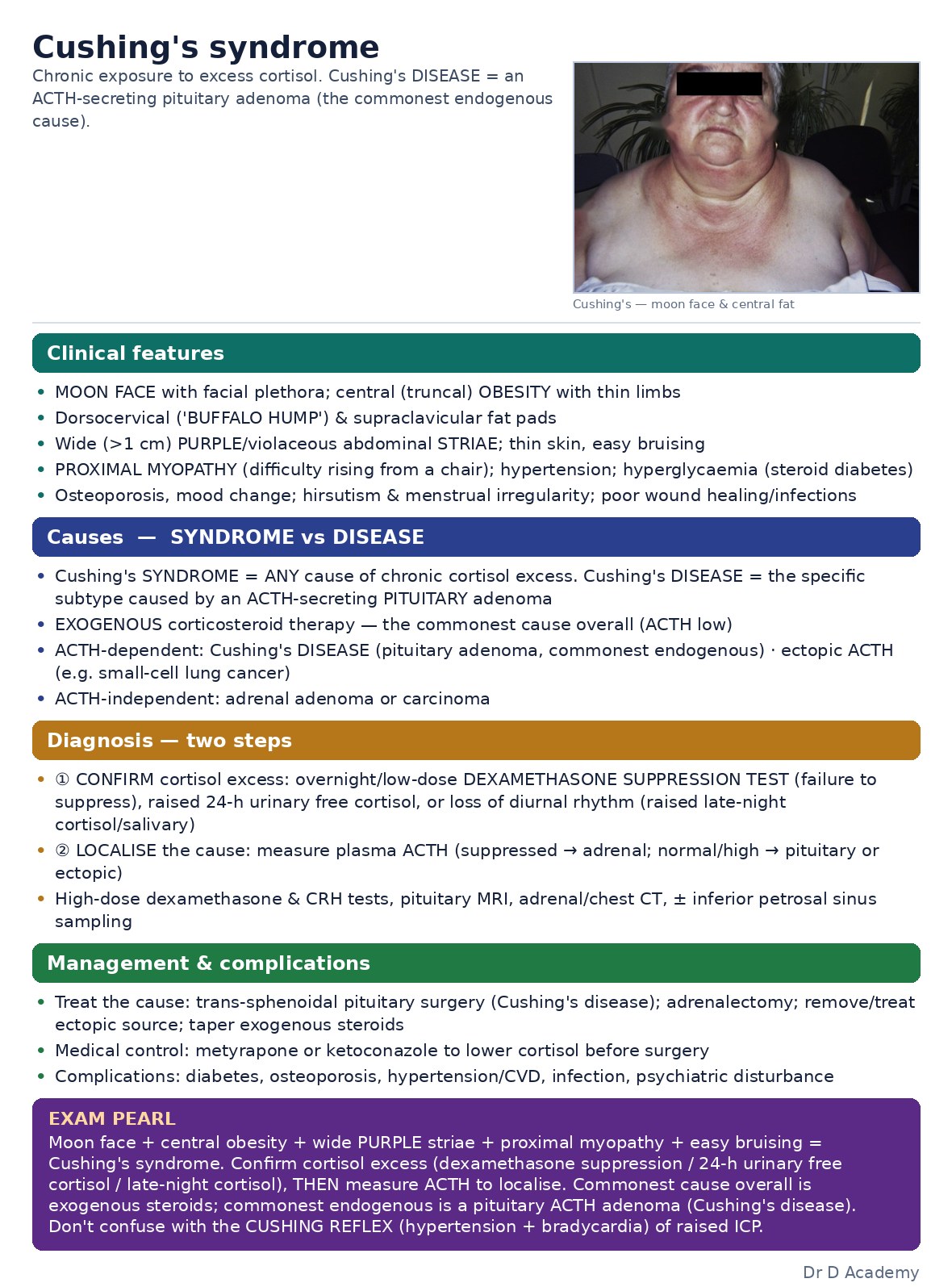
State of chronic glucocorticoid excess. By far the commonest cause is exogenous steroid therapy; endogenous disease is most often pituitary ACTH excess (Cushing's disease).
Figures & algorithms
Red flags
- Refer endocrinology for all suspected endogenous Cushing's - diagnosis and localisation are specialist
- Admit if adrenal crisis post-treatment, severe hypokalaemia (ectopic ACTH), psychosis, or severe uncontrolled hypertension/hyperglycaemia
Assessment
Investigations
- Confirm excess: overnight 1mg dexamethasone suppression test, late-night salivary cortisol, or 24h urinary free cortisol (two abnormal)
- Then ACTH: suppressed = adrenal (CT adrenals); detectable = ACTH-dependent (pituitary MRI, high-dose dex, IPSS, CT chest/abdomen for ectopic)
Management
- Iatrogenic: taper steroid to lowest effective dose
- Cushing's disease: transsphenoidal pituitary surgery first line; radiotherapy or bilateral adrenalectomy if persistent
- Adrenal tumour: adrenalectomy
- Ectopic: treat source
- Medical control (metyrapone, ketoconazole, osilodrostat) to lower cortisol pre-op or if surgery unsuitable
- Replace steroids post-op until axis recovers
Disposition
Refer endocrinology for all suspected endogenous Cushing's - diagnosis and localisation are specialist.
Complications & pitfalls
- Hypertension, type 2 diabetes, osteoporotic fractures, venous thromboembolism, infections, psychiatric disturbance, cardiovascular mortality
- Nelson's syndrome after bilateral adrenalectomy; adrenal insufficiency post-cure
Exam pearls
- Always exclude exogenous steroids (including inhaled, topical and joint injections) before an exhaustive endogenous work-up. For screening, a late-night salivary cortisol or overnight dexamethasone suppression test is more practical than random cortisol.
- Monitoring & follow-up: Post-op monitor for adrenal insufficiency and cortisol recovery; long-term surveillance for recurrence. Manage comorbidities (BP, glucose, bone, thrombosis risk). On medical therapy monitor cortisol, LFTs, electrolytes and adrenal insufficiency symptoms.
Disclaimer: Educational decision support for qualified clinicians and students — not a substitute for clinical judgement, local protocols or a full drug reference. Confirm every dose and contraindication against your formulary before prescribing.