Raised intracranial pressure — ICU care bundle
Neuroprotection · Critical Care / ICU
Physician-written · Verified by three sets of doctors · Reviewed November 2026
Bedside summary
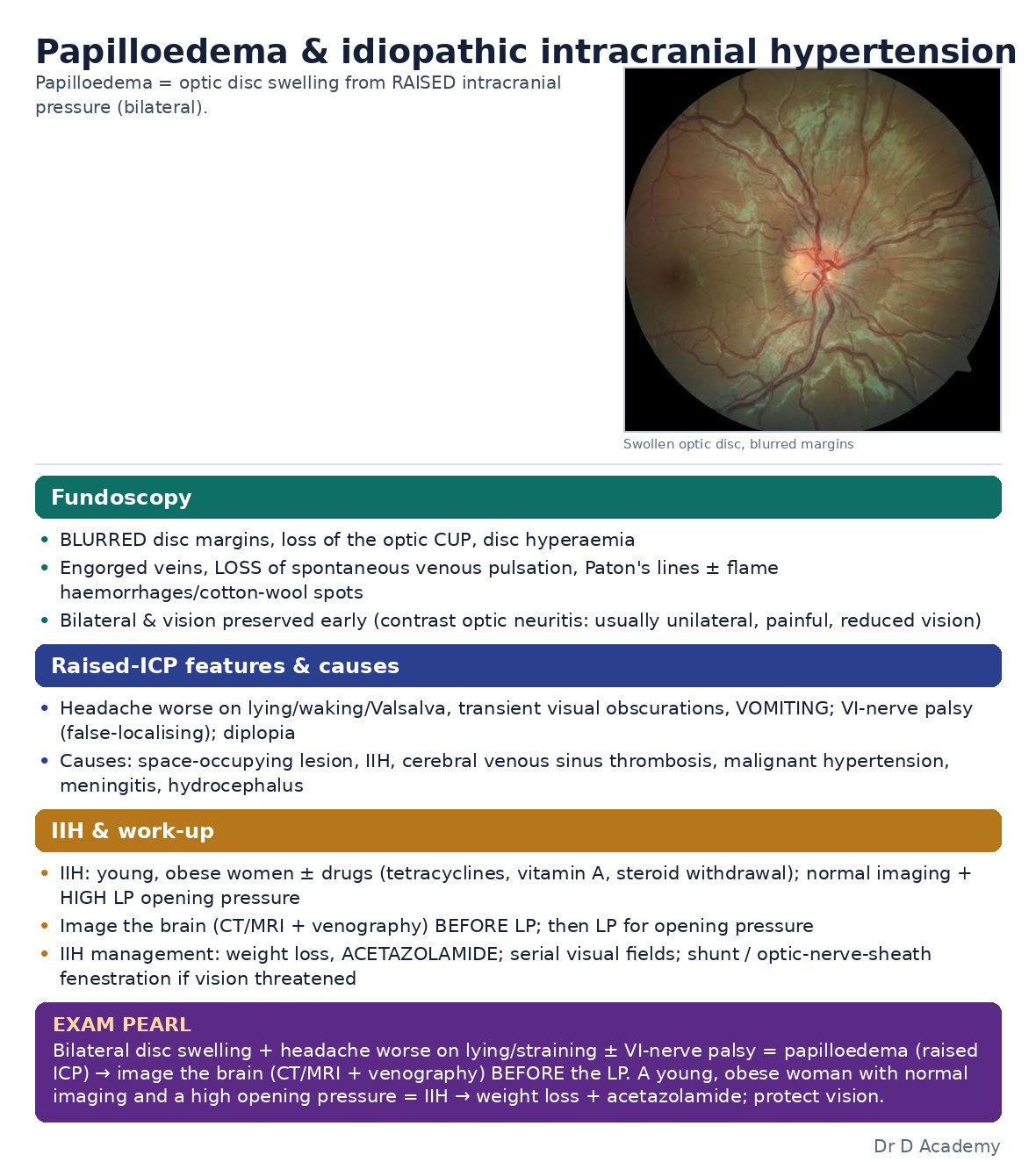
Whatever the cause (TBI, haemorrhage, hepatic encephalopathy, meningitis, tumour), the ICU goal is cerebral perfusion: CPP = MAP − ICP. A stepwise bundle controls ICP while the definitive cause is treated.
Figures & algorithms
Red flags
- Unilateral dilating pupil + falling GCS = herniation: hyperosmolar bolus, brief hyperventilation, and theatre/repeat CT NOW
- Cushing response (hypertension + bradycardia + irregular breathing) is late
Management
- Tier 0 (everyone): head-up 30°, head neutral, no tube ties/collars obstructing venous drainage, normoxia (PaO₂ >10 kPa), normocapnia (PaCO₂ 4.5–5.0), temperature ≤37.5°C, glucose 6–10, Na⁺ ≥140, adequate sedation/analgesia, seizure control
- Tier 1: osmotherapy for surges — hypertonic saline (e.g. 3% 2–5 mL/kg) or mannitol 0.25–0.5 g/kg; CSF drainage if EVD in situ; keep CPP 60–70 mmHg with vasopressors as needed
- Tier 2: deepen sedation ± neuromuscular blockade; moderate hypocapnia 4.0–4.5 kPa as a TEMPORISING measure only
- Tier 3 (refractory, with specialists): barbiturate coma with EEG monitoring, decompressive craniectomy, hypothermia only as rescue
- Throughout: treat the CAUSE (evacuate the clot, drain the hydrocephalus, antibiotics for the abscess) and reassess pupils hourly
Exam pearls
- Sustained ICP >22 mmHg associates with worse TBI outcome (BTF) — treat trends, not spikes during suction
- Prophylactic sustained hyperventilation worsens ischaemia — reserve low CO₂ for emergencies
Venous drainage, gas control, osmotherapy, cause-control — in that order, fast.
Disclaimer: Educational decision support for qualified clinicians and students — not a substitute for clinical judgement, local protocols or a full drug reference. Confirm every dose and contraindication against your formulary before prescribing.