Kawasaki disease coronary artery aneurysm in the adult
Coronary · Cardiac
Physician-written · Verified by three sets of doctors · Reviewed November 2026
Bedside summary
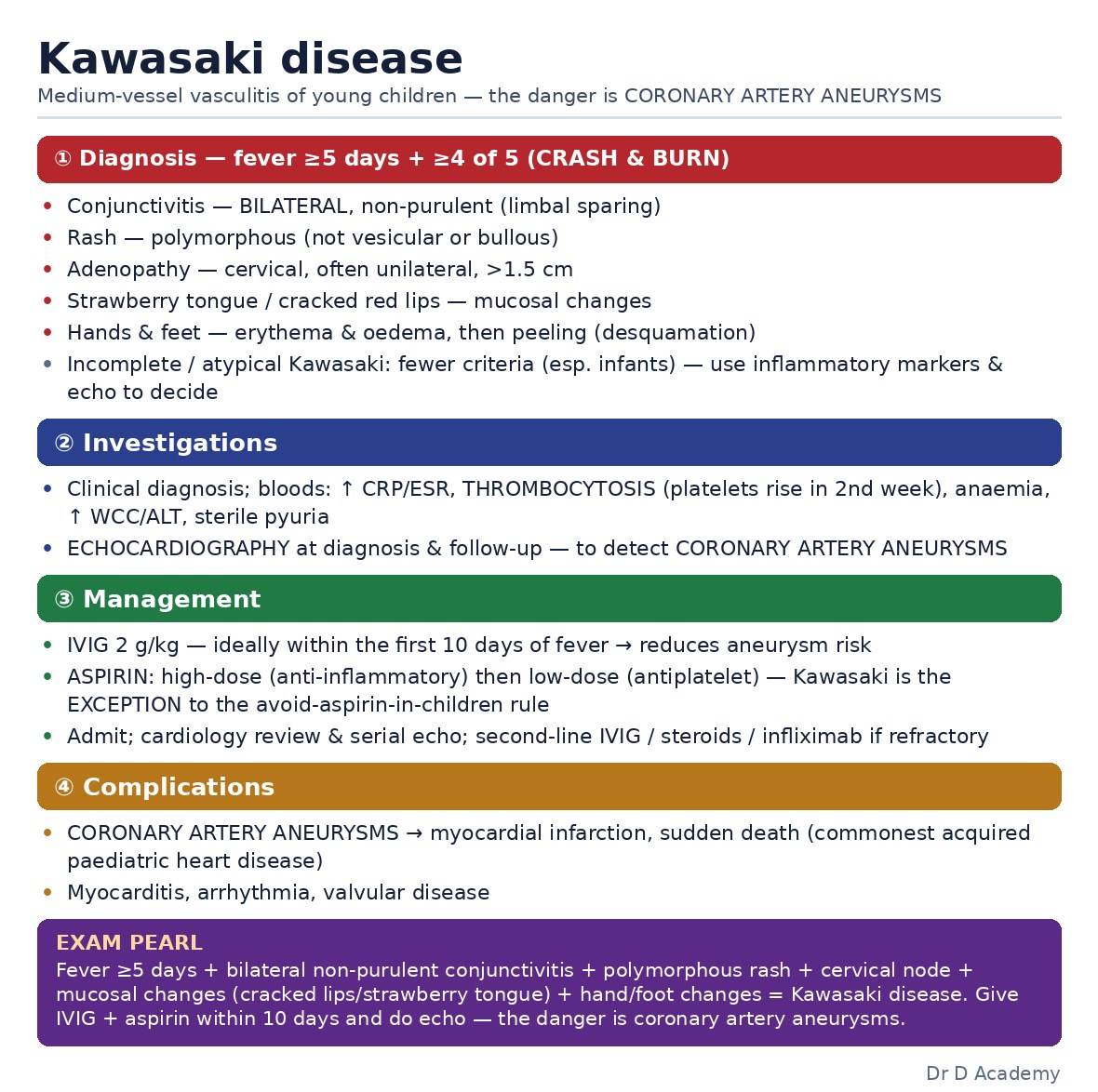
Adults with a history (known or missed) of childhood Kawasaki disease may have persistent coronary artery aneurysms that predispose to thrombosis, stenosis, myocardial infarction and sudden death. Giant aneurysms carry the highest risk. They present as acute coronary syndrome at a young age or are found incidentally on imaging. Antithrombotic strategy is stratified by aneurysm size.
Figures & algorithms
Red flags
- Giant coronary aneurysm (highest thrombosis/rupture risk)
- Acute coronary thrombosis
- Young patient with MI
Assessment
Differential diagnosis
- Atherosclerotic ACS in a young adult
- Spontaneous coronary artery dissection
- Other coronary aneurysm/ectasia (atherosclerotic, connective tissue, vasculitic)
Investigations
- History of childhood Kawasaki disease (ask directly in young ACS patients)
- Coronary imaging (invasive angiography or CT coronary angiography) to define aneurysm size, stenosis and thrombus
- Standard ACS work-up (ECG, troponin) when presenting acutely
Management
- Consider it in a young adult with ACS/MI or aneurysmal coronaries; take a Kawasaki history.
- Manage acute ACS/coronary thrombosis via standard pathways with cardiology/interventional input (aneurysm thrombosis management is specialised).
- Stratify long-term antithrombotic therapy by aneurysm size — antiplatelet for smaller aneurysms, and anticoagulation PLUS antiplatelet for giant aneurysms.
- Arrange lifelong cardiology surveillance imaging.
- Consider percutaneous or surgical revascularisation for significant stenosis.
- Aggressive cardiovascular risk-factor control.
Drugs & doses
Aspirin (antiplatelet) for persistent aneurysms
Add anticoagulation (e.g. warfarin) for GIANT aneurysms — dual antithrombotic therapy (confirm against local policy / specialist guidance)
Standard ACS therapy for acute coronary thrombosis (confirm against local policy)
Disposition
Admit for acute coronary events; otherwise specialist cardiology follow-up with imaging surveillance.
Complications & pitfalls
- Coronary thrombosis and MI
- Progressive coronary stenosis
- Sudden cardiac death
- Aneurysm rupture (rare)
Exam pearls
- Ask young ACS patients about childhood Kawasaki disease.
- Giant aneurysms need anticoagulation PLUS antiplatelet therapy.
- Lifelong cardiology surveillance is required.
Educational — confirm all doses against local policy.
Disclaimer: Educational decision support for qualified clinicians and students — not a substitute for clinical judgement, local protocols or a full drug reference. Confirm every dose and contraindication against your formulary before prescribing.