Infective endocarditis antibiotic prophylaxis
Endocarditis / prevention · Cardiac
Physician-written · Verified by three sets of doctors · Reviewed November 2026
Bedside summary
Guidance on who needs antibiotic prophylaxis before procedures to prevent infective endocarditis. Indications have been markedly narrowed: only the highest-risk cardiac patients undergoing specified (mainly dental) procedures, with emphasis on oral/skin hygiene over antibiotics. Policies differ (NICE more restrictive than AHA/ESC) — know your local protocol.
Figures & algorithms
Red flags
- Unexplained fever, night sweats or malaise in a patient with prosthetic valve/prior IE — investigate for endocarditis (blood cultures, echo), do not just reassure
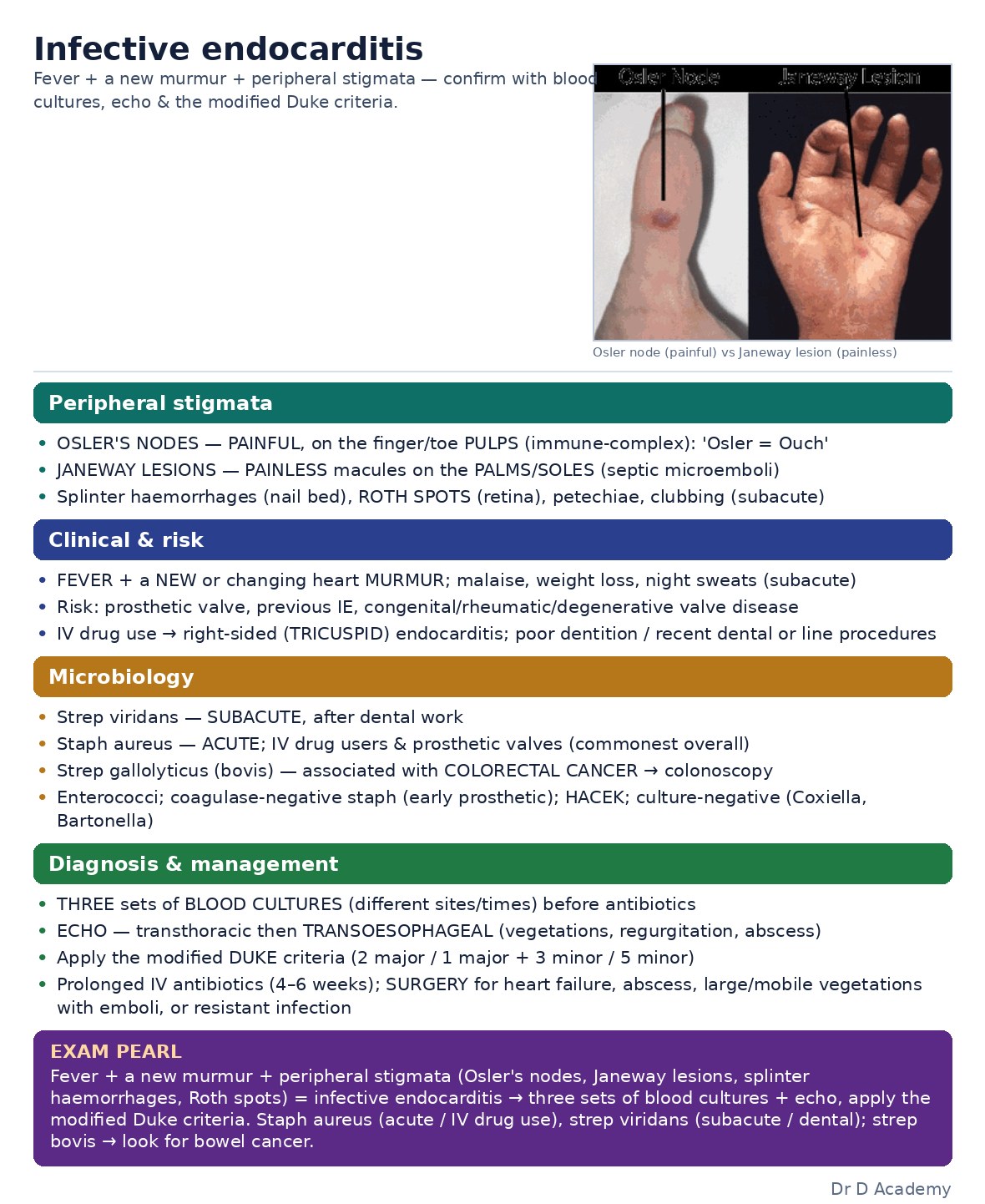
- New murmur or embolic phenomena
- Dental sepsis in a high-risk patient
- Line/device infection (CIED) — separate management
Assessment
Differential diagnosis
- N/A (preventive protocol) — distinguish high-risk from non-high-risk cardiac conditions
- Procedures requiring vs not requiring cover
- Active infection requiring treatment (not prophylaxis)
Investigations
- Identify high-risk cardiac condition: prosthetic valve (incl. TAVI) or prosthetic material used for valve repair; previous infective endocarditis; specified congenital heart disease (unrepaired cyanotic CHD, repaired with residual defect/prosthetic material); cardiac transplant with valvulopathy
- Identify the procedure risk: dental procedures involving manipulation of gingiva/periapical region or oral mucosa perforation are the main at-risk procedures
- Document penicillin allergy status
- Review local policy (NICE vs AHA/ESC) and baseline oral/skin health
Management
- Determine if the patient has a high-risk cardiac condition AND is undergoing an at-risk procedure
- Emphasise universal measures for all cardiac-risk patients: excellent oral hygiene, regular dental review, prompt treatment of infection, avoid non-sterile piercing/tattooing
- If prophylaxis indicated (high-risk patient + at-risk dental procedure per local policy), give a single antibiotic dose 30-60 minutes before the procedure
- Do NOT give routine prophylaxis for GI, GU, respiratory (unless incising infected tissue) or dermatological procedures in the absence of active infection
- If the procedure is on already-infected tissue, treat the infection with an appropriate regimen covering likely organisms (this is treatment, not prophylaxis)
- Record the decision and counsel the patient to seek care for unexplained fever
Drugs & doses
Amoxicillin 2 g PO single dose 30-60 min before dental procedure (adult); paeds 50 mg/kg PO (max 2 g)
Ampicillin 2 g IV/IM OR amoxicillin 2 g IV if oral route not possible (paeds 50 mg/kg)
Penicillin allergy: clindamycin 600 mg PO (adult) [note: increasingly replaced due to C. difficile/adverse effects] OR azithromycin/clarithromycin 500 mg PO
Penicillin allergy alternative (AHA): cephalexin 2 g PO (avoid cephalosporin if history of anaphylaxis/angio-oedema to penicillin); paeds 50 mg/kg
Doxycycline 100 mg PO is a further allergy alternative in some updated guidance [verify local policy]
No prophylaxis indicated for most non-dental procedures without active infection
Disposition
Outpatient/pre-procedure decision; document the indication and allergy status. Signpost high-risk patients to dental care and to seek review for unexplained fever.
Complications & pitfalls
- Infective endocarditis if prophylaxis omitted in genuinely high-risk setting
- Antibiotic adverse effects (anaphylaxis, C. difficile with clindamycin) from unnecessary prophylaxis
- Antimicrobial resistance from overuse
Exam pearls
- Indications are now restricted to the HIGHEST-risk patients (prosthetic valve/material, prior IE, specified CHD, transplant valvulopathy) having at-risk dental procedures — routine cover for most valve disease was abandoned.
- NICE (UK) advises prophylaxis is NOT routinely recommended but can be considered after discussion for high-risk patients; AHA/ESC retain it for defined high-risk groups — follow LOCAL policy.
- Good oral hygiene and dental health prevent more endocarditis than peri-procedural antibiotics.
- Clindamycin is no longer the preferred penicillin-allergy option in recent guidance (C. difficile risk) — amoxicillin-family or a cephalosporin/azithromycin alternative is preferred; check local formulary.
- Prophylaxis is a single pre-procedure dose, not a course.
Disclaimer: Educational decision support for qualified clinicians and students — not a substitute for clinical judgement, local protocols or a full drug reference. Confirm every dose and contraindication against your formulary before prescribing.